

Iran’s Revolutionary Guard Corps warned Britain on Thursday over allowing U.S. bombers to fly from British bases for operations against Iran, as tensions escalated following renewed Houthi attacks on Saudi shipping.
The IRGC said Britain would bear responsibility for enabling American military operations if its territory or bases were used by U.S. aircraft targeting Iran. The warning came as Washington continued strikes against Iranian military targets and sought to restore commercial shipping through key regional waterways.
Gallery
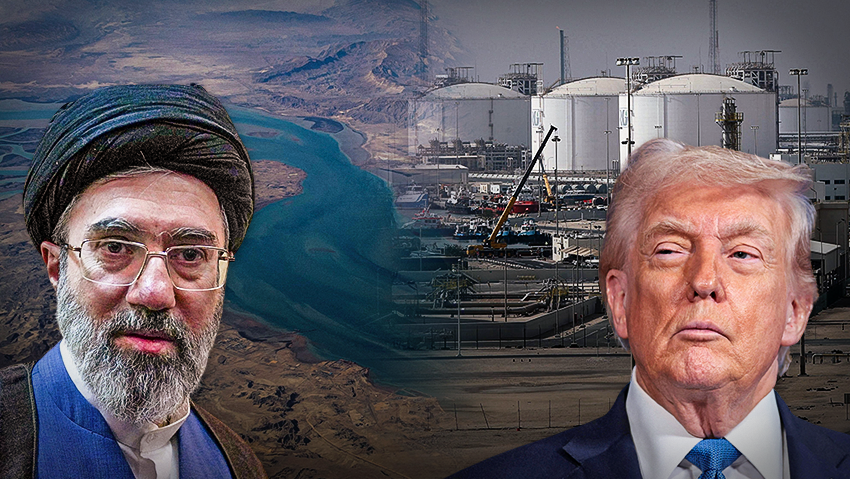
US President Donald Trump threatened Iran and Yemen’s Houthi terrorists with 'major military punishment'
(Photo: Hamed Jafarnejad/ISNA/WANA (West Asia News Agency) via REUTERS, REUTERS/Jonathan Ernst, REUTERS/Stringer, AFP)
Hours earlier, U.S. President Donald Trump threatened Iran and Yemen’s Houthi terrorists with “major military punishment” if the Iran-backed group carries out another attack on commercial shipping.
In a Truth Social post, Trump said the Houthis had acted responsibly since being struck by the United States a year ago but had now “started up again” by firing at two Saudi Arabian ships.
“If they do this again, the U.S. will hold Iran responsible,” Trump wrote, describing the Houthis as Tehran’s “surrogate and/or proxy” and warning that severe military punishment would be inflicted on both Iran and the Houthis.
Trump said he was “very disappointed” with the Houthis, adding that until the latest attacks they had acted “very professionally and smart.”
The Houthis said they attacked the Saudi oil tankers Encelia and Layla with ballistic and cruise missiles and drones, claiming the ships had violated a maritime blockade the group recently declared against Saudi Arabia.
Saudi authorities said the Encelia was struck in the Red Sea and caught fire, but that all crew members were safe. Officials said measures were taken to secure the vessel and protect the marine environment.
The attacks marked a renewed escalation by the Houthis after a prolonged lull in attacks on commercial shipping and raised concerns over disruption to the Bab el-Mandeb Strait, a crucial route connecting the Red Sea with the Gulf of Aden.
The Houthi threat against Saudi shipping has also raised the prospect of renewed direct confrontation between the group and Saudi Arabia, despite a truce that had largely contained fighting between them since 2022.
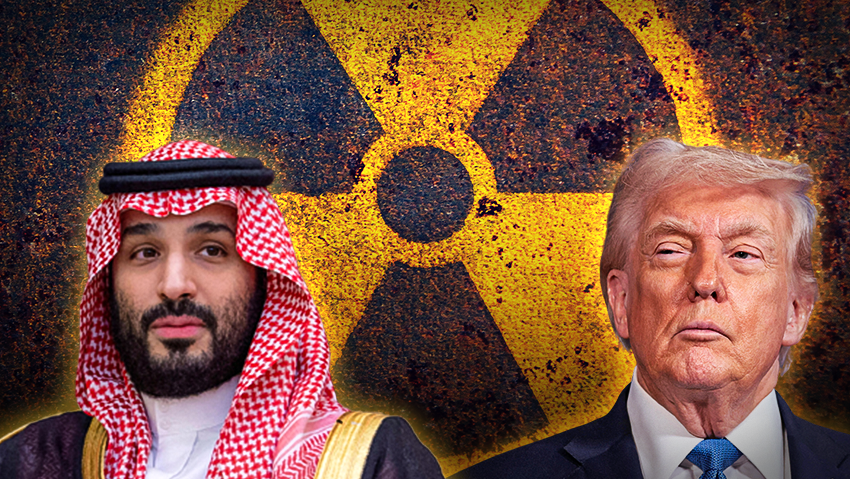
Trump ties Saudi civilian nuclear deal to normalization with Israel
(Photo: Hamed Jafarnejad/ISNA/WANA (West Asia News Agency) via REUTERS, REUTERS / Jonathan Ernst, shutterstockBandar Algaloud/Courtesy of Saudi Royal Court/Handout via REUTERS)
Trump said the agreement between the U.S. Department of Energy and Saudi Arabia would permit only peaceful, nonmilitary nuclear facilities and would not allow uranium enrichment.
“The Civil Nuclear Deal being made between the United States Department of Energy and Saudi Arabia, which pertains only to non-military use such as the ones that Iran and UAE, and others, already have, will be approved, but is totally subject to Saudi Arabia joining the very respected and successful Abraham Accords,” Trump wrote.
“The United States is not opposed to Civil, Non-Enriched Nuclear Facilities,” he added.
The announcement appeared to rule out Saudi uranium enrichment, an issue that had generated concern in Israel over the possibility of a regional nuclear arms race.
The Abraham Accords, brokered during Trump’s first term, established diplomatic relations between Israel and the United Arab Emirates, Bahrain and Morocco.
Saudi Arabia has long been viewed by Washington and Jerusalem as the most significant potential addition to the accords, but negotiations have been complicated by Riyadh’s demands for U.S. security guarantees, civilian nuclear cooperation and progress on the Israeli-Palestinian issue.
Trump’s statements placed Saudi Arabia at the center of two major regional developments: renewed Houthi attacks on its commercial shipping and Washington’s effort to link nuclear cooperation with recognition of Israel.
First published: 16:28, 07.23.26