

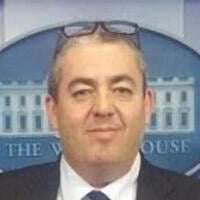
“The barbarity of the Islamic Republic toward innocent civilians, especially toward the Israeli people, has crossed every human and moral boundary. For years, the Iranian regime has spread hatred and death in the name of religion. But it is important to know: the Iranian people themselves are not partners to these crimes.”
Matiyeh Hadir, a former undercover agent in Iran’s intelligence services, stood in Jerusalem and spoke these words not as a slogan, but as a personal declaration from someone who escaped the regime and came to Israel to see it with his own eyes.
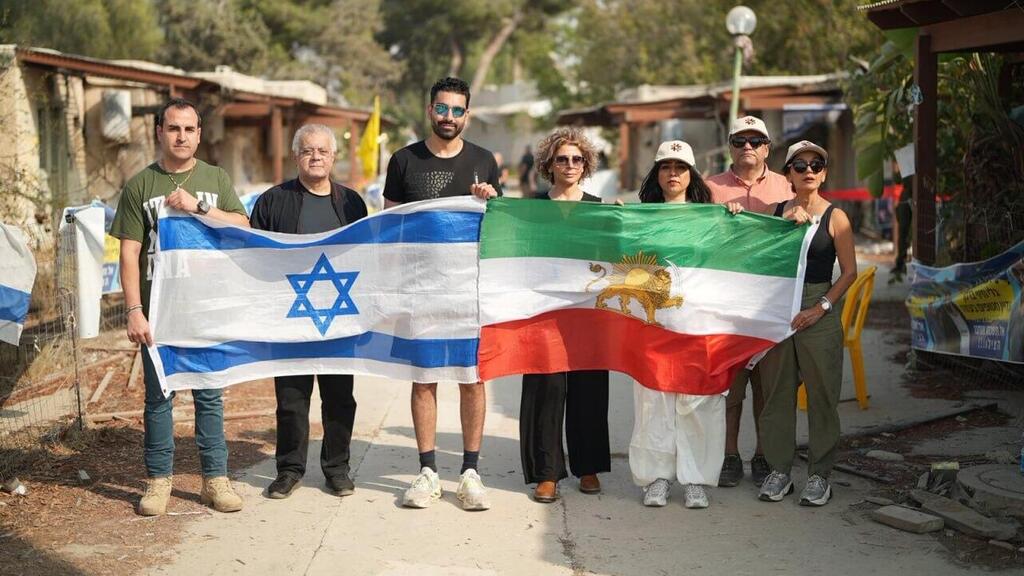
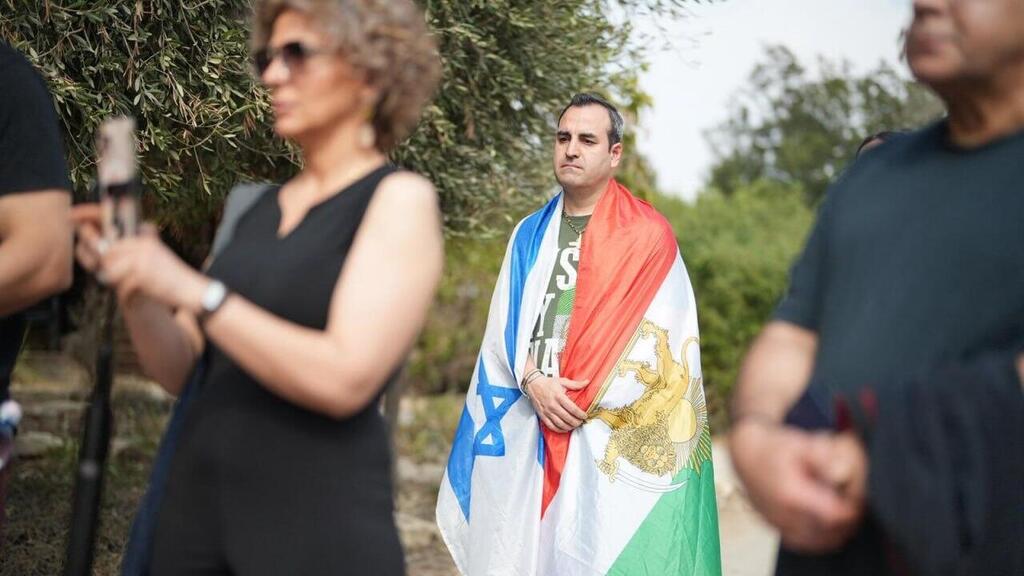
Hadir is one of 10 Iranian exiles — journalists, activists and influencers with more than two million followers — who visited Israel in recent days as part of a Cyrus Accords-inspired trip organized by Sharaka, an NGO that builds bridges between Israel and the Muslim world.
The participants came to learn about Israel firsthand, counter Tehran’s propaganda and reach out to a people many Iranians were taught to hate from afar. Most have lived in exile for years, fleeing the Islamic Republic’s repression and becoming leading voices in the Iranian diaspora.
The visit was carefully planned to showcase Israel’s diversity, from religious history to technological innovation — and the horrors of terrorism. The delegation began at the Islamic Art Museum, continued to the Old City, and visited viewpoints around Jerusalem. On the second day, they met at the Foreign Ministry, toured the National Library to see ancient Persian manuscripts, visited Yad Vashem and met Holocaust survivor Rina Quint.
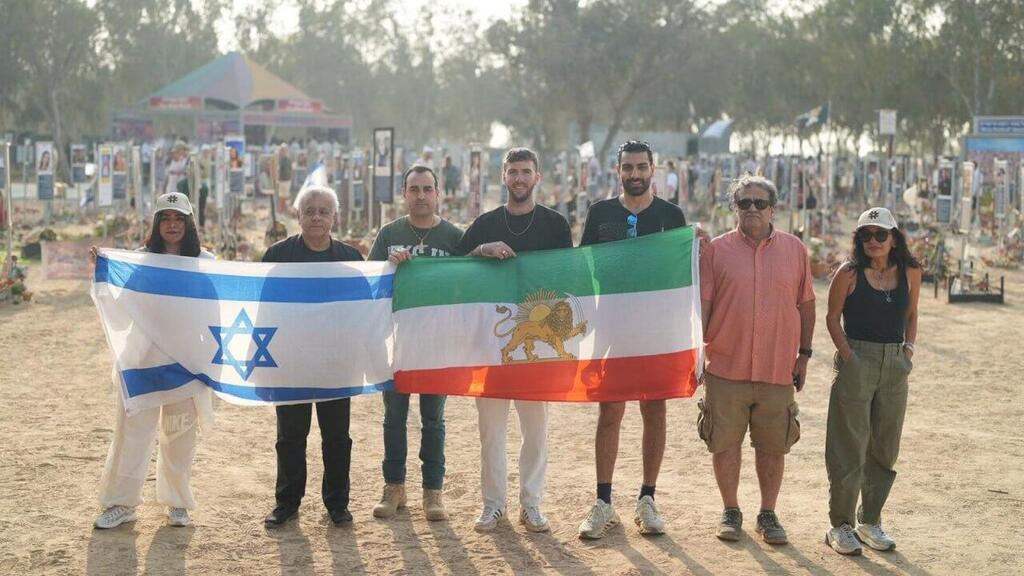
At the Nova music festival memorial site
(Photo: Sharaka)
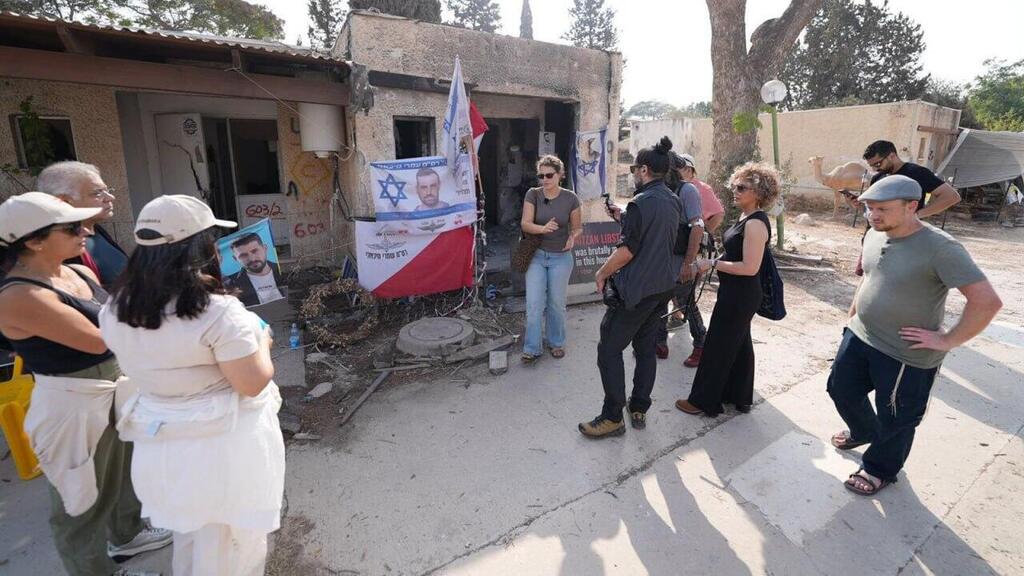
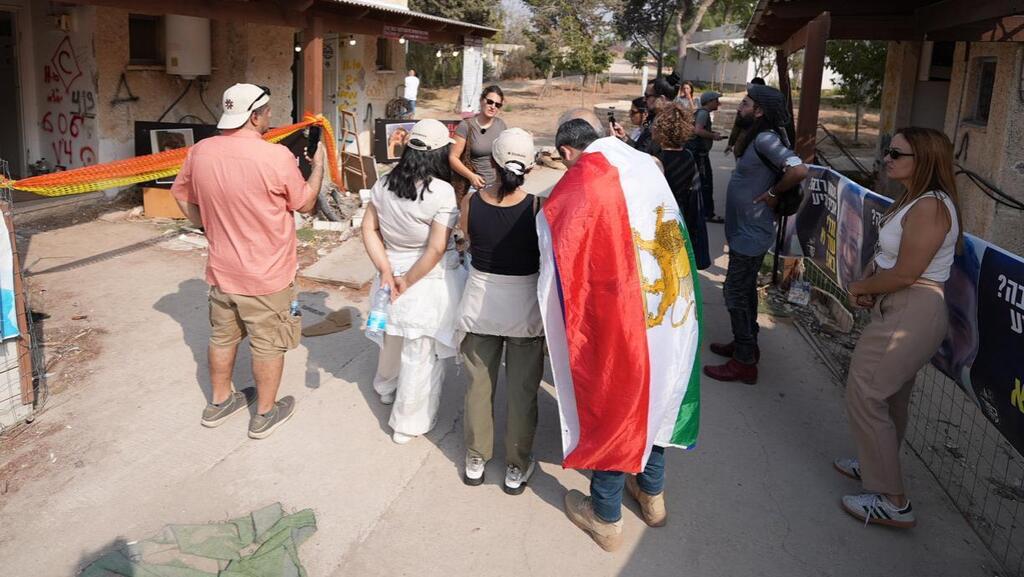
On the third day, they traveled to the Gaza border region. In Kfar Gaza, at the Nova music festival site and at Kibbutz Dorot, they heard firsthand accounts from survivors of the October 7 massacre. “We saw the destruction with our own eyes. This is not a ‘clash,’ this is pure terror,” one participant said.
At Yad Vashem, they held a memorial ceremony at the Hall of Remembrance. Later, they traveled to Tel Aviv for dinner with a Persian family in Jaffa, a lecture on innovation and a “Cyrus Day” event. In Haifa they visited the Baha’i Gardens and Daliyat al-Karmel “to understand,” they said, “that Israel is not what the regime tells its people.”
(Photo: Sharaka)
Hadir said, “Many Iranians admire Israel’s stand against terrorism and see it as a free country fighting the same enemy that oppresses them. The Iranian people support Israel in its struggle against the brutality of the Islamic Republic and its proxies, and hope for the day when both peoples can live in peace, freedom and dignity.”
Behzad Mehrani, a political activist and former political prisoner in Iran, added, “The 12-day war was not a conflict between Israel and Iran, but a war between the State of Israel and the Islamic Republic of Iran — a regime whose slogan is the destruction of Israel. It is important to clarify: the Iranian people do not support this regime. Most Iranians despise the ayatollahs and their politics of hatred. Our people want freedom, justice and peace — not terror, not oppression, and not wars in the name of religion. The Islamic regime does not represent the Iranian people.”
(Photo: Sharaka)
Samuel Davoud, spokesperson for the HOOMA human rights organization, said, “We clearly see that the Iranian people’s struggle against the Islamic regime is a struggle for all humanity. The people of Iran are thirsty for freedom and hoping for a true friend who will help them topple the ayatollahs — a brutal regime that represses, persecutes and kills its own citizens. We are doing everything we can to make the voices of brave Iranians heard, and we believe the day this regime falls is closer than ever. The Iranian and Israeli peoples share a common fate, two free peoples at heart standing against dark forces and refusing to give up hope. Long live a free Iran, and long live Israel, together, for freedom, justice and peace.”
Siyavash Avesta, a Persian-French journalist and writer, said, “For 46 years the criminal regime in Iran has threatened Israel. Recently, during the 12-day war, the regime allowed itself to attack Israel and target civilian buildings and people without taking responsibility for its crimes. Nazi hunter Serge Klarsfeld used to say, ‘Never forgive, never forget.’ The same applies to the Iranian regime’s crimes.”
(Photo: Sharaka)
The exiles were divided on whether Iran is likely to attack Israel again. Hadir fears it will. “It is important to understand that since the 12-day war there has been a struggle between reformists and conservatives. The reformists are currently gaining strength. They have about 60 percent support and are willing to negotiate with everyone. The conservative faction may attack again to prevent the reformists from consolidating power and taking control of Iran.”
Davoud disagreed. “I do not think that will happen, because they are truly afraid to ‘mess things up’ again.”