

A U.S. official described intelligence analysis as the task of assembling a puzzle without knowing what the finished image should look like, lacking key pieces, and discovering that some pieces belong to a different puzzle altogether. This description is particularly apt when assessing the Houthis, who tightly restrict access to reliable information while actively disseminating disinformation. Control of information is a core Houthi strength, especially regarding the status of senior officials, but it also shines lights on important vulnerabilities.
Months after U.S. and Israeli military campaigns against the Houthis concluded, information about the deaths of numerous senior figures has only slowly trickled out. The “martyrdom” of the terror group’s top military commander, Muhammad Abd al-Karim al-Ghamari, was announced in mid-October, while the death of Zakaria Hajar, the head of the missile and drone program, was disclosed in late December.
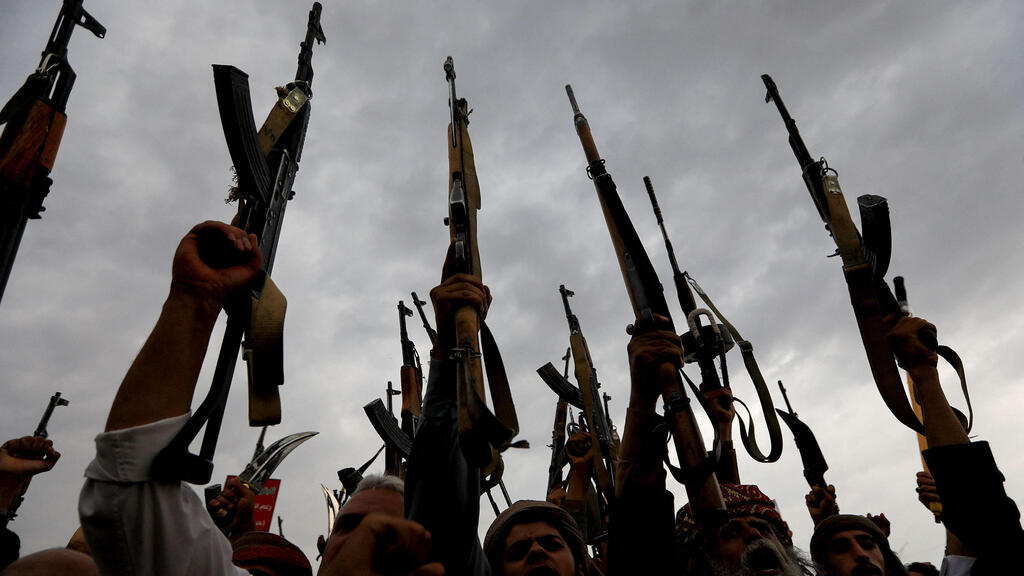
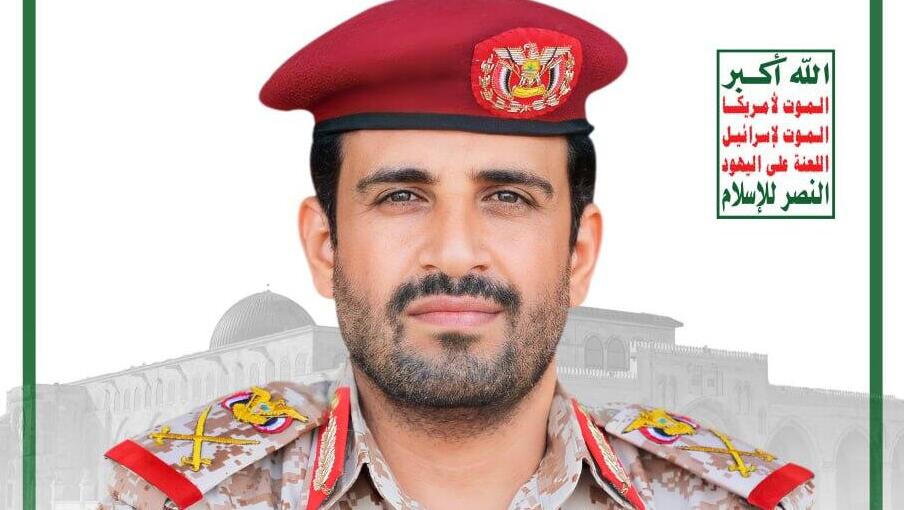
Muhammad Abd al-Karim al-Ghamari
In both cases, the assassinations are believed to have occurred months earlier. Yet only in al-Ghammari’s case was a successor publicly announced after his death was acknowledged. By contrast, roughly a dozen senior members of the Houthi cabinet were killed in late August. Their deaths were acknowledged within days, but none have been replaced to date.
At first glance, these responses appear inconsistent. On closer inspection, however, they reflect a coherent approach that distinguishes between political and military figures, and between public facing officials and covert security operatives.
The Houthis devote significant resources to projecting both domestic and external deterrence and carefully manage developments that could undermine this image. Assassinations pose a particular challenge because successful strikes can embolden adversaries, weaken perceptions of regime resilience, and encourage follow on attacks. The regime’s response to this is calibrated rather than uniform.
This logic is evident in the Houthis’ handling of assassinated political leaders. The killing of Saleh al-Samad, the de facto Houthi president, in a Saudi airstrike in April 2018 was acknowledged within four days and followed immediately by the appointment of a successor with a similar tribal profile. The speed of this response suggests that either the strike could not be concealed or that al-Samad’s death was not viewed as sufficiently destabilizing to justify prolonged secrecy. More importantly, because the presidency is framed as a head of state position, leaving the role vacant would have undermined the movement’s claims to sovereign authority.
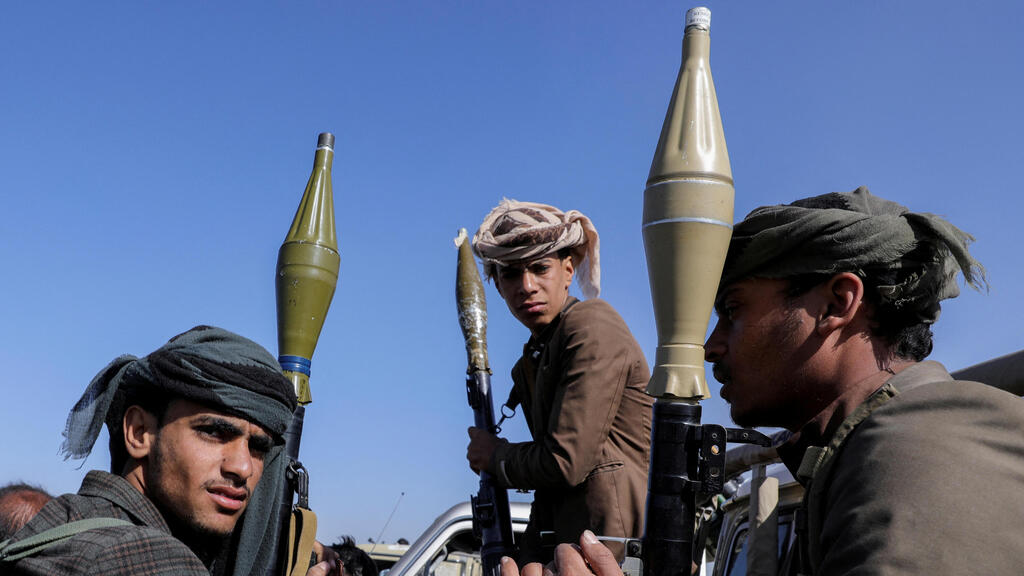
Houthis in Yemen
(Photo: Reuters/Khaled Abdullah)
A similar logic appears to have guided the Houthis’ initial response to the Israeli airstrike in August 2025 that killed numerous members of the Houthi cabinet. As in al-Samad’s case, the targets were largely public facing political figures. Many had been appointed to convey the illusion of a broad based governing coalition rather than exclusive rule by a narrow Hashemite elite. Their deaths were acknowledged within days.
The divergence lies in what followed. More than one hundred days later, major cabinet positions, including the prime ministership and the ministries of information, foreign affairs, and economy, remain vacant. This delay is notable given the movement’s mounting governance challenges. While the limited pool of trusted non-Hashemite candidates may partially explain the vacancies, it probably does not fully account for it. A complementary explanation is that the vacancies themselves serve a narrative function: leaving key governance posts unfilled allows the movement to attribute its dysfunction to the Israeli strike rather than to its own misrule. Historically, the Houthis have used cabinet reshuffles to deflect criticism and signal corrective intent, and they appear to be holding that card for a later date.
The Houthi response differs further when it comes to senior security officials who maintain a public profile. For example, Mohammed al-Ghammari, the Houthi chief of staff killed in the same August 2025 strike, was a highly visible figure who regularly appeared at regime events and issued public statements. After the strike, written statements attributed to him continued to circulate, including denials that framed speculations of his death as evidence of Israeli failure. His death was concealed for nearly fifty days before being formally acknowledged, without disclosure of the circumstances, and accompanied by the immediate announcement of a successor with a similar profile. The replacement was a longstanding Houthi supporter in his forties, from a prominent Hashemite family, and from the same Madan area of Amran Governorate as his predecessor.
The timing of this acknowledgment was carefully chosen. It followed the Israel-Hamas ceasefire and coincided with the anniversary of Yahya Sinwar’s death. This period of calm meant a low risk of encouraging additional Israeli strikes and allowed al-Ghammari’s death to be framed as part of the Palestinian struggle rather than as the result of reckless escalation. In this case, concealment limited reputational damage and reduced incentives for follow on attacks for as long as necessary, while managed disclosure projected continuity and ideological commitment.
If it ultimately proves correct that Interior Minister Abdelkarim al-Houthi and Defense Minister Mohammed al-Atifi were also eliminated, as some reports have suggested, the Houthi response will likely mirror the handling of al-Ghammari. Their deaths would probably be acknowledged at a convenient moment, accompanied by immediate announcements of successors with similar profiles. Each death would also likely be disclosed separately to avoid creating the impression that the movement is experiencing a period of acute vulnerability.
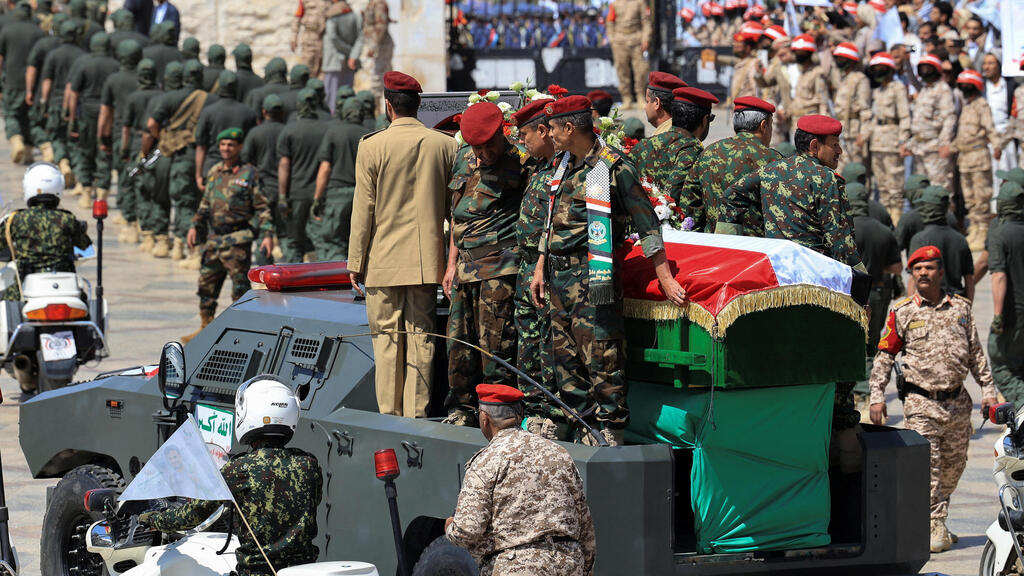
Funeral of al-Ghammari
(Photo: Reuters/Khaled Abdullah)
The most extensive concealment, however, is reserved for senior security officials who operate entirely in the shadows. Zakaria Hajar, the Houthi missile and drone chief, appears to have been killed roughly nine months before his death was announced, and the movement has continued to withhold information about the timing and location of the assassination. Unlike in al-Ghammari’s case, no successor has been publicly named. This silence likely reflects the sensitivity of the role, as the identity of the individual who assumed Hajar’s responsibilities is presumably a closely guarded secret. In this context, public demonstrations of institutional continuity have limited value, since the position depends on operational secrecy rather than public legitimacy.
Taken together, these cases suggest that the Houthis’ approach to assassinations follows a consistent logic rather than an ad hoc pattern. Decisions to deny, acknowledge, or replace are calibrated according to the visibility of the individual, the symbolic importance of the position, and the anticipated impact on public perception. Deaths are concealed when secrecy preserves deterrence and internal cohesion, acknowledged when it is safe or necessary to do so, and accompanied by carefully staged succession when continuity must be demonstrated.
This approach reflects a deliberate effort to separate the political and psychological consequences of assassinations from their operational effects. While concealment cannot offset the loss of experienced personnel, controlling the timing and framing of acknowledgment shapes how those losses are perceived by domestic and foreign audiences. By managing disclosure, the Houthis seek to limit reputational damage, dampen adversary perceptions of intelligence superiority or operational success, and sustain a broader sense of ambiguity around Yemen in general and the Houthi regime in particular.
At the same time, this behavior reveals a key vulnerability. Despite rhetoric that glorifies martyrdom and professes indifference to targeted killing, the Houthis clearly devote substantial effort to mitigating the fallout of these strikes. For Israel and other actors, this suggests that assassinations should be evaluated not only for their military effects but also for their informational impact. Selective disclosure or the release of information that the Houthis would struggle to credibly refute could therefore amplify pressure on the movement. This vulnerability is especially pronounced in a system that relies heavily on personalized authority from elite Hashemite networks and, above all, secrecy.
Ari Heistein is a research fellow at the Jerusalem Institute for Strategy and Security and a consultant on defense technology.