


U.S. Secretary of State Marco Rubio said Thursday that Israel and Lebanon were nearing understandings on pilot zones for the disarmament of Hezbollah, despite what officials familiar with the talks described as the most difficult round of negotiations so far.
The proposed pilot zones would likely involve IDF withdrawals from areas already cleared by Israeli forces, with the Lebanese army taking over control in their place. The talks are being held in Washington under heavy American pressure, as the United States seeks to translate the fragile ceasefire on the Lebanon front into a broader security arrangement. Recent U.S.-backed understandings have sought to preserve a ceasefire while allowing Israel to act against imminent threats, though Hezbollah is not a formal party to the diplomacy.
Gallery
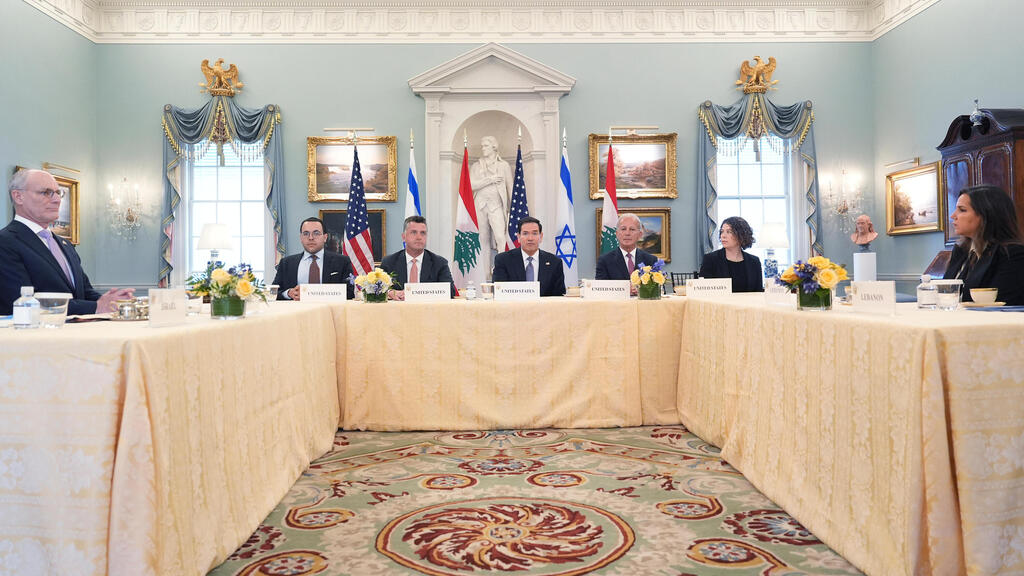
Negotiating meeting between Lebanon’s ambassador and Israel’s ambassador to the US
(Photo: AP Photo/Jacquelyn Martin)
Officials exposed to details of this week’s talks said the fifth round was the worst held so far. One Israeli official said the Americans were pressing hard for understandings despite major disagreements. Thursday was expected to be the final day of the current round, with the most likely outcome described as declarations of intent rather than a complete agreement.
The tensions come as Lebanese media reported that three people were killed and one was wounded Thursday in a drone strike targeting a vehicle between the villages of Mifdoun and Zawtar al-Sharqiyah in southern Lebanon. The report followed another Iranian warning that included a demand for an Israeli withdrawal from Lebanon.
Against the backdrop of Iranian efforts to link the regional fronts, senior Israeli officials familiar with the talks said Prime Minister Benjamin Netanyahu had convinced U.S. President Donald Trump that Israel would not withdraw from southern Lebanon, but would be bound by a full ceasefire across Lebanon. Under that approach, Israel would not initiate attacks, but would retain the right to defend itself, act against threats and respond if attacked.
According to the officials, Iran has instructed Hezbollah to comply with the ceasefire terms and avoid attacking Israel or IDF forces, and the terror group is broadly trying to do so. Still, the atmosphere in the negotiating rooms at both the State Department and the Pentagon was described as tense and negative. The core dispute remains Israel’s withdrawal and the selection of pilot zones that would be handed over to the Lebanese army.
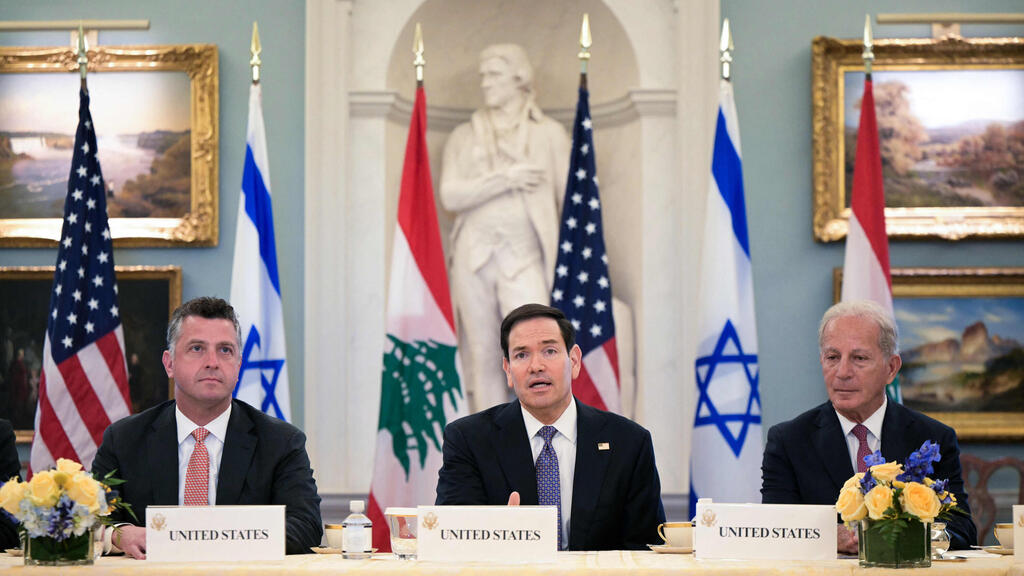
Marco Rubio
(Photo: Oliver Contreras / AFP)
Israeli officials said both Israel and Lebanon were angered by the inclusion of the Lebanese issue in the memorandum of understanding with Iran. They said the Americans inserted the clause without consulting either Israel or Lebanon, and did so only because Iran insisted.
Inside Israel, officials are divided over whether Iran would act to defend Hezbollah if the IDF renewed attacks in Beirut or initiated strikes against the terror group elsewhere in Lebanon. One school of thought holds that Tehran would not genuinely intervene and is merely paying lip service to its ally. Others believe that if Israeli attacks resume, especially in Beirut, Iran would feel obligated to strike Israel.
The Americans also did not update either side about the understandings reportedly reached in Switzerland to establish a “deconfliction cell.” Officials said neither side fully understands what the mechanism would entail, and the matter could be discussed during the visit of U.S. CENTCOM commander Brad Cooper to Israel and in his talks with IDF Chief of Staff Lt. Gen. Eyal Zamir.
Israeli officials say the current situation, in which Israel remains in a security zone inside Lebanon without withdrawing but also without full operational freedom against Hezbollah, is deeply problematic and will be difficult to sustain over time. Defense Minister Israel Katz has publicly insisted that Israeli forces will not pull out of southern Lebanon, a stance that has complicated broader U.S. diplomatic efforts.
The assessment in Israel and the United States is that in the current political climate, it would be difficult or nearly impossible to convince Netanyahu to agree to any withdrawal from Lebanon. Netanyahu and Defense Minister Israel Katz have been issuing daily statements on the matter against the backdrop of approaching elections. U.S. officials understand Netanyahu’s constraints and are therefore not focusing at this stage on a full withdrawal, instead concentrating on the pilot-zone plan.
The Lebanese government, which also feels hurt by the American move, is not expected to take unnecessary risks or go out of its way while it believes Washington is prioritizing its deal with Iran.
Regarding Iran, Israeli officials believe the United States will not return to fighting before the November midterm elections, after which a new window of opportunity may open. Trump would then be freer of political pressure and could seek to settle accounts with Tehran if he concludes that Iran is misleading him.
Meanwhile, Tzipi Hotovely, head of Israel’s National Public Diplomacy Directorate, told a JNS conference in Jerusalem that in the wake of October 7, Israel must remain in the security zone in Lebanon.
“Our soldiers are doing a great job dismantling all the terror infrastructure that has only one purpose, to harm innocent civilians,” she said. “So while we are chasing the terrorists, they are chasing our children.”