

U.S. officials on Sunday told The New York Times the story of the dramatic rescue of an American navigator who survived two days deep inside enemy territory in Iran, revealing new details about the tense moments after he was found and evacuated by helicopter, when the mission again appeared at risk of failure. The landing gear of at least one aircraft became stuck in the sandy soil of the makeshift airstrip, forcing troops to call for reinforcements and wait for hours.
The Times report is based on conversations with 12 current and former U.S. military and government officials, who described what is known about events since Friday morning, when an F-15 aircraft was hit near Tehran. The pilot and navigator flew away from the capital’s airspace and, upon reaching southern Iran, ejected and abandoned the aircraft. During the ejection, they became separated, each finding himself alone deep in hostile territory armed only with a handgun.
Gallery
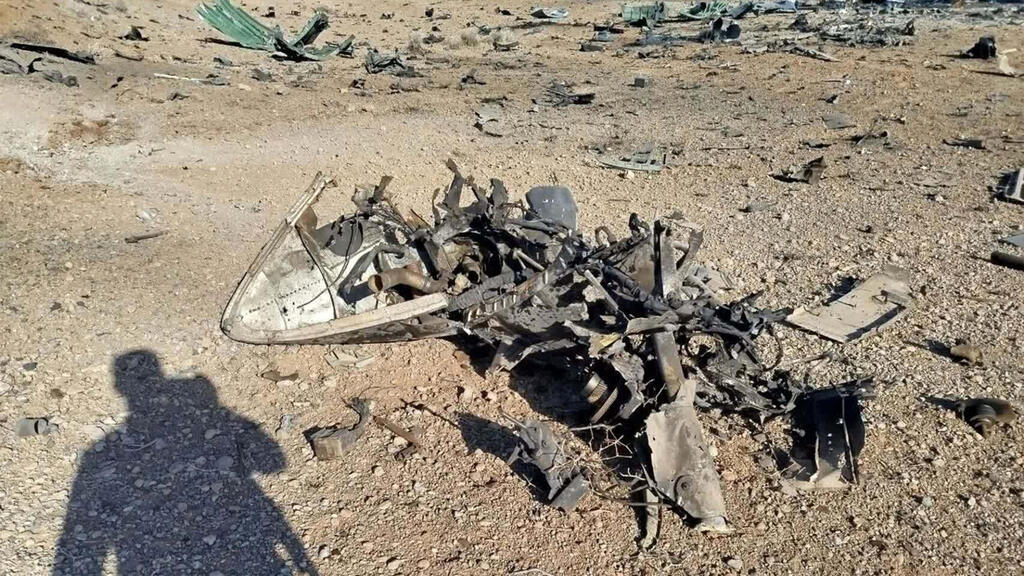
“The remains of the aircraft that the United States bombed before leaving the scene on the morning of the rescue
(Photo: AFP PHOTO / IRAN'S REVOLUTIONARY GUARD VIA SEPAH NEWS)
According to the report, the pilot maintained continuous contact with his unit from the outset and was rescued about six hours later by a force that included attack aircraft and helicopters that came under heavy fire. Surveillance planes and drones were dispatched to scan the area near the crash site but failed to locate the navigator or find any sign he was alive. The military was forced to classify his status as “unknown,” and he remained missing.
U.S. military officials told the Times that on the ground the navigator focused on evasion and survival. He climbed a mountain ridge about 2,100 meters (about 6,900 feet) high and wedged himself into a crevice where he hoped to remain hidden and safe until U.S. forces could find him.
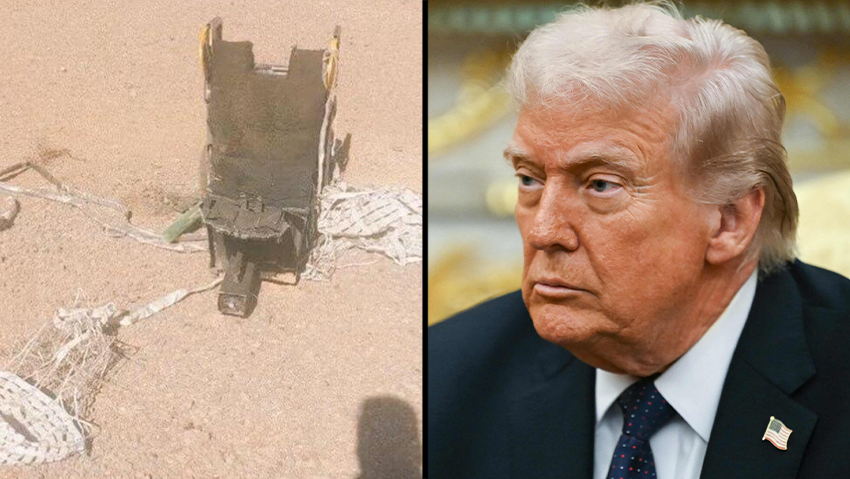
(Photo: ANDREW CABALLERO-REYNOLDS / AFP)
On Friday evening, about 14 hours after the aircraft was hit, U.S. Central Command, or CENTCOM, prepared to announce that the aircraft had been shot down and that the pilot had been rescued. Just as it was about to release the statement, however, U.S. personnel managed to locate the navigator using a beacon he was carrying.
The device is a small electronic transmitter designed to send out a radio signal to help pinpoint a person’s location. U.S. Air Force pilots and navigators carry such beacons along with secure communication devices to coordinate with rescuers. However, military officials stressed to the Times that aircrew are trained not to broadcast their location continuously, limiting use of the beacon because it can also be detected by the enemy.
Navy SEALs deployed, CIA spreads disinformation
According to the report, senior CENTCOM officials immediately shelved the planned announcement, and Defense Secretary Pete Hegseth called President Donald Trump, telling him that as long as there was a chance of finding the navigator, the rescue of the pilot should remain secret.
Iran, the report said, dispatched several search teams to the area, one of which gathered at the base of the mountain where the navigator was hiding, hoping to capture him and use him as leverage in negotiations with the United States.
CIA headquarters in Virginia
(Photo: Reuters )
Meanwhile, the injured navigator waited, aware that both U.S. and Iranian forces were racing to find him. A military official described the signals the navigator managed to send as intermittent. The military’s first task was to confirm that the person transmitting was indeed the navigator and not someone in Iran who had found his equipment.
At CIA headquarters in Virginia, the agency developed a deception operation to buy time for the U.S. military and the navigator. It spread a rumor inside Iran that the crew member had been found and was being transported out of the country by ground convoy, in hopes that Iranian forces would shift their search away from the area where the navigator was believed to be hiding and focus instead on roads leading out of the region. A senior administration official told the Times the operation appeared to have confused the Iranian forces searching for him.
On Saturday morning, the U.S. military made final preparations for a large-scale rescue operation involving about 100 special operations troops, led by Navy SEAL Team 6, with Delta Force units on standby if needed. A much larger conventional force, including helicopters, surveillance aircraft, fighter jets and aerial refueling planes, was also placed on alert to assist.
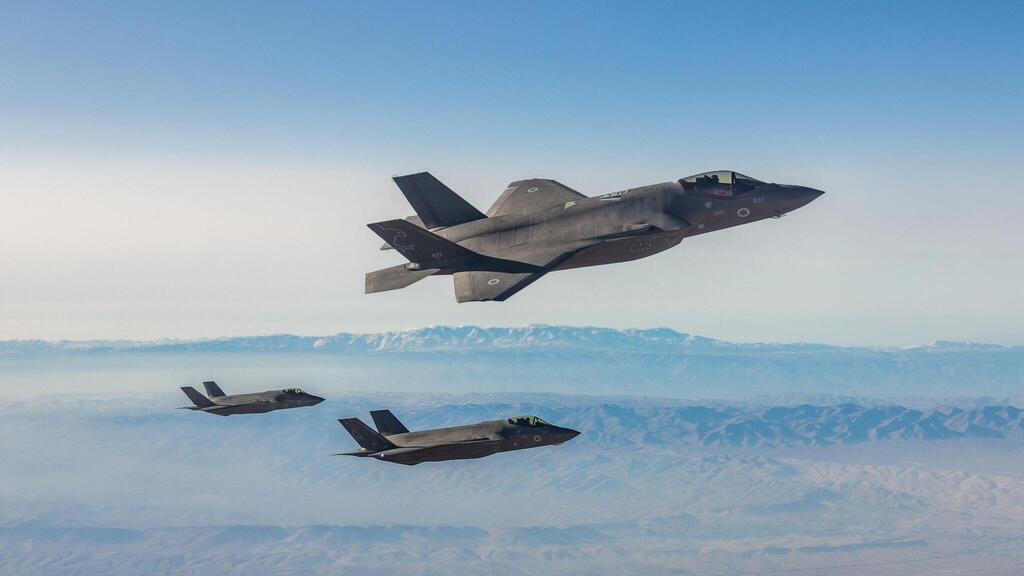
Israeli Air Force aircraft en route to Iran
(Photo: IDF)
A U.S. military official told the Times it took hours to determine the navigator’s location and confirm his identity. Military officials were assisted by the CIA, which used specialized technology unique to the agency to locate the crew member hiding in the mountain crevice and verify his identity. U.S. and Israeli officials gathered intelligence to determine whether the crew member was alone, surrounded by Iranian forces or had been captured. Once they determined he was alone, military officials waited for darkness to carry out the rescue.
Special operations helicopters carrying troops flew to the remote mountainous site where he was waiting.
Bombs lit the mountains orange
A senior U.S. official described the mission as one of the most challenging and complex in the history of U.S. special operations forces. The troops had to contend with the mountainous terrain, the likelihood that Iranian forces would quickly move to attack, and the unclear medical condition of the injured crew member.
Upon landing, the troops fired their weapons intensively to prevent any Iranian forces in the area from approaching. U.S. fighter jets dropped massive bombs that lit the surrounding mountains in orange. The troops themselves, however, did not engage in a direct firefight with enemy forces.
After reaching the navigator, they rushed him to a helicopter, which flew him to a makeshift sandy airstrip inside Iran that special operations forces had prepared in advance for possible rescues or other emergencies. The plan was to immediately transfer him and the rescue force onto two C-130 aircraft that were to fly them out of danger to an air base in Kuwait.
However, according to military officials, in a last-minute complication the front landing gear of at least one of the aircraft, and possibly both, became stuck in the sandy ground at the airstrip.
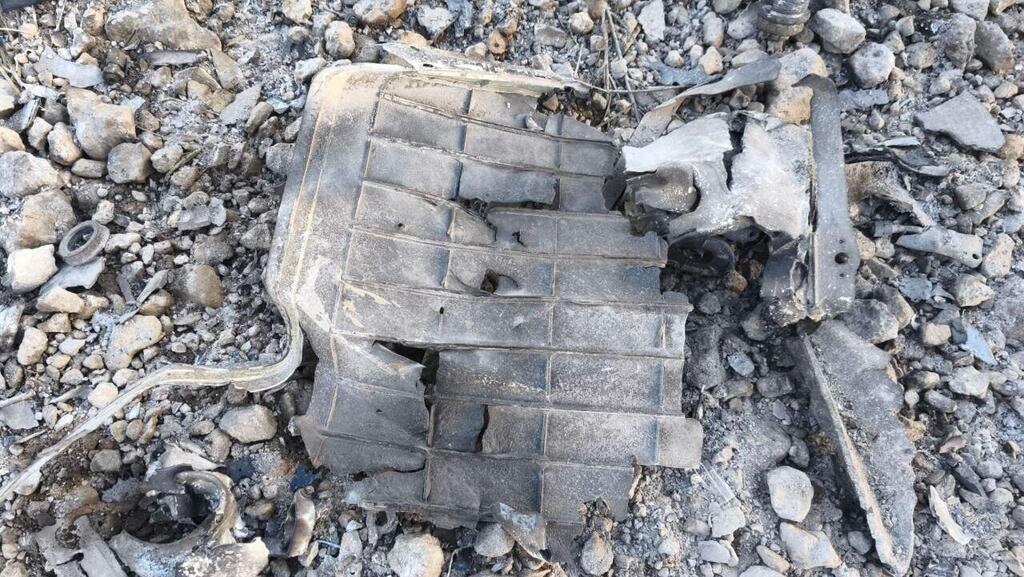
The wreckage of the US aircraft that crashed on Friday
Several more hours passed, efforts to free the wheels failed, and the troops called in three replacement aircraft.
Sources told The New York Times that senior officials at the Pentagon and CENTCOM waited anxiously as a mission that had seemed close to completion suddenly became uncertain again. Ultimately, the troops and the wounded navigator boarded the three replacement aircraft, and after sunrise the planes took off one after another from the remote airstrip, with the aircraft carrying the rescued navigator departing first.
After the rescue force left, U.S. fighter jets bombed the two disabled aircraft to prevent them from falling into Iranian hands. Once the last American troops exited the area, Trump announced the mission’s success.