

Over the years, Prime Minister Benjamin Netanyahu has attended the annual United Nations General Assembly many times, delivering speeches from its famous podium and meeting leaders from around the world. But since Oct. 7 and the war in Gaza, Israel’s international standing has deteriorated, while Netanyahu has become an increasingly controversial figure abroad. The International Criminal Court has issued an arrest warrant for him over alleged war crimes and crimes against humanity in Gaza.
In the past, a UN visit could serve as an opportunity to meet leaders and advance diplomatic initiatives, much like the summit U.S. President Donald Trump held Tuesday with leaders from Arab states. This time, however, that does not appear to be the case, with the Prime Minister’s Office citing “scheduling constraints” to explain the absence of meetings. Netanyahu’s diplomatic room for maneuver at the UN has narrowed sharply. His last speech was boycotted by 77 countries and delegations, and, as far as is known, he has generally avoided travel outside the United States because of the arrest warrant, with the exception of a visit to Viktor Orban’s Hungary last year and a secret visit to the United Arab Emirates during Operation Roaring
Cheers and protests: Netanyahu takes the podium last year
(Video: UN)


Gallery
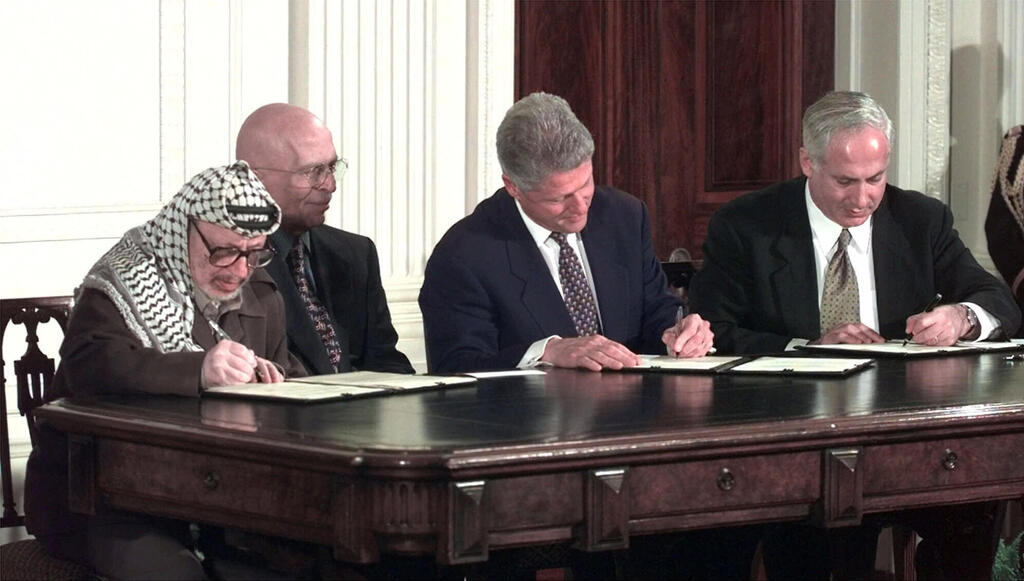
Netanyahu with Clinton and Arafat at the signing of the Wye River Memorandum in 1998
(Photo: AP/ Susan Walsh)
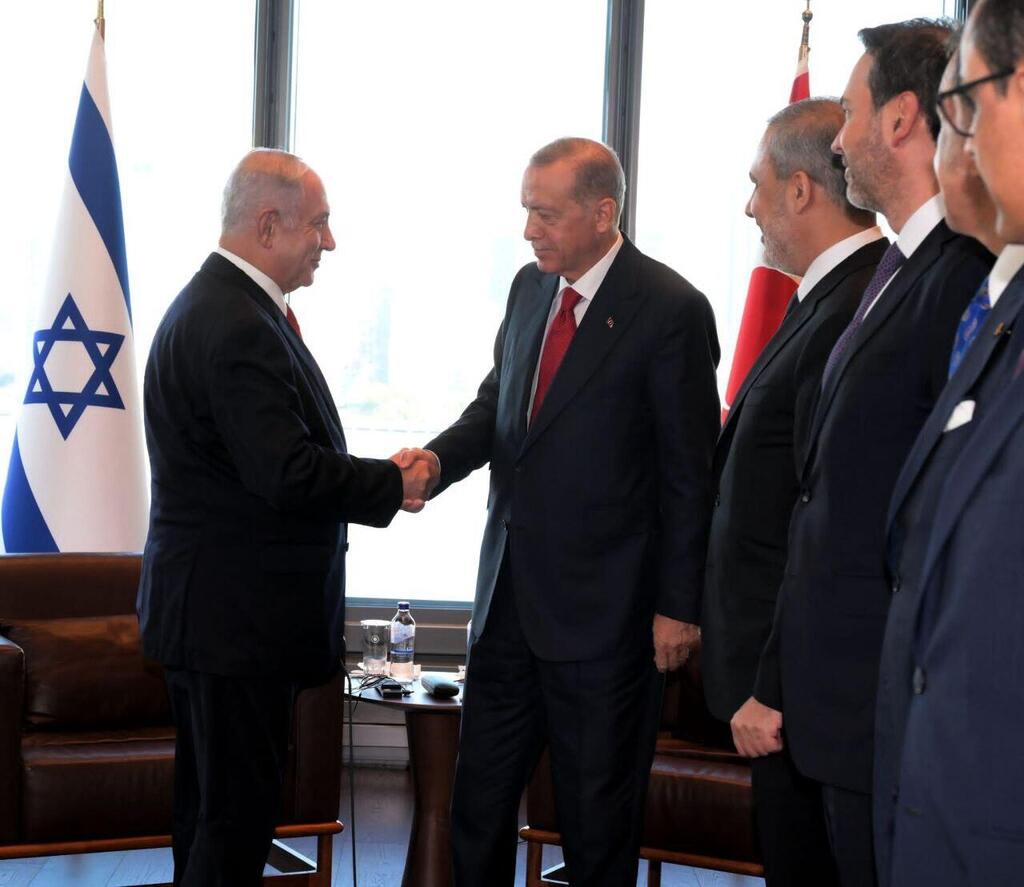
With Erdogan in 2023, when they discussed normalization with Saudi Arabia
(Photo: GPO)
Throughout his years in office and his visits to the UN, Netanyahu has delivered speeches that became deeply etched in the public memory, including his 2012 “bomb speech” and his call to the Palestinians a year earlier to “let’s talk dugri,” using the Hebrew word for speaking frankly. The trips were also used for meetings with U.S. presidents over the years: Bill Clinton, Barack Obama, Joe Biden and Donald Trump, whom Netanyahu also met during one of his more recent General Assembly visits.
It may seem almost unimaginable today, but in late September 2023, roughly two and a half weeks before the Hamas massacre, Netanyahu met Turkish President Recep Tayyip Erdogan, who has since compared the prime minister to Hitler. At the time, the two discussed the possibility of normalization with Saudi Arabia.
Netanyahu’s first UN visit as prime minister, rather than as Israel’s ambassador to the organization, came in September 1998, more than two years after he was elected. During that trip, he met Palestinian Authority chairman Yasser Arafat and then-U.S. President Bill Clinton at the White House, where Clinton urged the two to return to the peace process ahead of the signing of the Wye River Memorandum later that year.
During the same visit, Netanyahu also met then-UN Secretary-General Kofi Annan, as well as other leaders from around the world. That stands in contrast with more recent visits, during which he has avoided meeting current UN Secretary-General António Guterres. The 1998 trip was Netanyahu’s only visit to the UN during his first term as prime minister.
Eleven years later, in September 2009, roughly six months after returning to the premiership, Netanyahu again flew to New York for the General Assembly. His speech focused primarily on the Holocaust and Iran.
During that visit, he met then-U.S. President Barack Obama and Palestinian Authority President Mahmoud Abbas, with the American president once again urging the sides to pursue peace. Against the backdrop of the publication of the Goldstone Report, which criticized IDF conduct in Gaza during Operation Cast Lead, Netanyahu also met European leaders in an effort to contain the fallout from the report. He also met then-UN Secretary-General Ban Ki-moon.
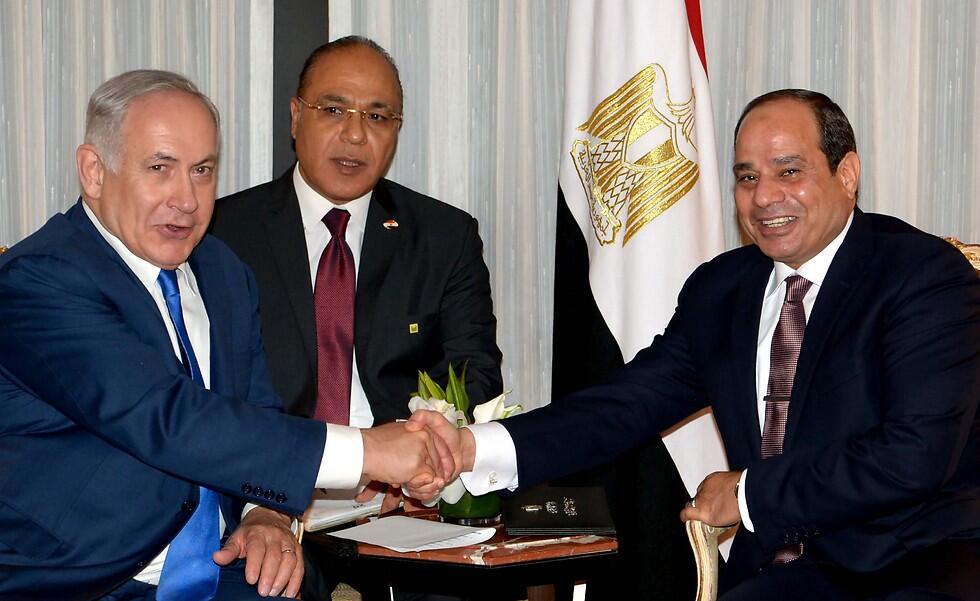
Egyptian President Abdel Fattah el-Sisi with Prime Minister Netanyahu at their first meeting in 2017
(Photo: GPO)
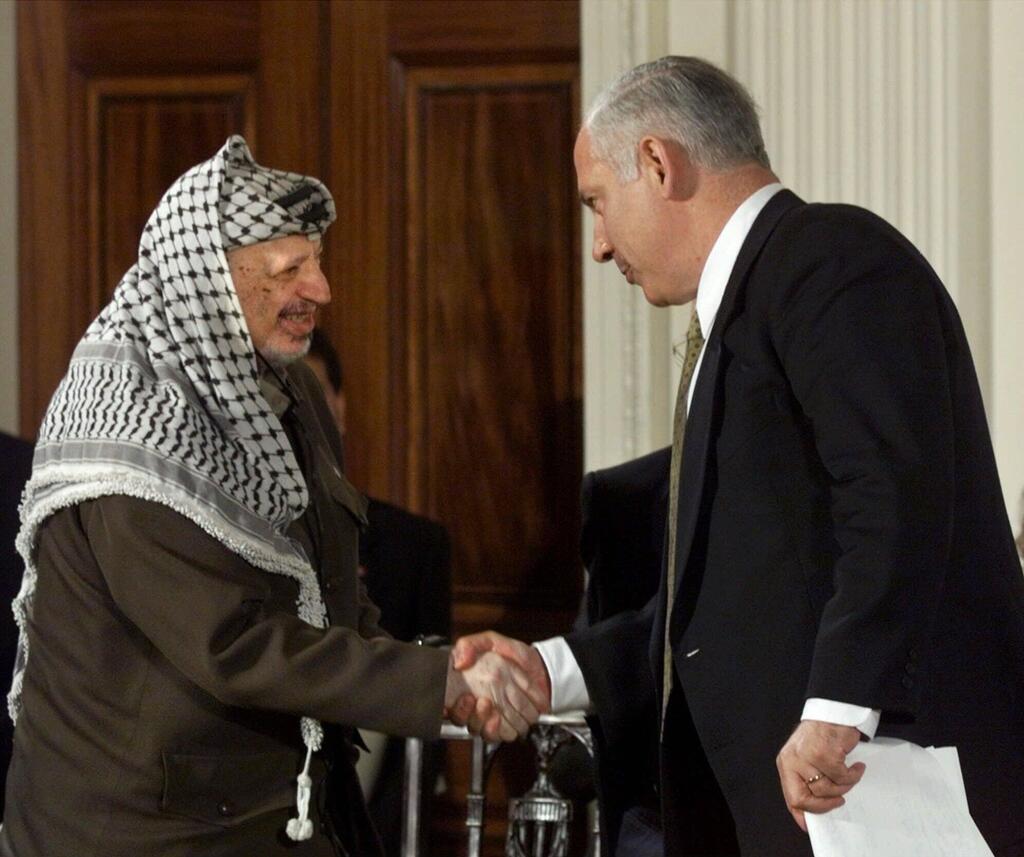
Netanyahu and the Palestinian Authority chairman in 1998
(Photo: AP/ DOUG MILLS)
Netanyahu went on to visit the UN many times over the years. Iran was generally at the center of his speeches and public statements, and despite his efforts to push the Palestinian issue to the sidelines, some of the leaders he met sought to revive diplomatic efforts aimed at resolving the conflict.
Netanyahu also met leaders considered more friendly toward Israel, as well as leaders from Africa and South America as part of efforts to strengthen Israel’s ties with countries on those continents. He held meetings with leaders from other regions as well. In 2014, for example, he met Indian Prime Minister Narendra Modi, the first meeting between Israeli and Indian leaders in a decade.
In 2017, Netanyahu met Egyptian President Abdel Fattah el-Sisi in New York on the sidelines of his UN visit. That same year, Netanyahu also met U.S. President Donald Trump, as well as Japan’s Shinzo Abe, Panama’s Juan Carlos and Rwandan President Paul Kagame. A year later, he again met Sisi and Trump.
By late September 2023, roughly two and a half weeks before Hamas’ surprise attack, Israel’s international standing and Netanyahu’s own position were very different from today. Netanyahu met Erdogan, as noted, and also held talks with Ukrainian President Volodymyr Zelensky, about a year and a half after Russia’s invasion of Ukraine.
He also met German Chancellor Olaf Scholz, with whom he discussed the sale of Israel’s Arrow 3 missile defense system to Germany.
During the same visit, Netanyahu met UN Secretary-General António Guterres, who has since become a harsh critic of Israel and was later declared persona non grata in Israel. Netanyahu also met then-U.S. President Joe Biden.
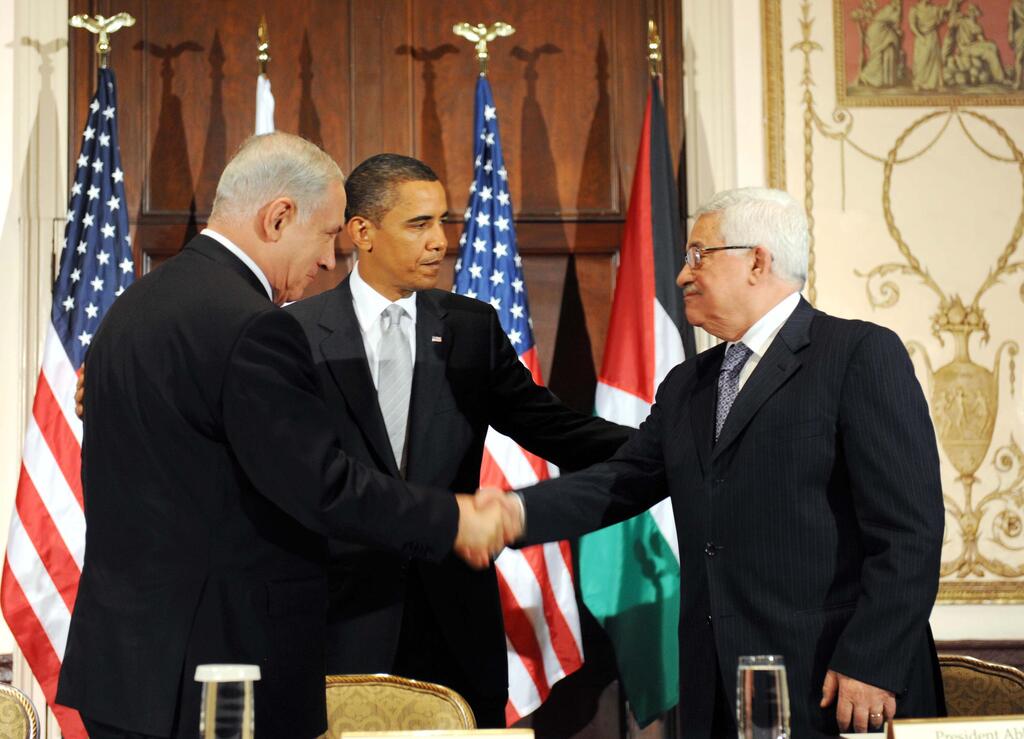
Abbas and Netanyahu shake hands with Obama mediating, September 2009
(Photo: GPO)
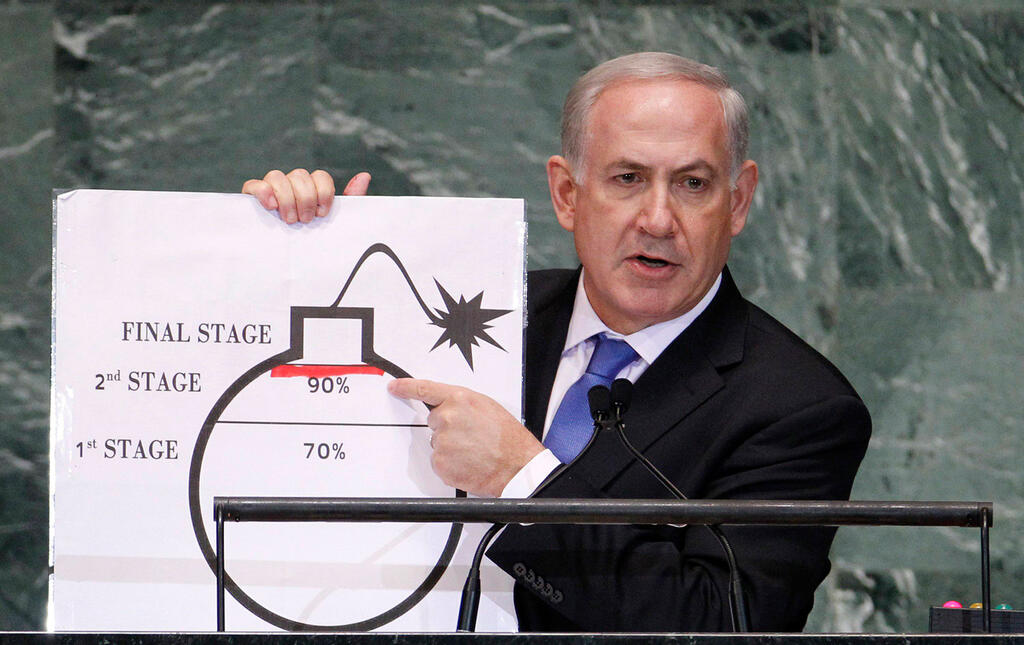
Netanyahu and his 2012 'bomb speech'
(Photo: Reuters)
Since the outbreak of the war, Netanyahu has attended the UN General Assembly twice, in September 2024 and again last September. His upcoming appearance will be his third General Assembly visit since Oct. 7.
In 2024, Netanyahu cut his visit short following the assassination of Hezbollah Secretary-General Hassan Nasrallah. During the trip, he met Dutch Prime Minister Dick Schoof and Serbian President Aleksandar Vučić, both considered friends of Israel. Netanyahu did not meet leaders who, even at that stage, were sharply criticizing Israel’s actions in the Gaza Strip.
Last September, Netanyahu addressed the UN and met Argentine President Javier Milei, who also lit a ceremonial torch at Mount Herzl during Israel’s Independence Day celebrations, as well as Paraguayan President Santiago Peña, considered a prominent supporter of Israel.
Netanyahu later met Trump at the White House, the fourth meeting between the two during Trump’s second term.
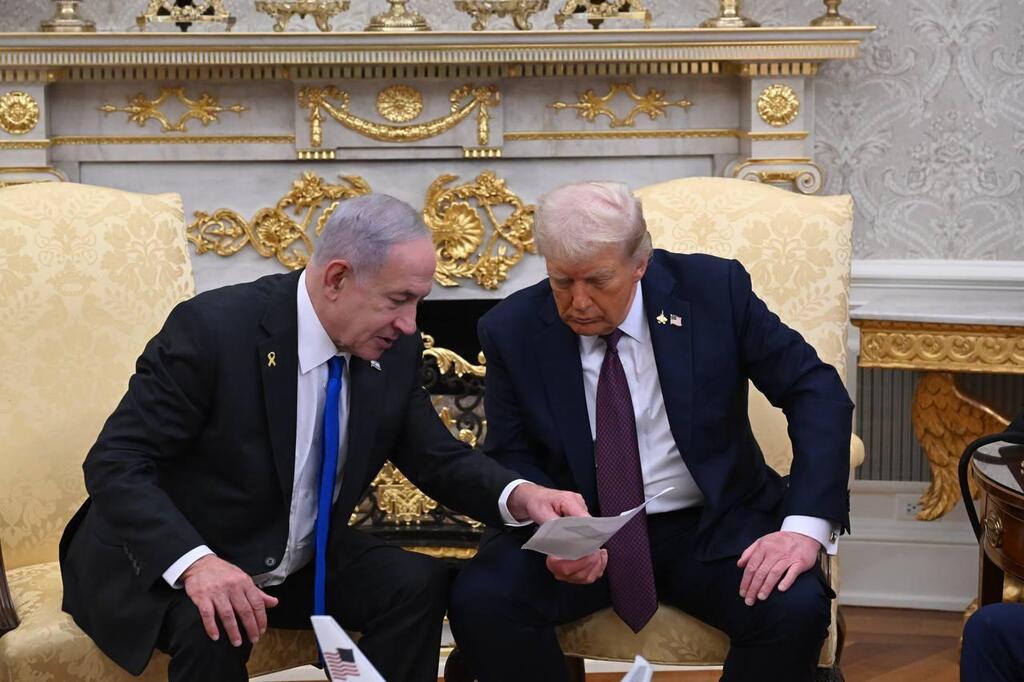
Trump and Netanyahu at the White House last September. No meeting is expected this time
(Photo: GPO)
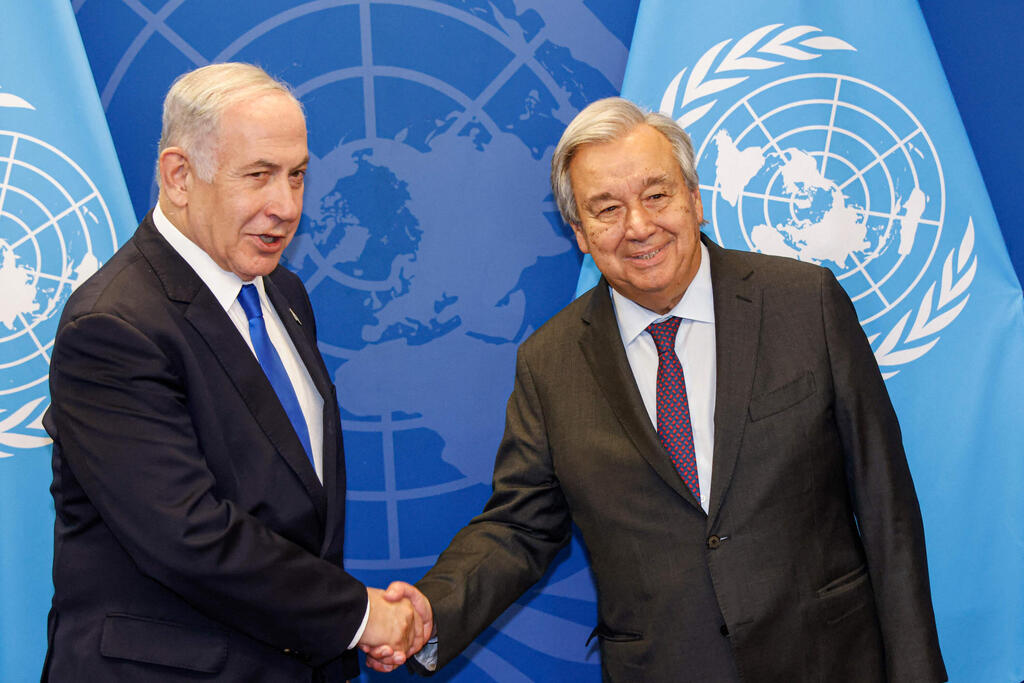
Netanyahu and Guterres in better days, September 2023
(Photo: KENA BETANCUR / GETTY IMAGES NORTH AMERICA / AFP)
On the upcoming visit, no meeting between Netanyahu and Trump is expected, nor is a meeting with billionaire Elon Musk, despite earlier discussions about one.
Netanyahu is scheduled to land in the United States on Thursday morning at a military airport in New Jersey, about a two-hour drive from the UN headquarters in New York. His speech is scheduled to begin at 2 p.m. New York time, 9 p.m. in Israel.
In an unprecedentedly short stay for an Israeli prime minister visiting the United States, Netanyahu is expected to spend only about six hours in New York. He will not stay overnight and is scheduled to fly back to Israel that evening. Netanyahu will also not bring journalists with him aboard the prime ministerial aircraft.
The short visit is due to concerns over possible security incidents and demonstrations expected against Netanyahu in New York, including protests by pro-Palestinian groups and Israeli demonstrators. At the same time, pro-Israel demonstrations by Jewish supporters are also expected.
Netanyahu’s speech is expected to focus largely on Iran and, according to officials, will include “a series of revelations about Iran and its efforts to rebuild.”
A senior official said the speech is expected to last about 40 minutes and will also include references to New York Mayor Zohran Mamdani, who has called Netanyahu the “architect of the genocide in Gaza.”
Mamdani’s remarks also prompted concerns in Israel over whether he would allow the prime ministerial plane, Wing of Zion, to remain at the airport until Netanyahu finishes his speech.
Netanyahu is also expected to strongly condemn the International Criminal Court in The Hague, which issued arrest warrants for him and former defense minister Yoav Gallant.