


According to the U.S. Treasury Department, Iran has transferred about one billion dollars to Hezbollah since the beginning of the year to rebuild the Lebanese terror group after its losses in the war with Israel. Much of the funding was channeled through money-exchange agencies and cash-based businesses, using legitimate financial mechanisms to disguise its origin and destination.
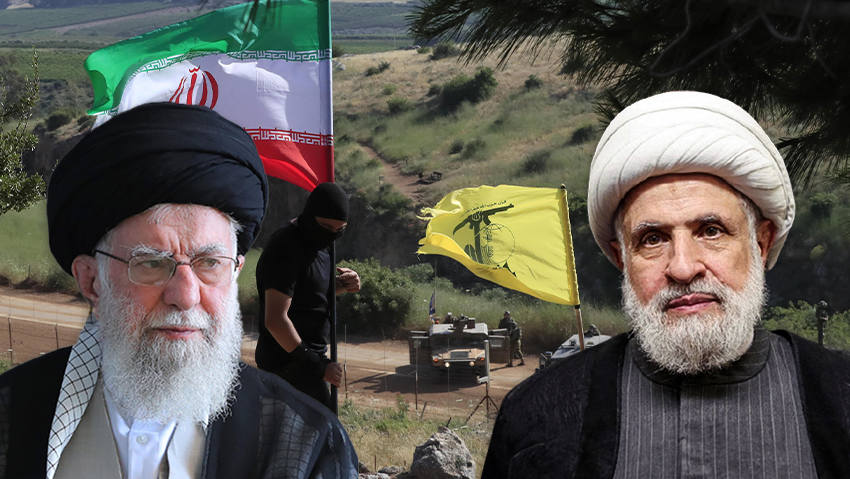
The department said the money is used to rebuild Hezbollah’s military capabilities and undermine the Lebanese government’s attempts to assert sovereign control across its territory. Mixing illicit funds with legitimate business activity, it warned, threatens the integrity and stability of Lebanon’s financial system.
Last week, a U.S. delegation visited Lebanon and delivered a blunt message to President Joseph Aoun, Prime Minister Nawaf Salam and other officials: Hezbollah’s funding channels must be cut as part of efforts to dismantle its weapons infrastructure. According to multiple reports, the delegation gave Lebanon a deadline through the end of the year to complete required reforms and tighten oversight of money-laundering networks. The delegation’s head reportedly warned that failing to stem Hezbollah’s financing could force the United States “to leave Beirut to its fate.”
The fall of Assad and Lebanon’s flight ban that upended the old routes
Nearly a year ago, on Nov. 27, the cease-fire between Israel and Hezbollah took effect. Even then, Hezbollah began attempting to rebuild its strength with large infusions of Iranian money and efforts to smuggle weapons through multiple channels.
Less than two weeks later, as Hezbollah tried to move Iranian weapons and cash through Syria, the Assad regime fell. With the new Syrian leadership declaring it would not allow weapons transfers through its territory, Syria was largely removed from the smuggling map. Lebanon also banned flights arriving from Iran, closing both the air and land corridors the IRGC had used for years.
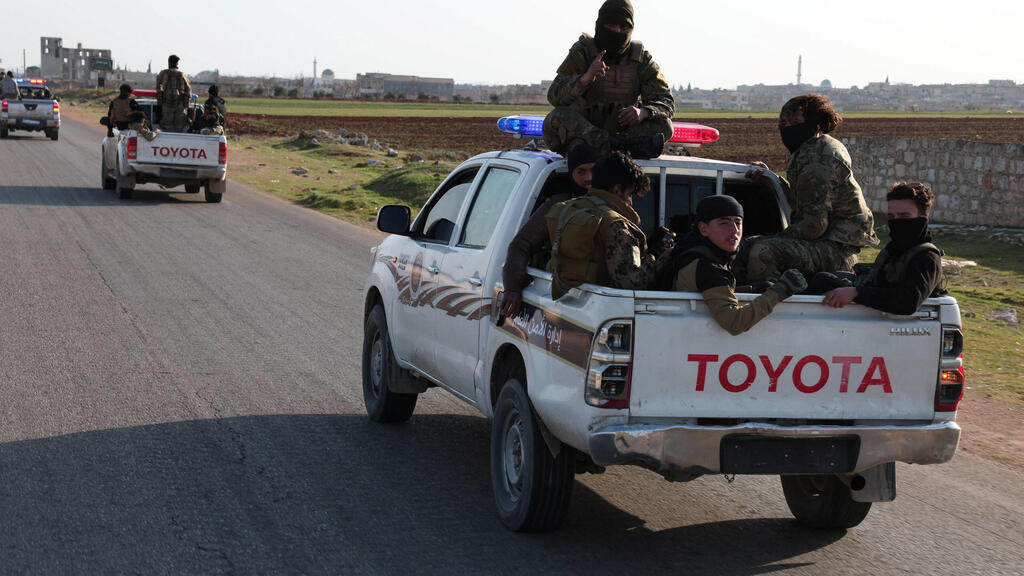
The Assad regime was toppled, and the new president declared he would act against the smuggling routes from Iran to Lebanon
(Photo: Reuters/Mahmoud Hassano)
Still, Iran and Hezbollah quickly adapted. They shifted smuggling networks to Turkey and Iraq, made greater use of maritime routes and relied on money-exchange agencies and cryptocurrency channels. “The U.S. disclosure of major IRGC financial support to Hezbollah, along with exposure of the smuggling methods, shows Iran and Hezbollah found alternative ways to overcome the geopolitical changes in Lebanon and the Middle East since the cease-fire,” the Meir Amit Intelligence and Terrorism Information Center wrote.
The center assessed that Iran will continue aiding Hezbollah’s military and civilian reconstruction to maintain its influence in Lebanon’s Shiite community and prevent Israel or Lebanese authorities from weakening or dismantling Tehran’s most important regional proxy.
It warned that the lack of decisive action by the Lebanese government or the international community to block Hezbollah’s financing and smuggling routes will allow Iran and Hezbollah to continue transferring funds and weapons with minimal disruption.
Through Turkey, by sea and with crypto: the new smuggling systems
Since its establishment in Lebanon, Hezbollah has been Iran’s preferred proxy in the “axis of resistance” against Israel. To maintain this strategic link, Hezbollah created Unit 4400, responsible for its weapons buildup and supply transfers. The IRGC’s Quds Force Unit 190 also built a combined network for smuggling arms, money and technologies that fueled Hezbollah’s military growth, especially its arsenal of more than 100,000 rockets and drones.
For years, Beirut International Airport served as a central air corridor for smuggling Iranian materiel into Lebanon. But as part of the cease-fire arrangements — and under U.S. and Israeli pressure — Lebanese authorities tightened oversight at the airport. On land, Iran moved large volumes of equipment through Assad’s Syria, until the regime’s fall and the new president, Ahmad al-Shar’a, declared he would no longer allow weapons transfers through the country.
Israel also eliminated senior IRGC officials involved in the transfer networks. Among them were Saeed Izadi, the Quds Force’s head of its “Palestine Branch,” who for two decades handled relations with Hezbollah, Hamas and Islamic Jihad for operations against Israel, and Bahnam Shahriari, commander of Unit 190, who managed the flow of money and weapons from Iran to Hezbollah and other proxies.
In response, Iran and Hezbollah built a new smuggling infrastructure centered on third countries, components shipped in pieces and reassembled in Lebanon, and maritime routes using civilian shipping lanes. According to the Meir Amit center, the shift from “weapons transport” to “independent production capability” inside Lebanon allows Hezbollah to rely less on vulnerable supply lines and more on local manufacturing based on Iranian know-how, parts and technology.
The center outlined several current tactics: smuggling arms, equipment and money through Turkey and Iraq; using money-exchange agencies; gold transfers; and maritime shipments either directly to Lebanon or routed through other countries.