

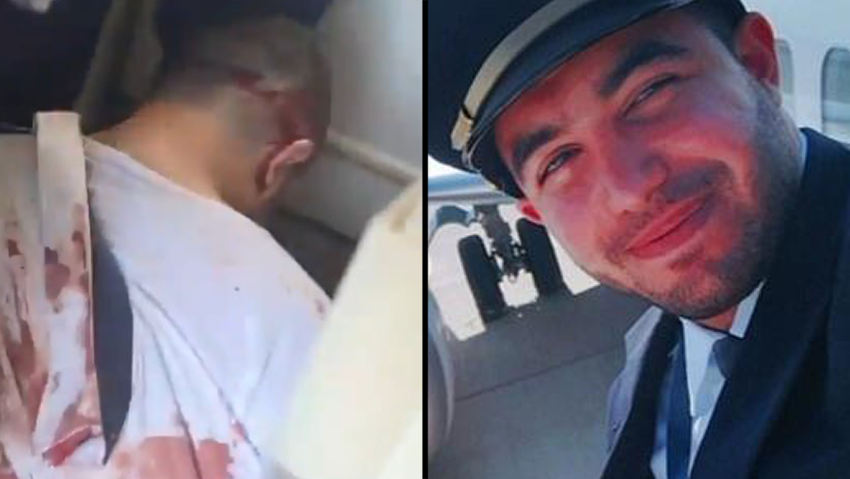
Four days have passed since Omani co-pilot Hamam al-Hammami tried to crash a flydubai flight bound for Israel, and the agencies responsible for background checks on foreign crew members flying into the country continued Sunday to shift responsibility among themselves.
In Israel in 2026, the pattern has become familiar: A failure occurs, only for it to emerge afterward that warnings had been issued that, had they been heeded, might have prevented it. In many cases, including the flydubai flight, those warnings came from the State Comptroller’s Office, a government watchdog whose standing has steadily eroded in recent years.
Under Israeli law, the state comptroller can issue recommendations but has no enforcement authority. In the past, however, comptroller reports commanded considerable respect both among the public and within government ministries. Politicization and a growing culture of evading responsibility and criticism have eroded that standing. Near the end of the previous Knesset’s term, there was even a controversial attempt to appoint Prime Minister Benjamin Netanyahu’s lawyer, Michael Rabello, to the position.
The post is currently vacant after the High Court of Justice ordered a new vote on the appointment. That dispute is only one example of the government’s relationship with the watchdog: A ynet review found that government ministries have failed to act on the comptroller’s recommendations in a range of areas in which deficiencies were identified.
‘A failure that cries out to the heavens’
Former state comptroller Matanyahu Englman warned as early as May 2024 of failures in the oversight and screening of aircrew members arriving in Israel. Although he recommended that the National Security Council conduct a comprehensive review together with the Transportation Ministry, Finance Ministry, Israel Airports Authority, Shin Bet domestic security agency and police, those recommendations appear not to have been implemented.
“Basically, the comptroller was right about everything he wrote, from A to Z,” said Danny Shenar, who headed the Transportation Ministry’s Security, Emergency and Cyber Division for 25 years.

Former state comptroller Matanyahu Englman
(Photo: MUNI EXPO 2026)
“He says a state body needs to be established, that everything cannot rest with MAMLAT,” Shenar said, referring to the Aviation Security Operations Center, an operational body under the Transportation Ministry’s security division responsible for issuing security clearance for foreign flights seeking to land in Israel. “And that staff work needs to be done. It wasn’t done.”
Eyal Hulata, who headed the National Security Council under the government of former prime ministers Naftali Bennett and Yair Lapid, was equally critical.
“Nothing has been done since the comptroller’s report in 2024,” Hulata said. “It’s a failure that cries out to the heavens.”
Similar problems emerged in comptroller reports examining government failures in southern and northern Israel since 2023 and during the war.
A September 2025 report found that a forum of ministry directors-general held 27 meetings without making a single operational decision, that a civilian emergency command center was shut down within three months and that 43 emergency centers were operating without coordination.
A June 2025 report found that the evacuation of 43 communities along Israel’s northern border was carried out without coordination among government ministries. In February 2026, the comptroller found that the evacuation of 210,000 residents was marred by systemic failures and that billions of shekels transferred to hotels were not adequately monitored.
Engelman has also said the 2021 Mount Meron disaster could have been prevented. In 2008, about 13 years before 45 people were killed in a crush during the annual Lag BaOmer pilgrimage at the tomb of second-century Jewish sage Rabbi Shimon Bar Yochai, the State Comptroller’s Office had already published a report detailing safety deficiencies at the site and problems with preparations for the event. The disaster was Israel’s deadliest civilian catastrophe before the Oct. 7, 2023, Hamas attack.
The warnings have extended beyond civilian matters.
In December, Englman published his annual security report, which he said “should keep government ministers awake at night.”
The report identified “a series of deficiencies” across a range of security-related areas, including preparedness for a terrorist attack on the Tel Aviv metropolitan area’s light rail system, security at Ramon International Airport in southern Israel and follow-up work on protecting critical infrastructure against missiles, rockets and other aerial threats.
It also examined the employment of consultants by the Defense Ministry, the ministry’s oversight of defense companies’ use of marketing agents and intermediaries in defense export deals, measures to prevent biological pathogens and knowledge that could be used to develop biological weapons from leaking and the management and security of Defense Ministry databases.
A coordinator is no magic solution
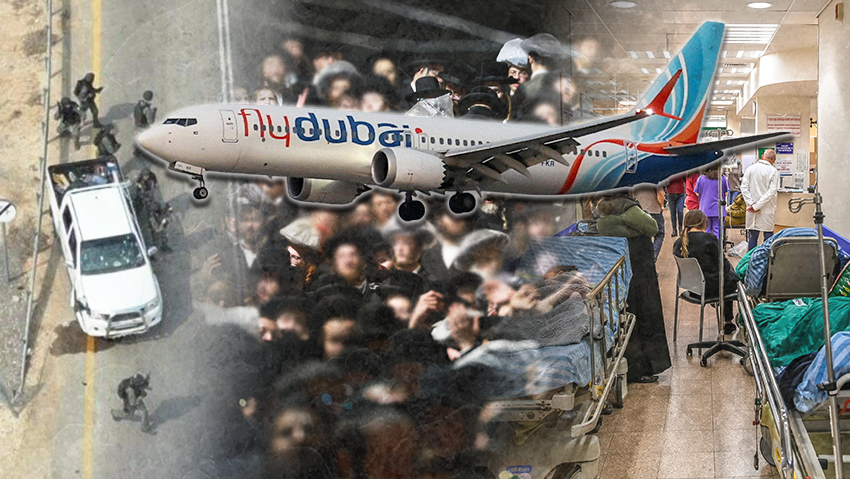
Following the flydubai incident, officials are again calling for the appointment of a special coordinator and a central body to oversee the issue.
Einav Peretz, an accountant and expert on governance and auditing who formerly chaired the association of municipal auditors and now heads the National Center for Municipal Knowledge and Management, told ynet that appointing a coordinator is not a cure-all.
(Photo: REUTERS/Ammar Awad, Haim Horenstein, Tal Shahar, IDF)
“We need to be careful and not say about everything, ‘We need a coordinating body here,’” she said. “There is a chain of activity, and you have to decide which government ministry leads the response. If it’s the Transportation Ministry, then the entire chain of events needs to be under it, and someone needs to manage it.”
Peretz said a distinction must be made between a prolonged, government-wide crisis and a failure to enforce procedures that already exist.
“You have to separate when a coordinator is needed, when the issue is acute and ongoing, from when there is a procedure that isn’t being followed — in which case it needs to be followed and one body needs to be responsible for it,” she said.
“I don’t think there was any lack of clarity in the flydubai case over who does what. There were procedures there. They simply weren’t followed. The gap here is between a clear procedure and its actual implementation. There is a procedure, and it is clear: Pilots must not hold citizenship from an enemy state.”
For broader, persistent problems, such as crime in the Arab sector or the rehabilitation of communities in the north and south, Peretz said a coordinating body under the Prime Minister’s Office is necessary — but only if it has the authority to act.
“Otherwise, every ministry will continue working on its own,” she said.
Peretz also pointed to the limited impact of audit reports when their findings are not implemented.
“Their success will be measured when they are implemented,” she said. “It depends on the comptroller, how personal the conclusions are, how the deficiencies are followed up and what happens if they aren’t corrected.”
“An audit report is the beginning of the correction process,” she added. “To complete it, you need a responsible body, deadlines, follow-up and consequences for failing to correct the deficiencies. There also needs to be an enforcement mechanism for state comptroller reports.”
No enforcement powers — and no comptroller
The State Comptroller’s Office, which Englman headed until July and which has remained without a permanent leader amid controversy over the process to choose his successor, operates within legal limits that prevent it from enforcing its recommendations. It can identify shortcomings and warn of the dangers they pose, but it cannot compel government bodies to fix them.
The agencies and ministries it audits are legally required to submit plans for correcting deficiencies. Oversight of whether those plans are implemented, however, rests with the Knesset, primarily through its State Control Committee, which can summon officials to account for their actions. Media coverage and the resulting public scrutiny can also help pressure agencies to implement recommendations.
In other words, Israeli law deliberately established the state comptroller as a watchdog and advisory authority, not an enforcement body.
Although government agencies are sometimes portrayed as completely ignoring the comptroller’s recommendations, that is not entirely accurate. Agencies do implement recommendations and correct deficiencies, though not all of them.
About 20% of the reports issued by the State Comptroller’s Office each year are follow-up audits, in which investigators revisit previously examined issues to assess what has changed. Those reports also identify deficiencies that have been corrected.

Michael Rabello
(Photo: Shalev Shalom)
In June, the Knesset held a vote to choose Englman’s successor between Rabello, Netanyahu’s attorney, and retired Supreme Court Justice Yosef Elron.
A month later, High Court justices invalidated the process, ruling that it had been fundamentally flawed and ordering another vote. That vote has yet to take place.
The decision came after several lawmakers photographed themselves casting ballots for Rabello even though the vote is required by law to be secret.
A growing workload
The State Comptroller’s Office does not focus only on national security.
The Oct. 7 massacre and its effects on Israeli society underscored the importance of the country’s social welfare services both during emergencies and in everyday life.
In addition to routine responsibilities such as assisting families of children with special needs, at-risk youth, older people and families facing financial hardship, social workers have been tasked with supporting bereaved families, evacuees, military reservists and people affected by the war.
At the same time, conditions in municipal social services departments have continued to deteriorate. The Welfare Ministry and local governments have struggled to fill positions, leaving social workers with growing caseloads.
In 2021, the Welfare Ministry published an internal report examining difficulties in recruiting social workers for municipal welfare departments. But a recent state comptroller report found that the ministry had not prepared an overall budget estimate detailing the cost of fully implementing the report’s recommendations.
Another unresolved issue is workload. The ministry has not established a maximum number of cases that an individual social worker should handle, leaving caseloads to continue growing.
“Although the Welfare Ministry was aware of social workers’ workloads, it has not yet completed development of a new formula” used to determine the number of positions funded in each municipality, the comptroller said in a June 2026 report.
That remained the case “even though two years have already passed since the outbreak of the war, which exacerbated the manpower shortage in municipal social services departments,” the report said.
A year and a half to see a psychologist
The war has also presented the health system with unprecedented challenges, including treating large numbers of wounded people, coping with surging demand for mental health care and addressing inadequate protection at hospitals against missiles and other attacks.
As early as November 2023, the state comptroller warned of gaps discovered during visits to communities near Israel’s borders. Among them were shortcomings in protected spaces at some hospitals that required immediate attention, particularly in rooms where lifesaving treatment is provided.
(Photo: Nachum Segal)
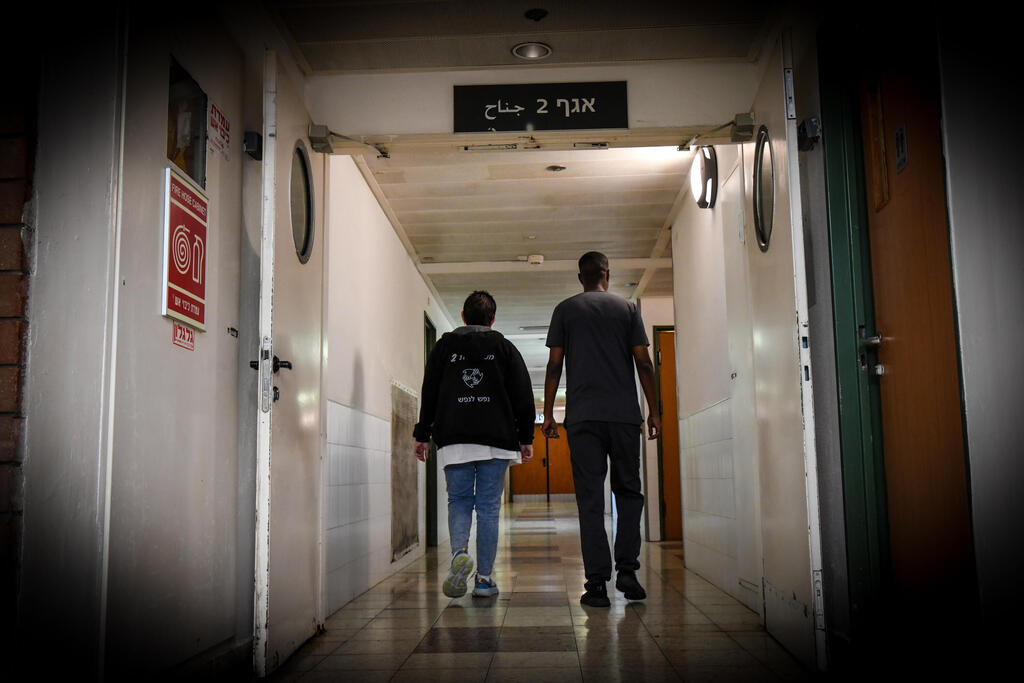
A state comptroller report published in early 2026 examining hospital protection between January and September 2024 found serious deficiencies that remained far from resolved.
About 56% of hospital beds at the 27 general hospitals examined — roughly 10,500 of 18,900 — lacked adequate protection. About 41% of operating rooms, 168 of 406, were also unprotected. The audit found that a significant proportion of medical imaging equipment and catheterization rooms were similarly unprotected.
In long-term care facilities, including geriatric, psychiatric and rehabilitation hospitals in the Health Ministry’s Dan district in central Israel, about 93% of beds lacked adequate protection, including beds located in areas classified as the “most protected available.” That amounted to 1,860 of 2,000 beds.
The war also exposed longstanding shortcomings in Israel’s mental health system, which had faced chronic funding and staffing shortages even before Oct. 7.
A sharply critical state comptroller report published in February 2025 painted a bleak picture of the mental health response available to Israelis following the Oct. 7 attack and during the war.
Even now, despite expanded services through health maintenance organizations, progress on the Health Ministry’s national mental health program — budgeted at 1.4 billion shekels — and new wage agreements in the system, patients seeking psychologists or psychiatrists through the public health system continue to face extremely long waits.
A November 2025 survey by the Forum of Organizations for Public Psychology found that waiting times for publicly funded psychological treatment averaged as long as 18 months.
Short on protection, short on equipment
In December 2025, the state comptroller published a report on shelters and protective infrastructure in Israeli municipalities, warning that about 25% of students — roughly half a million children and teenagers — lacked adequate protected spaces at their schools. As a result, many would be unable to attend school during wartime.
A survey of school principals conducted by the State Comptroller’s Office found that at 39% of schools, not all students could reach protected spaces within the required warning time.
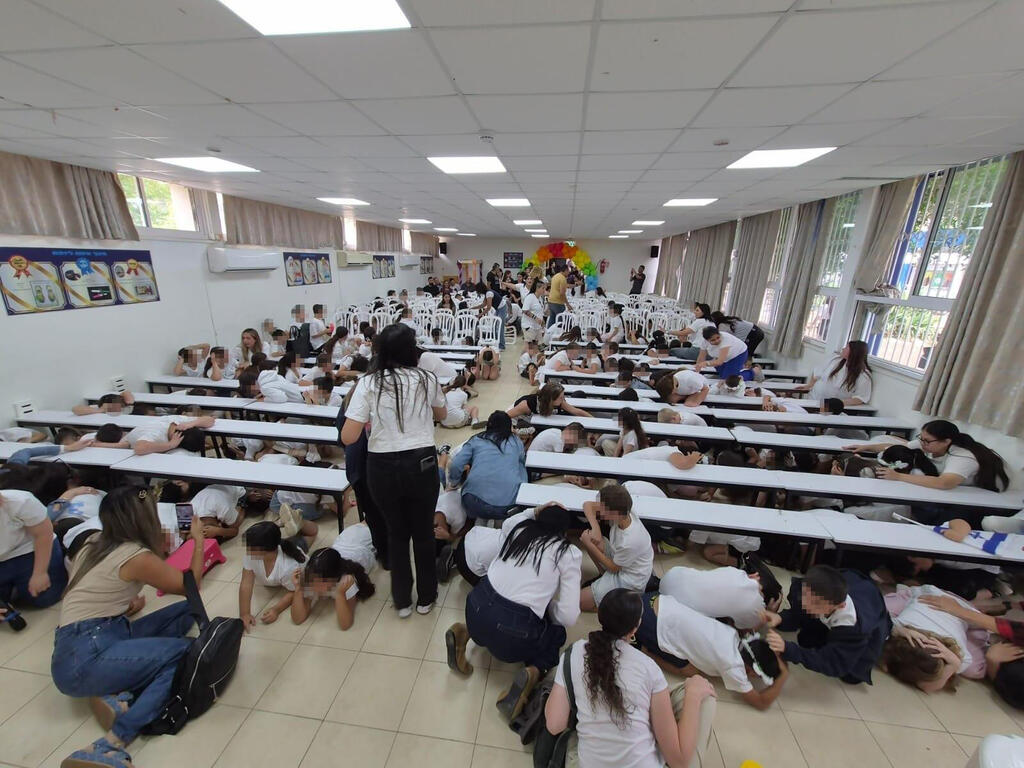
Students take cover in a classroom during rocket sirens in Kiryat Shmona
(Photo: from social media)
The Knesset Education Committee and State Control Committee held hearings on the findings. The report found that 14% of educational institutions had no protective infrastructure at all, 24% had partial protection, 24% had protection meeting the required standard and 38% had protection exceeding the standard.
In another audit, the comptroller examined the psychological toll of the war on students.
Rates of emotional distress among children were already high before Oct. 7, with 61% of parents reporting that their children experienced difficulties between 2018 and 2023.
The comptroller found that about 53% of middle and high school students experienced psychosomatic symptoms at the beginning of the war. Yet most parents whose children were struggling did not seek help from local educational psychology services, which operate in schools and kindergartens, because they were unaware the services existed. The gap was particularly pronounced among Arab and ultra-Orthodox Jewish families.
The comptroller also warned that the Education Ministry had not updated for more than 35 years the formula governing the ratio of educational psychologists employed by local authorities to the number of students they serve.
As a result, children face waits of about 55 days for educational psychology services, while parents who need urgent appointments are often forced to pay for private treatment.
A separate audit found that despite recommendations in a 2021 state comptroller report and an Education Ministry strategic process conducted in 2021 and 2022, schools remained inadequately equipped for digital learning in both routine periods and emergencies.
An Education Ministry technology survey conducted in early 2023 found that about 23% of responding schools had a low level of digital equipment and about 66% had a medium level.
Surveys of principals and parents conducted by the State Comptroller’s Office found that significant shortages of equipment for remote teaching and learning persisted during the war, particularly among students, affecting about 72% of schools, but also among teachers, affecting about 48%.
The shortages reduced schools’ ability to conduct remote learning and undermined its effectiveness. Among principals whose schools did not conduct remote learning during the emergency, 27% cited the lack of equipment as one of the main reasons.