

U.S. President Donald Trump has broken countless conventions in American politics since storming onto the political scene a decade ago, particularly since returning to the White House last year. But for many in the United States, his latest move, airing advertisements promoting himself at taxpayers’ expense, is being seen as a step too far even by Trump’s standards. Criticism in recent days has also come from members of his own Republican Party, which is fighting to retain control of Congress in the midterm elections five weeks from now.
The controversy erupted last Wednesday, when a 29-second advertisement began airing on U.S. television and streaming services. A montage of images of Trump plays to JMSN’s song “Love Me,” as the president declares: “Together we will defeat communism, socialism and Marxism in America once and for all.”
Trump's advertisement


At the end of the ad, UFC chief Dana White is heard praising Trump: “He is the toughest, most resilient person that I’ve ever met, and nothing was going to stop him from fighting so hard for the country he loves.”
Along the bottom of the screen appears the disclosure: “Paid for by the U.S. Government.”
A second Trump advertisement later aired with the same notice that the government had financed it. It featured footage from a speech Trump delivered at Mount Rushmore as part of celebrations marking the 250th anniversary of U.S. independence.
“Never has any nation celebrated a victory as glorious as this victory,” Trump is heard saying in the video.
The advertisements quickly triggered an uproar because they promote Trump personally while being financed by the government, raising questions over whether they violate U.S. laws restricting the use of public funds for political propaganda.
A group of Democratic lawmakers quickly appealed to the White House, demanding that the ads be removed and that the administration disclose how much money had been allocated to them. The administration did not comply, and at the beginning of this week a third advertisement praising Trump began airing.
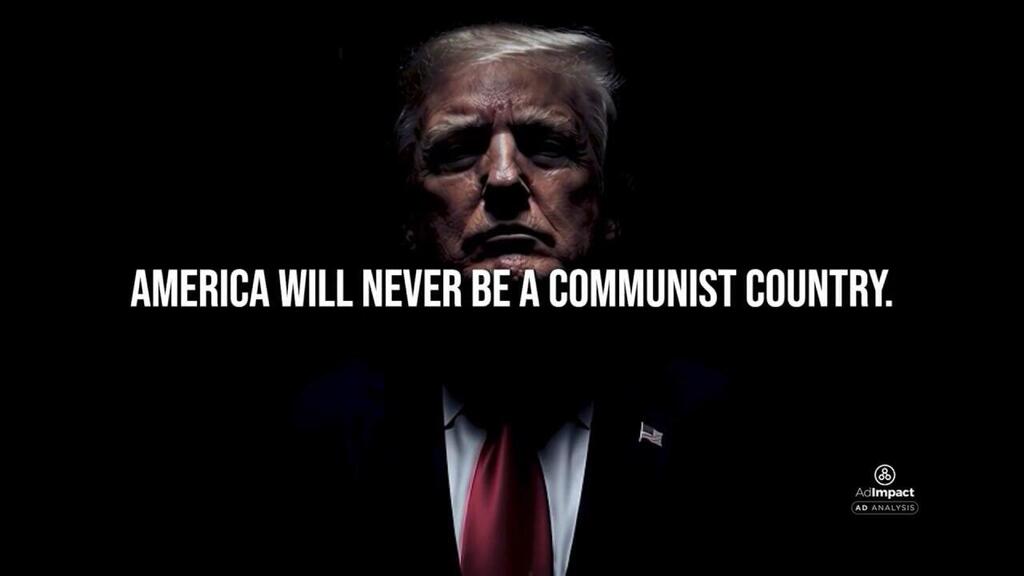
In the latest spot, Trump is presented as a fighter promising to confront what he describes as existential threats to America’s future. He is seen walking down a corridor as audio plays from a speech he delivered during the 2024 presidential campaign.
“This is the final battle,” Trump says. “With you at my side, we will demolish the deep state. We will expel the warmongers from our government. We will drive out the globalists. We will cast out the communists, Marxists and fascists. We will throw off the sick political class that hates our country. We will rout the fake news media and we will liberate America from these villains once and for all.”
The new advertisement is nearly identical to a video Trump posted on his Truth Social account during the 2024 presidential campaign. Only the closing seconds of the original video, which featured campaign branding and contact information, were removed.
The administration has not disclosed how much it paid for the various advertisements, which have aired across multiple television networks, including during NFL games.
According to AdImpact, which tracks advertising spending in the United States, the ads have cost taxpayers at least $1.4 million. The actual figure could be significantly higher depending on how the networks classified and priced the spots.
Numerous legal experts have argued that the advertisements, particularly the third one, which clearly repurposes material from Trump’s election campaign, may violate federal restrictions against using government funds for publicity or propaganda.
Another federal law, the Hatch Act, restricts government employees from engaging in partisan political activity in their official capacity. The president himself is exempt from those provisions, but officials involved in preparing or distributing the ads could potentially face scrutiny.
“The president and his administration have gone from breaking the law to trampling it,” Norm Eisen, who served as a White House special counsel for ethics and government reform under President Barack Obama, told The New York Times.
Richard Painter, who served as the White House’s chief ethics lawyer under President George W. Bush, also expressed astonishment at the administration’s latest move.
“You watch all three ads, they’re sheer propaganda,” Painter told The Associated Press. “This is increasingly looking like what authoritarian governments do to promote their leaders.”
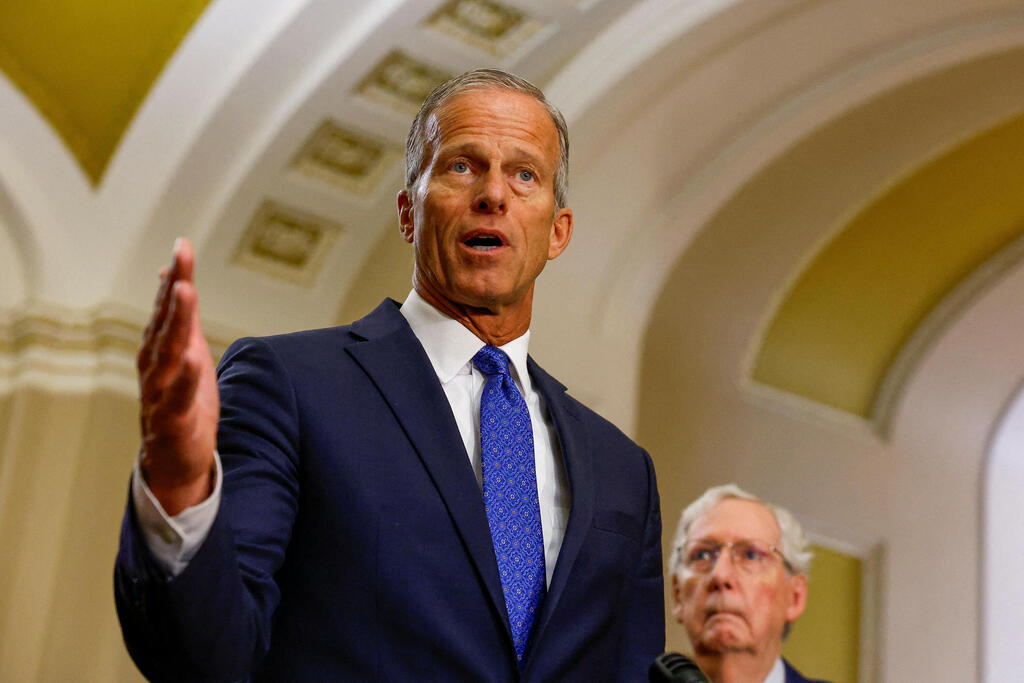
John Thune
(Photo: REUTERS/Piroschka van de Wouw)
The timing of the advertisements has added to suspicions about the political purpose behind them. The midterm elections are scheduled for Nov. 3 and are widely viewed as a referendum on Trump’s second term, with control of Congress at stake.
Trump’s approval ratings have fallen amid the war with Iran and the rise in prices that has accompanied it for ordinary Americans.
Trump and Republicans are deeply concerned about losing control of the two chambers of Congress, the Senate and the House of Representatives.
Democratic control of even one chamber would allow the party to block attempts by Trump to advance initiatives requiring new legislation. It would also give Democrats significantly greater authority to open congressional investigations into the president and senior members of his administration.
Democrats have already promised investigations over allegations that Trump has used the presidency during his second term to advance his business interests and those of people close to him.
Criticism of the government-funded advertisements promoting Trump has come from both sides of the political divide.
Senate Majority Leader John Thune publicly objected to the administration’s conduct, although he appeared careful to soften his criticism and avoid a direct confrontation with the president.
“It’s a great message. I like the message. But it shouldn’t be paid for with taxpayer dollars,” Thune told reporters Monday.
Louisiana Republican Sen. John Kennedy, considered an ally of Trump, also said that no elected official or government employee should use taxpayer money to promote themselves.
“I don’t think any public official, including President Trump or Kristi Noem or John Kennedy, should spend public money on private ads for themselves,” Kennedy told CBS’ Face the Nation. “Now, the White House sees it differently,” he added. Democrats, as expected, have been far harsher.
A group of lawmakers who demanded last week that the White House remove the advertisements compared them in a letter to White House Chief of Staff Susie Wiles to the sort of government propaganda associated with North Korea.
“This is the sort of government propaganda one might expect in North Korea, not the United States of America, and it is an egregious and illegal misuse of Americans’ hard-earned tax dollars,” they wrote.
Rep. Jamie Raskin, the top Democrat on the House Judiciary Committee, said the advertisements “may be felony criminal theft and conversion of government property for political campaign purposes.”
Raskin, who could gain the authority to compel administration officials to testify before the committee if Democrats take control of the House, said Trump would not necessarily be the only person facing investigation over the advertisements.
Officials involved in preparing them could also face scrutiny over whether they violated restrictions on political activity by government employees.
A former Trump campaign official, speaking to CNN, expressed deep concern about the potential consequences. “It’s stupid, stupid, stupid beyond belief,” the former official said. “Everybody there is going to get subpoenaed. This is going to be bad.”
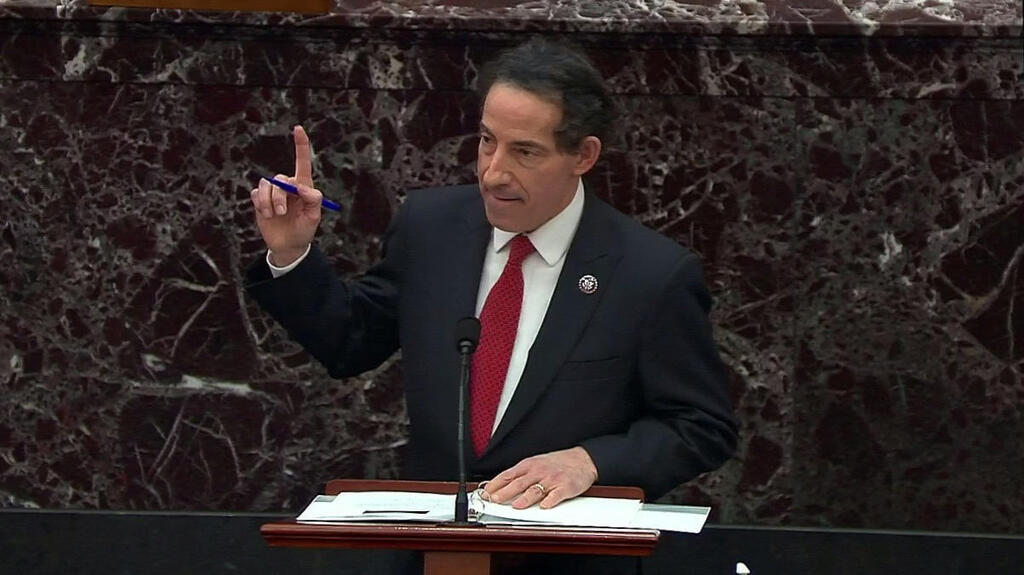
Rep. Jamie Raskin
(Photo: Reuters)
The administration, for its part, insists that the advertisements violate no law or regulation.
The White House has described them as “public service announcements” and said their purpose is to remind “Americans to love their country and understand what makes it worth defending, at home, at our borders and abroad.”
Officials have insisted the advertisements are “clearly not political,” stressing that Trump himself is not on the ballot in the midterm elections.
The White House has also compared them with advertisements aired by previous administrations. Among the examples it has cited are advertisements during Joe Biden’s presidency encouraging Americans to receive COVID-19 vaccines, as well as advertisements under George W. Bush promoting changes to Medicare.
The Bush-era advertisements also caused controversy at the time. The Government Accountability Office found that some of the administration’s promotional material contained political elements, although the legal findings varied depending on the specific material and how it was presented.
Painter said comparisons with the Bush administration offered little defense for what is happening now.
“They really shouldn’t have done it the way they did,” he said of the advertisements produced during the Bush years, before he joined that administration. “But it’s nowhere near as bad as what’s happening here. It’s not even close.”