


The government told the High Court of Justice late on Sunday that it is prepared to consider a proposal by the justices to reverse the dismissal of Attorney General Gali Baharav-Miara through a special advisory panel tasked with overseeing the dismissal of senior legal officials.
The government said it would return the matter to the Grunis committee—named after former Supreme Court Chief Justice Asher Grunis, who has previously led it—on the condition that the panel can convene without a former justice minister or attorney general, and that the process can be completed within two weeks of its request.

The court issued a conditional order earlier this month in response to petitions against Baharav-Miara’s removal and urged the government to cancel the dismissal using the ministerial committee it had established.
The justices, led by Deputy Chief Justice Noam Sohlberg, recommended that the government adhere to a more rigorous procedure outlined in a 2000 Cabinet decision, which implemented recommendations from the Shamgar Commission—a government-commissioned panel that created safeguards against politically driven firings of key legal officials.
In a sharply worded response, the government argued that the court’s orders were unlawful, undemocratic and in conflict with its authority to reverse decisions made by previous administrations. “These orders violate the most basic principle that the body that enacted a policy has the right to revoke it,” the government said. “The court is overturning precedents set by earlier justices and changing the rules midgame regarding its own powers.”
The government also claimed that the court’s actions undermine democratic principles by restricting the right of elected officials to diverge from the decisions of their predecessors. “These orders clash with state regulations and prevent the government from correcting past errors,” the statement said.

Justice Minister Yariv Levin
(Photo: Alex Kolomoisky)
Still, the government said it would agree—under protest and for practical reasons—to engage with the court’s procedural proposal. Citing the urgent need for a functioning legal advisory system, especially during wartime, officials noted that Baharav-Miara is no longer in working contact with the government.
“Each day that passes in this situation causes serious harm to the country and all its citizens,” the statement read. “Therefore, the government is willing to consider the court’s procedural suggestion—if it forms into a clear and complete proposal that ensures a swift consultation process.”
The government has asked the court to clarify whether the Grunis Committee can operate without participation from a government representative, such as a former justice minister or attorney general, and whether it can complete its work within two weeks of being activated.
The request came in a formal government response filed just before the court’s September 14 deadline expired, after the justices issued a conditional order earlier this month urging the government to reverse its dismissal of Baharav-Miara and to return the matter to the Grunis Committee.
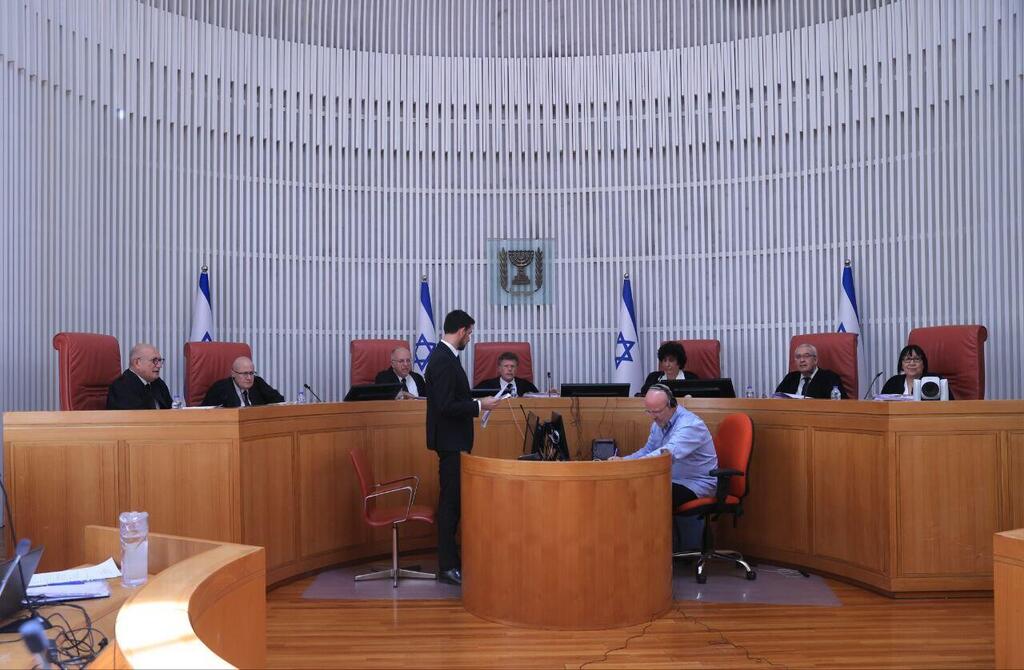
The High Court of Justice
(Photo: Alex Kolomoisky)
The court noted procedural failings in the firing and called for adherence to a 2000 cabinet decision that implemented the recommendations of the Shamgar Commission, formed in the aftermath of the Bar-On Hebron affair. That decision requires consultation with a public committee before dismissing an attorney general.
The government emphasized that if any non-elected member of the committee attempts to resign in order to sabotage the process, that action should be seen as fulfilling the consultation requirement.
The Grunis Committee includes a former justice minister (currently vacant), Israel Bar Association representative Tami Ulman, legal scholar Prof. Ron Shapira and a representative of the Knesset.
The government acknowledged its difficulty in appointing a former justice minister or attorney general to the committee, citing the limited number of eligible candidates under the Shamgar framework. “The list of those qualified for this role is extremely narrow,” the government said, adding that it would continue reaching out to suitable candidates “in line with the government’s values.”

Chief Justice Yitzhak Amit
(Photo: Alex Kolomoisky)
When issuing the conditional order, the panel of nine justices wrote that “under Israeli law, dismissing senior public officials requires consultation with a public committee whose recommendation was part of the appointment process.” They referenced a recent case involving the attempted dismissal of former Shin Bet chief Ronen Bar.
The court stressed that no compelling reason had been presented to deviate from the Shamgar-based procedure. “The 2000 government decision set the composition of the public committee and made consultation mandatory both when appointing and dismissing the attorney general,” the justices wrote. “At this stage, no justification has been given to override that requirement.”