

Prime Minister Benjamin Netanyahu said Thursday that Israel will maintain its security zone in southern Lebanon for as long as its security needs require, despite Iran’s demand for an Israeli withdrawal and vague wording in a U.S.-Iran memorandum of understanding promising to preserve Lebanon’s “territorial integrity.”
“We will restore security to the north,” Netanyahu said. “That requires maintaining the security zone in southern Lebanon, and it requires that we not leave there as long as Israel’s security needs require it.”
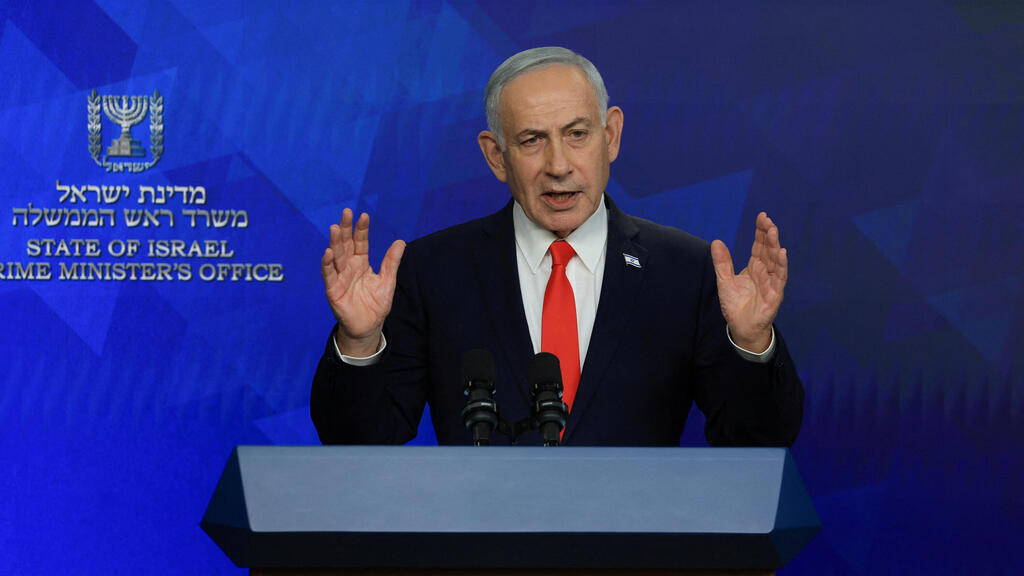
Netanyahu made the remarks at a ceremony inaugurating “Derech HaTanach,” the new name for Route 60, in Migdal Oz in the Gush Etzion area of the West Bank.
Speaking against the backdrop of repeated criticism from U.S. President Donald Trump in recent speeches, Netanyahu alluded to the dispute while stressing the importance of Israel’s alliance with Washington.
“Additional challenges lie ahead,” he said. “They require composure, a firm stand on our security interests and, at the same time, preserving the important relationship with our American friends, who fought alongside us shoulder to shoulder. We greatly appreciate that.”
Netanyahu said Israel would preserve “the achievements of the government” and “the achievements of the war,” calling them achievements of the entire Israeli people.
“Just as we restored security and prosperity to the Gaza border communities, we will restore security and prosperity to the communities of the north,” he said. “This power separates Hezbollah terrorists from our citizens and our communities.”
He added that Israel would continue to pursue what he described as the central goal that has guided him through most of his adult life: preventing Iran from obtaining nuclear weapons.
“As long as I am prime minister of Israel, Iran will not have nuclear weapons,” Netanyahu said.
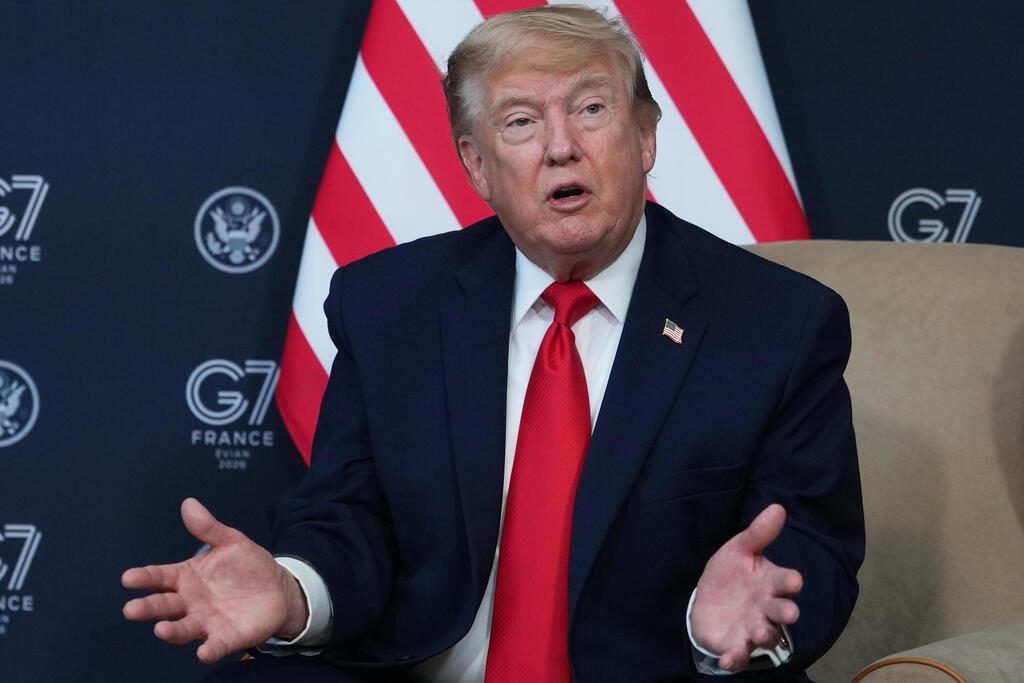
(Photo: Julia Demaree Nikhinson/AP)
Meanwhile, the Lebanese presidency said President Joseph Aoun had convened a meeting to prepare for the next round of U.S.-mediated talks with Israel, scheduled to take place in Washington next week, from June 23 to 25.
According to Reuters, Aoun instructed Lebanon’s negotiating team to adhere to Beirut’s position on a permanent ceasefire, an Israeli withdrawal and deployment of the Lebanese army along the border.
The move comes as Israel signals that it has no intention of withdrawing from the security zone in southern Lebanon while Hezbollah remains a threat along the border.
Israel’s ambassador to the United States, Yechiel Leiter, voiced concern in an interview with Tony Perkins over Lebanon’s inclusion in the memorandum of understanding.
“We are concerned about the inclusion of Lebanon in the memorandum of understanding,” Leiter said. “That was an Iranian insistence, to include their proxy Hezbollah in Lebanon.”
“We cannot accept Hezbollah on our border, and Hezbollah having thousands of terrorists who will try to infiltrate northern Israel and fire anti-tank missiles and UAVs at our communities,” he said. “We hope Iran will not be able to dictate Lebanon’s future, for the sake of the people of Lebanon and for the sake of Israel.”
‘A gang of murderous thugs’
Leiter also pushed back against Trump’s comments that Iran “must have ballistic missiles because other countries have them too.”
“We hope that within 60 days the issue of ballistic missiles will be discussed and hopefully eliminated,” Leiter said. “Because Tehran is not like any other country in the region or anywhere else. They are a gang of murderous thugs. And if they have ballistic missiles, they will use them against their neighbors.”
He said that, based on the memorandum of understanding, Israel was concerned that Iran appeared to be receiving concessions without clear obligations in return.
“Reading the memorandum of understanding, one can get the impression, and I hope it is mistaken, that Iran is receiving, but it is not clear what it is giving,” Leiter said. “I hope that during the negotiations this will become clearer. Maybe there is a document we do not know about.”
Leiter added that Hezbollah had benefited from 1.2 billion dollars a year in Iranian funding, even as ordinary Iranians lacked reliable water and electricity.