

IDF Chief of Staff Eyal Zamir announced Sunday afternoon the appointment of outgoing Hashmonaim Brigade commander Col. Avinoam Emunah as his adviser on Haredi affairs, a newly created role formed as part of the military’s efforts to recruit Haredi soldiers, even as the government moves to advance legislation that would exempt them from service.
The new adviser enjoys the trust of Haredi rabbis and is the founding commander of the Hashmonaim Brigade, the first unit established to enable Haredi soldiers to maintain their religious lifestyle and identity while serving in combat roles.
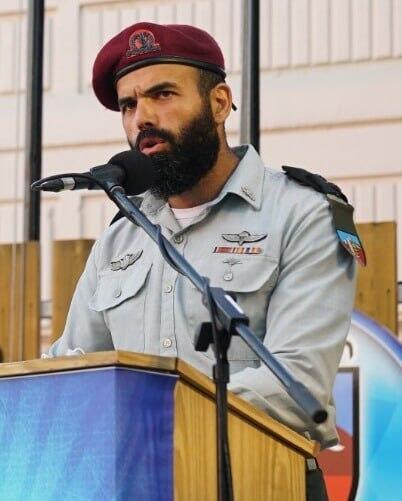
Emunah helped recruit hundreds of young men from the community through dialogue with rabbis, Hasidic leaders and heads of yeshivas. He also formulated the standards for maintaining religious observance in the Haredi brigade, including smartphone filtering, strict gender separation on bases, daily Torah study as part of the soldiers’ routine and the integration of prayers, biblical passages and Talmud study into official brigade ceremonies.
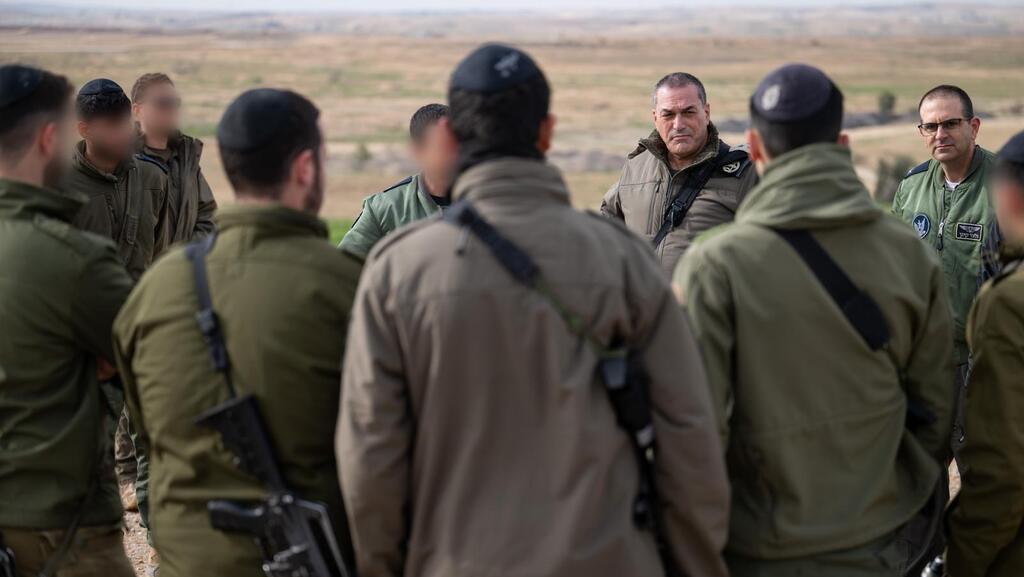
The IDF chief of staff with Haredi soldiers, last week
(Photo: IDF Spokesperson)
On Wednesday, Zamir spoke with soldiers from the Negev Company at the Nevatim Air Base in southern Israel, where Haredi servicemembers combine meaningful military service with full adherence to a Haredi way of life as part of a broader effort to expand the IDF’s ranks. Zamir said: "I call on the Haredi public to choose, like you, meaningful service and contribution to the security of the state."
He added: "The scope of the missions and challenges before us is broad and demanding, and accordingly the IDF is required to expand its ranks. Expanding the IDF, including the recruitment of the Haredi public, is an essential operational need to ensure our readiness for future challenges. Extending mandatory service to 36 months is only one component that requires legislation and is intended to ease some of the burden on reservists and adjust force structure to the IDF’s many missions. At the same time, recruiting the Haredi public is an operational necessity and a moral obligation for us as commanders, toward all those who serve, in order to share the burden equally across all segments of the population."