

Iran’s ballistic missiles are designed for “defense,” to “deter” any attack, and are not subject to negotiation, Iran’s Foreign Ministry spokesman said Monday, as Israeli officials warn the program poses a growing threat.
“The Iranian ballistic program was developed to defend Iranian territory and not to be the subject of negotiations,” spokesman Esmail Baghaei said at a weekly news conference in Tehran.
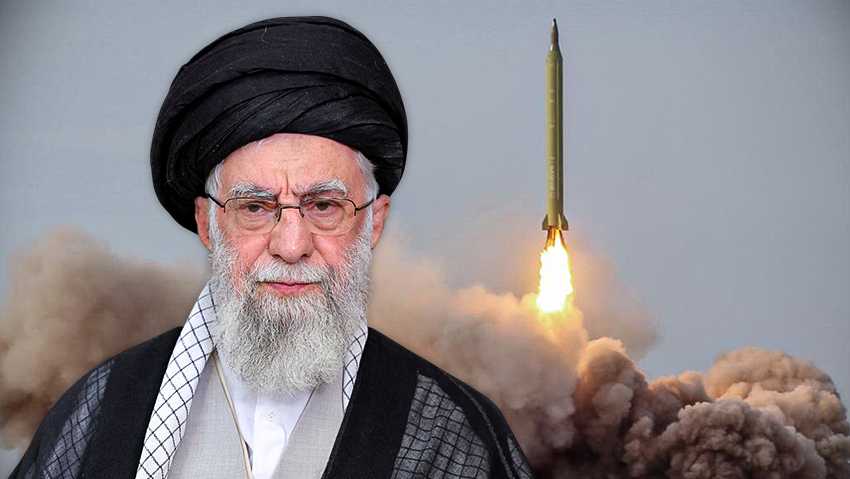
Ali Khamenei
(Photo: WANA (West Asia News Agency) via Reuters, Sepahnews/Handout/Anadolu Agency via Getty Images)
“Therefore, Iran’s defensive capabilities, designed to deter any aggressor from considering an attack on the country, are not up for discussion,” he added.
The United States has expressed concern over advances in Iran’s ballistic missile program, which it accuses of destabilizing the Middle East. Iran’s missile capabilities place Israel, its longtime enemy, within range.
According to NBC News, “Israeli officials are increasingly concerned about the expansion of Iran’s ballistic missile program.” The network reported Saturday, citing anonymous sources, that Israeli officials are preparing to brief President Donald Trump on options for a possible new strike against Iran.
Prime Minister Benjamin Netanyahu, who views Iran as an existential threat to Israel’s security, is expected to travel to the United States on December 29 to meet with Trump, a spokeswoman for the prime minister’s office told AFP earlier this month.
Iran and Israel, bitter enemies since the establishment of Iran’s Islamic Republic in 1979, fought a 12 day war in June, triggered by an unprecedented Israeli attack on Iranian military and nuclear sites as well as residential areas.
Iranian authorities said the strikes killed more than 1,000 people inside Iran.
The United States briefly joined the operation, bombing the underground Fordo uranium enrichment site south of Tehran on June 22, along with nuclear facilities in Isfahan and Natanz in central Iran.
After the fighting ended, Israel acknowledged that more than 50 Iranian missiles struck its territory, killing a total of 28 people.
Iran, whose military was once largely supplied by the United States, was forced to develop its own weapons after Washington and Tehran severed diplomatic relations following the Islamic Revolution and the imposition of US sanctions.
Once severely short of munitions during its devastating war with neighboring Iraq from 1980 to 1988, Iran now fields a broad domestically produced arsenal, ranging from air defense systems to missiles and drones.