

U.S. President Donald Trump said Friday he would meet with his advisers in the White House Situation Room to make a “final determination” on whether to move forward with a deal to extend the ceasefire with Iran.
Trump confirmed the high-level talks a day after U.S. and Iranian negotiators reportedly reached a tentative agreement to extend the fragile ceasefire by 60 days and begin new talks on Iran’s nuclear program. The emerging memorandum of understanding still requires approval from Trump and Iran’s top leadership.
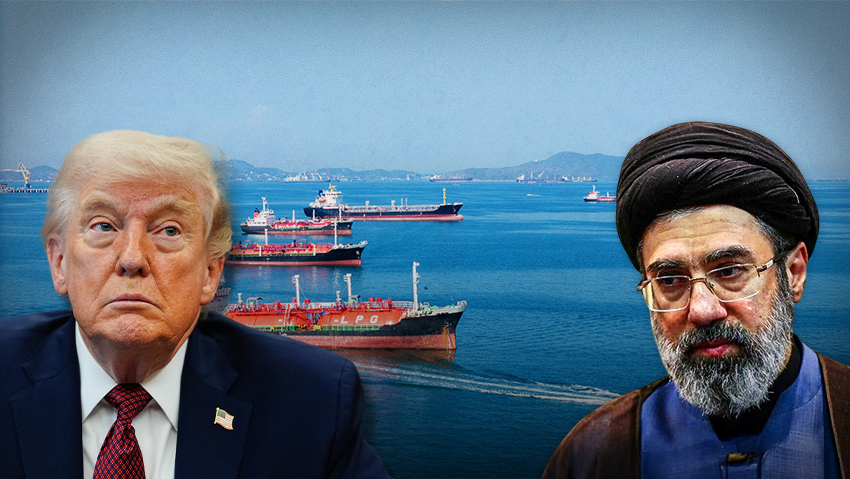
(Photo: Anna Moneymaker / AFP, CENTCOM, shutterstock)
He listed what a potential deal would need to include: Iran agreeing not to develop a nuclear weapon, the reopening of the Strait of Hormuz, the removal of any sea mines, the lifting of the U.S. blockade on Iran and the removal and destruction by the U.S. of Iran’s highly enriched uranium.
“No money will be exchanged, until further notice. Other items, of far less importance, have been agreed to. I will be meeting now, in the Situation Room, to make a final determination,” Trump posted on Truth Social.
Vice President JD Vance said Thursday night that there was a tentative agreement, but that it was unclear whether Trump would approve it. “It’s hard to say exactly when or if the president’s going to sign,” Vance told reporters, adding: “We’re going back and forth on a couple of language points.”
Iran did not immediately confirm a deal. Earlier Friday, Iranian Foreign Minister Abbas Araghchi called on Washington to abandon what he described as “excessive” demands in negotiations to end the war.
“Reaching a final agreement depends on the cessation of the American side’s attitude,” Araghchi said in a conversation with his Omani counterpart, denouncing the United States’ “excessive demands as well as its shifting and contradictory positions.”
The diplomatic push comes as the ceasefire appears increasingly fragile. The latest flare-up came less than a day earlier, when Kuwait intercepted missiles fired from Iran, according to U.S. Central Command.
U.S. Secretary of State Marco Rubio also met Friday with Pakistani Foreign Minister Ishaq Dar, whose country has emerged as a key mediator in talks to end the conflict. Neither Rubio nor Dar spoke to reporters as they posed for photographs at the State Department.