

Lebanese Prime Minister Nawaf Salam responded Friday to Hezbollah Secretary-General Naim Qassem’s recent threat that “there will be no life in Lebanon,” calling it “covert civil war rhetoric” aimed at the group’s supporters.
In an interview with Saudi newspaper Asharq Al-Awsat, Mikati said Qassem’s claims that he had demanded weapons be handed over to Israel were false. “On the contrary, we insist that the weapons remain under the exclusive control of the Lebanese state,” Mikati said.
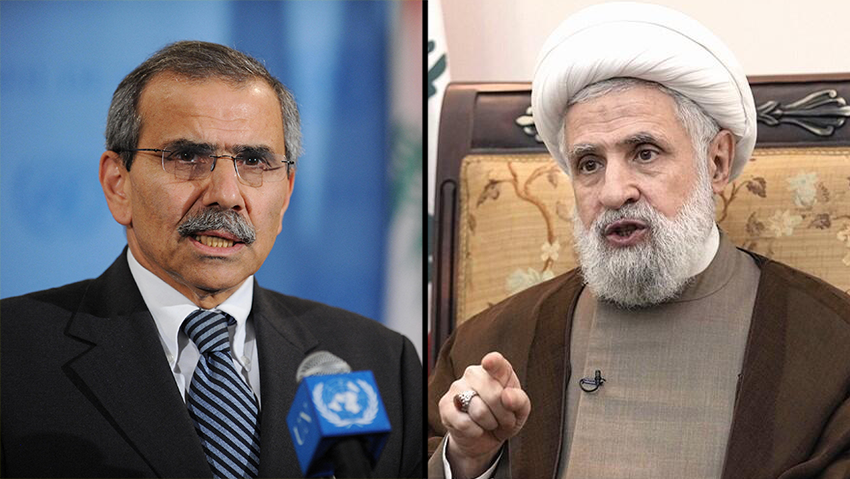
Nawaf Salam and Naim Qassem
(Photo: Stan Honda / AFP, Bilal Hussein, AP)
Mikati stressed that Lebanon’s decisions are made through its parliament, reflecting the will of the people, and not dictated by Hezbollah. He hinted at Hezbollah’s ties with Iran, saying, “I know who takes directives and who listens to them, seeing themselves as proxies of foreign powers.”
He reaffirmed that the state’s control over arms is a core duty: “A country cannot exist without exclusive control over its weapons. Our army is the national army, not the army of any other group. Does our army need reinforcement? Absolutely, that is what we want—a stronger army.”
Mikati added that Qassem’s earlier comments about delivering weapons to Israel were misleading, and Lebanon opposes such transfers. “We want to protect resistance weapons from Israeli attacks. What we demand is that these weapons be under state control exclusively,” he said. He also underscored that no Lebanese citizen wants a return to civil war.
Meanwhile, the IDF struck Hezbollah military infrastructure in southern Lebanon on Friday, including an underground facility in the Beaufort Ridge area. The IDF said the site violated understandings between Israel and Lebanon.
Defense Minister Israel Katz issued a warning to Lebanese President Michel Aoun: “We hold you and the Lebanese government directly responsible for enforcing Lebanon’s sovereignty and upholding the ceasefire. We will continue to act decisively against any violations.”
Last Wednesday, Aoun met in Beirut with Iranian National Security Council Secretary Ali Larijani. Aoun stressed that no organization in Lebanon is allowed to hold weapons or rely on foreign support and warned against foreign interference in Lebanon’s internal affairs, though he indicated openness to cooperation with Iran if it respects Lebanese sovereignty. Larijani, in turn, insisted Iran does not interfere in Beirut’s decision-making and emphasized Hezbollah’s role as part of the “resistance,” backed by Tehran, opposing any disarmament of the group.