

Students on a school trip near Israel's northern border reportedly picked up an unexploded munition, played with it and posed for photographs before it detonated, killing a 14-year-old boy and injuring 23 others. As investigators examine how the tragedy unfolded, new questions have emerged over a warning sign prohibiting entry to nearby woodland that had officially remained closed since May 2025.
The explosion occurred Monday near Mitzpe Pe'er in the Upper Galilee, during the first day of an annual excursion by eighth-grade students from the ORT Ma'alot-Tarshiha religious high school. Three students were seriously injured, 10 sustained moderate injuries and another 10 were lightly hurt.
Wounded students evacuated to Rambam Medical Center in Haifa
(Video: Gil Nehushtan)


Security officials increasingly believe the device was an old Hezbollah cluster munition left unexploded during the fighting along the Lebanese border. Police Commissioner Danny Levy said investigators were almost certain that cluster munitions were involved, although the weapon's precise origin and the circumstances of its detonation remain under investigation.
‘They were excited about it and took pictures’
About 50 students and teachers were participating in the excursion, which the Education Ministry said had received the necessary approval.
According to Eliyahu Galil, whose son was among the students, several boys discovered the unexploded device, handled it and photographed themselves with it before the blast.
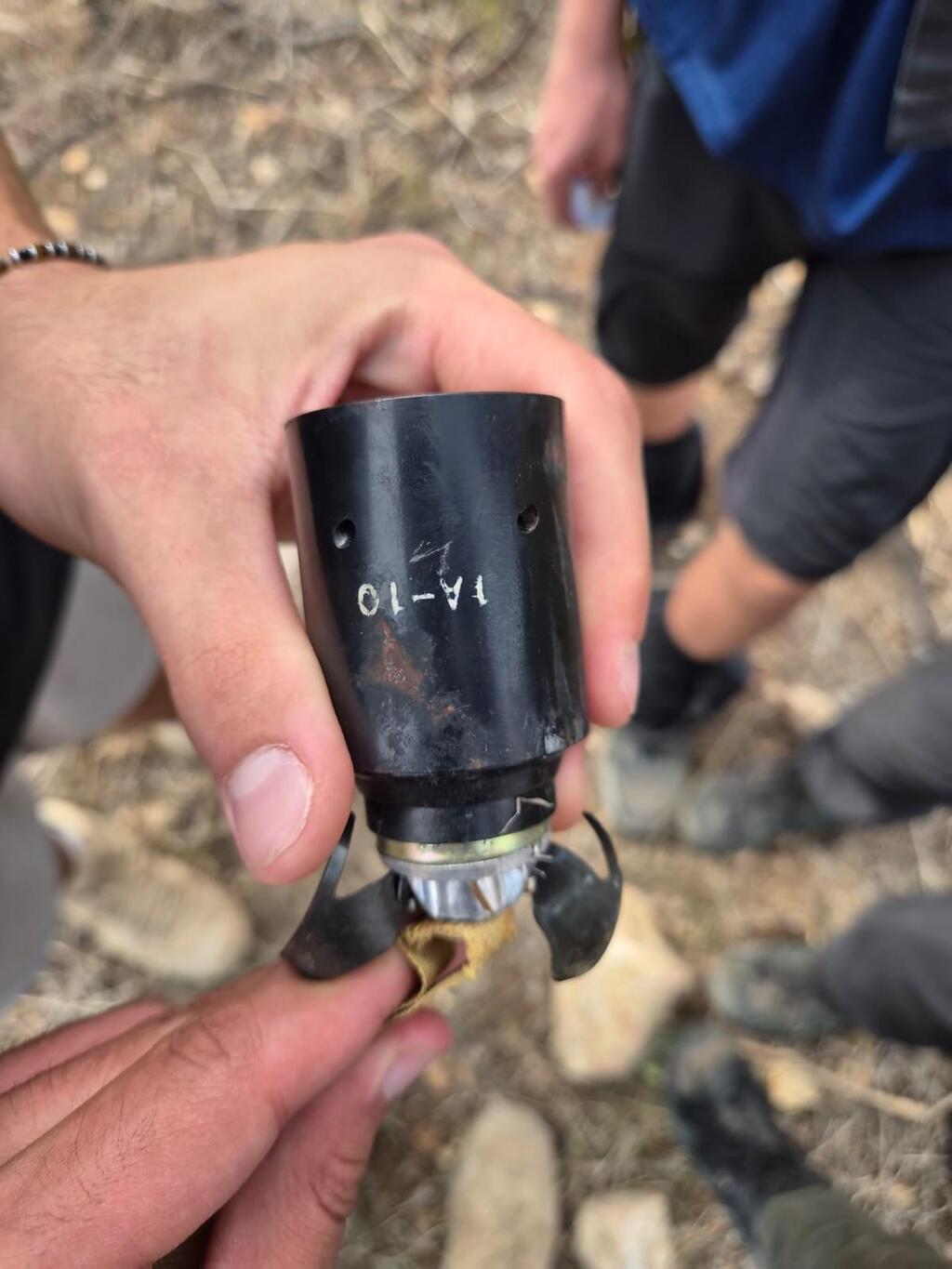
"They were excited about it and took pictures. Apparently, one of the children put it in his bag, and it exploded when the bag was off to the side," Galil said.
He said his son, who escaped injury, sent him a photograph of the device after the explosion.
Galil described the object as resembling a cluster munition with a shaped charge, apparently belonging to Hezbollah.
"They were playing with it," he said, stressing that his account of how the explosion occurred was based on what he had learned from the students.
"This could have ended much worse," he added.
Although his son was physically unharmed, Galil said he had witnessed deeply distressing scenes as classmates lay injured around him.
"A lot of boys we know from the community and the surrounding area were injured. Shrapnel in the shoulder, in the eyes, all kinds of very unpleasant places," he said.
Police have not determined whether the boy who was killed was holding the munition when it detonated.
"We still don't know for certain whether the boy who was killed was holding the unexploded ordnance," Levy said. "We will collect testimony and investigate what happened."
A warning sign that remained in force
A separate question has emerged over the location of the excursion.
Near the explosion site stands a Jewish National Fund (KKL-JNF) sign warning that entry into forests and recreation areas is strictly prohibited.
According to the organization's website, the Naftali Mountains Forest cycling trail and scenic road have been closed since May 25, 2025, until further notice because of rehabilitation work following damage caused by the war.
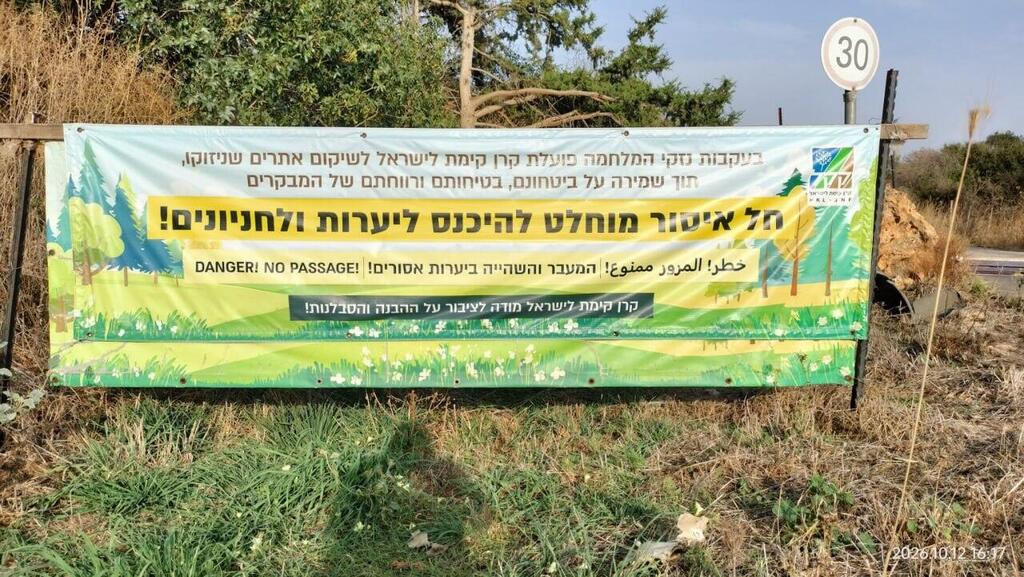
A Jewish National Fund (KKL-JNF) sign warning that entry into forests and recreation areas is strictly prohibited
(Photo: Avihu Shapira)
Following an inquiry by ynet, KKL-JNF officials confirmed that the restriction remained in effect because of previous fires and the security situation.
They said the area had not been cleared of potential hazards.
The students' bus was photographed passing the warning sign, raising questions about the planning and authorization of the route.
However, KKL-JNF emphasized that it could not establish whether the explosion occurred within the specific forest areas under its jurisdiction where entry was prohibited. Its representatives had not been permitted to enter the blast site to make that determination.
KKL-JNF is also not the authority responsible for imposing security closures or restricting civilian access because of unexploded military ordnance. Those responsibilities fall to the police and military.
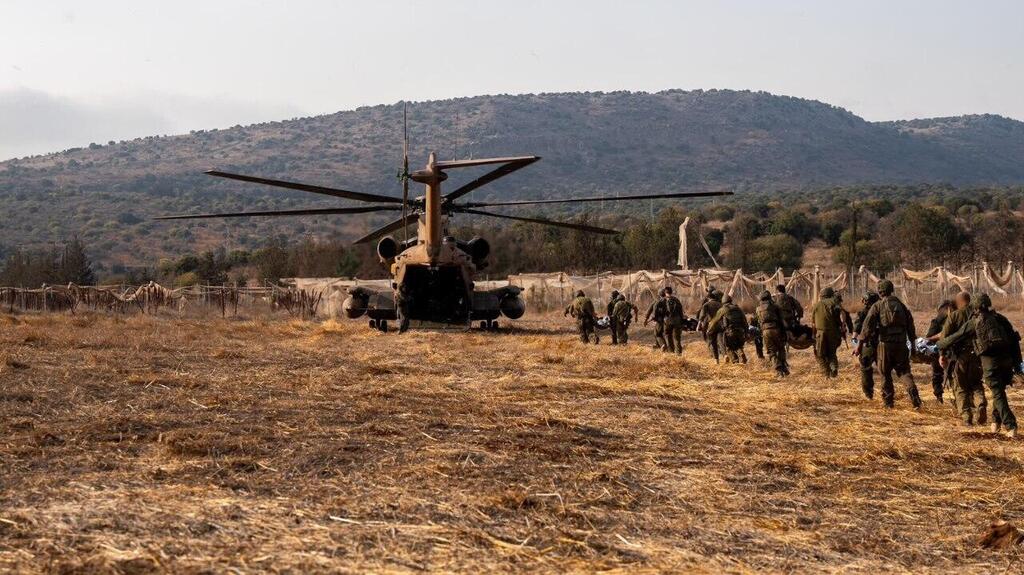
IDF soldiers receive a briefing ahead of the evacuation of wounded students from Ramim Ridge
(Photo: IDF)
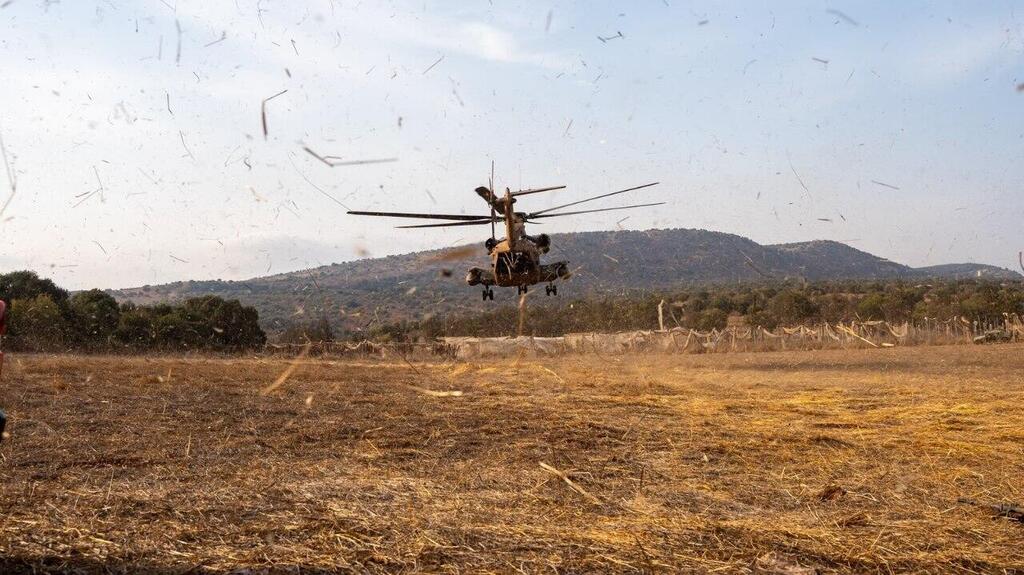
(Photo: IDF)
The distinction has become central to the investigation: A forest restriction was in place nearby, but it has not been established whether the school group entered an area that was officially closed to visitors.
The Education Ministry said its preliminary examination found that the excursion had been "organized in accordance with all procedures, under IDF supervision and instructions."
The military, however, is still examining whether permission had been granted for the students to travel along the specific route near Mitzpe Pe'er and, if so, whether that authorization passed through the required channels.
The site is extremely close to the Lebanese border, in an area previously used as a staging ground for IDF units and targeted by Hezbollah fire during the war.
‘The injured were scattered along the route’
Emergency responders described a chaotic scene as classmates tried to save one another in the moments after the explosion.
Tamir Duadi, a member of Kibbutz Manara's civilian emergency response squad, said he rushed to the site and was among the first to reach the wounded.
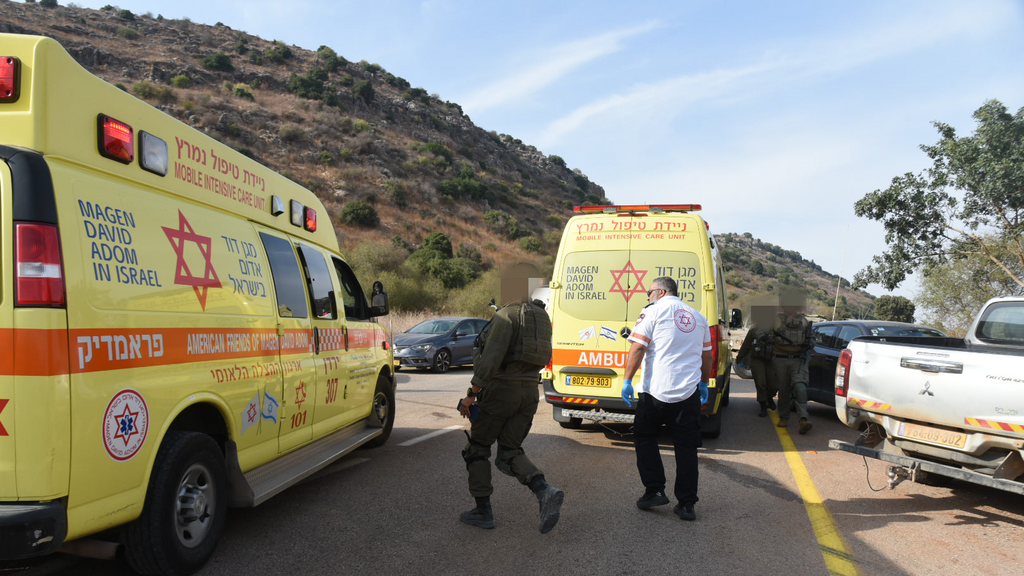
The scene of the deadly explosion near Israel's northern border
(Photo: Avihu Shapira)
"I took out my first-aid kit to treat them and perform CPR," he recalled. Another responder from United Hatzalah joined him, while police and Magen David Adom ambulances were dispatched.
"I told myself that if I didn't take responsibility, I had no business being there," he said. "I stayed until the end, until I saw the last child evacuated."
MDA emergency medical technician David Radko, who arrived on a motorcycle, said he immediately recognized the scale of the disaster.
"The injured were scattered along the route. Some were holding and trying to help their wounded friends. Farther along, I saw the more seriously injured," he said.
He began sorting casualties according to the severity of their injuries and attempting to control bleeding.
Despite the shock, he said the students cooperated with rescuers and showed remarkable determination to help their classmates.
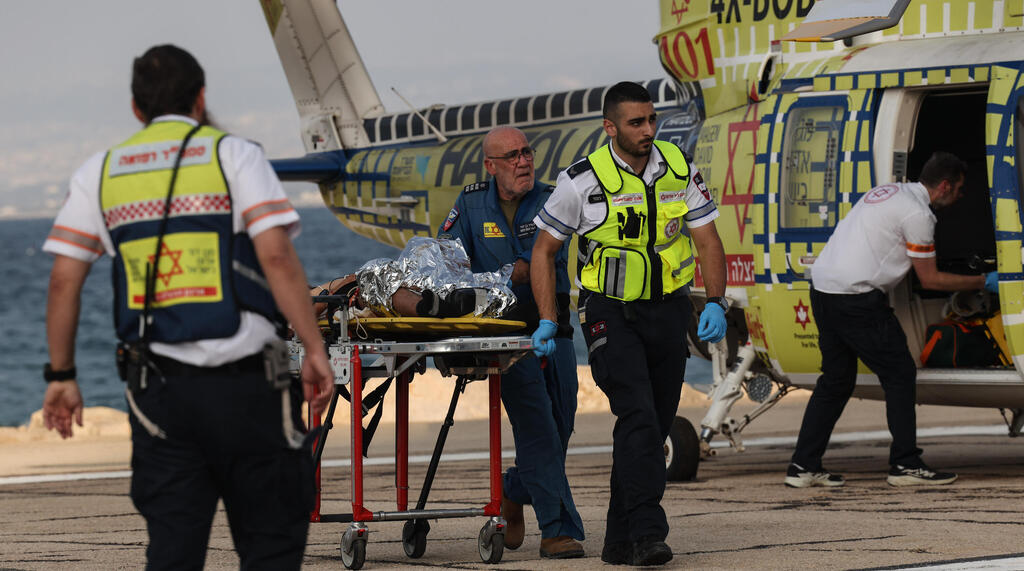
(Photo: Gil Nehushtan)
"Some had even applied tourniquets to their friends to stop the bleeding. I gave them instructions on how to help, and they listened and followed them," Radko said.
Paramedic Orly Ben Simon described shouting and confusion at the scene, where rescue teams found the 14-year-old unconscious and critically wounded.
"We immediately began prolonged and intensive resuscitation efforts," she said. "Unfortunately, his injuries were critical, and we had to pronounce him dead at the scene."
The injured were transported to Rambam Medical Center in Haifa, Ziv Medical Center in Safed and Galilee Medical Center in Nahariya.
Initial hospital reports indicated that 13 injured students had been admitted to Ziv, four to Rambam and six to Galilee Medical Center. Emergency crews also treated several people suffering from acute anxiety at the scene.
Police consider restrictions on school trips
At the scene, Commissioner Levy said police would examine the circumstances of the blast and consider further precautions to prevent similar incidents.
"Young children went out on a trip, and unfortunately there is one fatality and injuries of varying severity," he said.
"We will learn lessons to make sure things like this do not happen again."
Levy said investigators believed the explosion involved military ordnance left behind during the war, most likely a cluster munition.
He also suggested that authorities could temporarily restrict similar outdoor activities while the risks are reassessed.
"It may be that we will prohibit events like these for the coming period," he said.
Cluster munitions contain multiple smaller explosive devices designed to disperse across a wide area. When some of those devices fail to detonate on impact, they can remain dangerous long after fighting ends.
For the families of the students, the investigation now involves several painful questions: How did an unexploded munition remain accessible near a hiking route? Why were children allowed to handle it? And was the excursion properly cleared to pass through an area where warnings of wartime hazards were still in effect?
The authorities have yet to determine precisely where the students found the device, whether the fatal explosion occurred inside a restricted area or which body, if any, failed to prevent access to the hazard.