


The deadline set by Donald Trump’s Board of Peace for Hamas to accept a disarmament framework is expected to expire within the next 24 hours. The board’s director general, Nickolay Mladenov, is due to meet with Hamas representatives and receive a final response. The board will then decide on the next stages of Gaza’s reconstruction.
Israel is watching closely for Hamas’ answer. Officials say that if Hamas rejects the proposal, responsibility will shift to Israel to disarm the group by force. Israeli officials familiar with the issue said “all options are on the table.” They added that while they are awaiting direction from the political leadership, with attention focused on the north it is difficult to see fighting in Gaza resuming in the coming days.
A Hamas terrorist operating under the guise of an Al Jazeera journalist was killed
(Video: IDF)


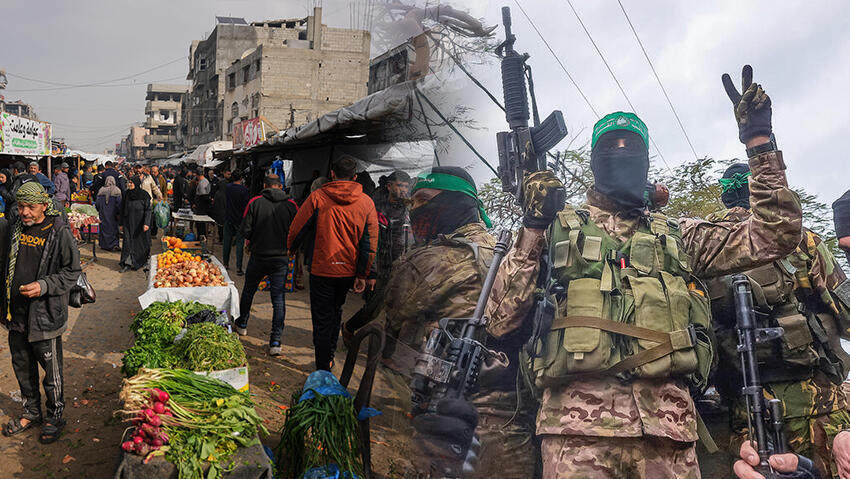
Senior Hamas officials have so far voiced reservations about the proposal. A spokesman for the group’s military wing said it would not agree to give up its weapons in negotiations when Israel failed to achieve that on the battlefield. Representatives of Islamic Jihad rejected the proposal outright.
Trump’s Board of Peace has decided to increase pressure on Hamas by setting a deadline for agreeing to the disarmament outline by the end of the current week. The board is demanding that Hamas commit to dismantling nearly its entire weapons arsenal and provide detailed maps of its underground tunnel network.
According to internal board documents, if a disarmament agreement is reached, Israeli forces are expected to withdraw from most or all of the Gaza Strip. Long-standing restrictions on the entry of essential goods would be lifted, armed operatives would receive amnesty, and caravans would be brought in to provide temporary housing for residents.
Mladenov conveyed the proposal to Hamas leadership and hinted that refusal could carry serious consequences, writing: “Those who do not cross the river will drown in the sea.”
At the same time, Prime Minister Benjamin Netanyahu has reiterated that Israel will act to disarm Hamas by force if the group does not agree in an agreement. Hamas continues to oppose the demand, saying that discussing weapons “in this way” is an attempt to further harm Palestinians. The group called on Israel to first meet its commitments under the October 2025 ceasefire.
Hamas claims Israel is not upholding its obligations, is allowing in insufficient humanitarian aid and continues to carry out strikes in Gaza despite the ceasefire. Hamas leaders have held talks in Istanbul with Turkish President Recep Tayyip Erdogan, as Arab and Turkish officials press the group to adopt a more pragmatic approach to the disarmament plan. Some within Hamas view disarmament as tantamount to surrender.
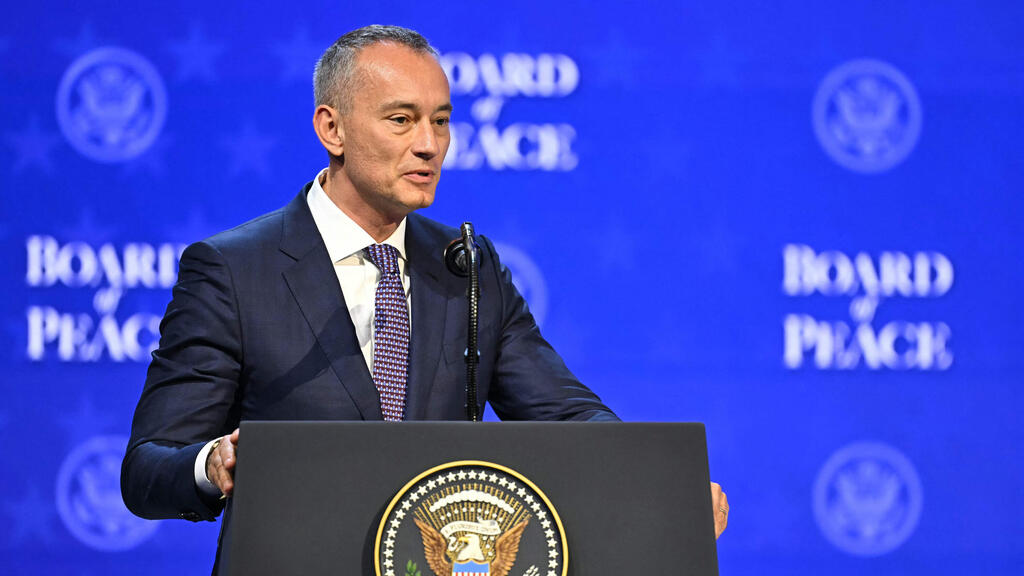
Nickolay Mladenov
(Photo: Fabrice COFFRINI / AFP)
A senior Board of Peace official said earlier this week: “We are focused on Gaza and will soon know which direction things are heading — toward a positive outcome of agreed disarmament or a negative one. We are in the final stages of deliberation and very close to Hamas’ decision on disarmament, yes or no.”
Mediators are optimistic Hamas will agree, something that has not happened so far. In Israel, however, there is pessimism and assessments that Hamas may try to delay or assume Israel is too preoccupied with Iran and Lebanon to act against it.
Meanwhile, Hamas continues to regroup, recruit operatives and attempt to restore its governance in the territory. Israel has also identified efforts to resume rocket production.
The senior board official said Hamas members “have at times surprised positively, such as with the release of hostages. They will need to announce this month whether they are prepared to disarm.” He said the process would begin with heavy weapons and proceed to lighter arms: first production facilities and rocket workshops, then tunnels and finally small arms. Hamas would be required to provide the locations of tunnels.
Oversight of the disarmament process would be carried out by a joint force of Palestinian security personnel and an international stabilization force, referred to as ISF. The war with Iran has delayed the ISF’s deployment by several weeks, and it is not expected to arrive in Gaza during the current month.
At the same time, planning for Gaza’s reconstruction is continuing. “We are not losing time. This is moving forward as usual,” the official said. “Reconstruction will not begin until disarmament begins, but planning, working with contractors and preparing infrastructure systems are all happening in parallel. There is no delay. Everything depends on implementation. Tenders are moving ahead on the assumption that voluntary disarmament will occur. Of course, execution will not begin without it.”
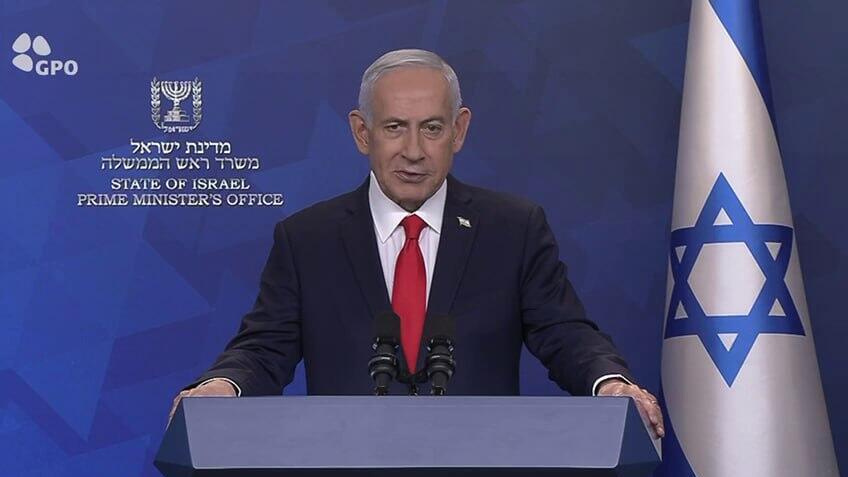
(Photo: Omer Miron, GPO)
The Palestinian technocratic committee has not yet entered Gaza and, according to the board official, will not do so until Hamas’ position is clear. “If the campaign in Iran ends and Hamas gives a negative answer, Israel may act, but I do not see Israel acting before there is a negative response. Israel has no interest in military action if there is a peaceful solution.”
The disarmament process in Gaza will be overseen by the Palestinian technocratic committee and is expected to last eight months, divided into five stages under the principle of “one authority, one law, one weapon,” meaning only the committee will determine who is allowed to bear arms.
In the first stage, lasting 15 days, the committee will assume security and administrative control of the territory. In the second stage, about six weeks long, Israel will remove heavy weapons from areas under its control and an international force will deploy. In the third stage, lasting about 60 days, Hamas will hand over all heavy weapons and its tunnels will be destroyed.
In the fourth stage, expected to begin about three months into the plan and last roughly five months, Hamas’ small arms will be collected and Israeli forces will begin a gradual withdrawal. In the final stage, set to begin 250 days after implementation, full verification of disarmament will take place, Israel will complete its withdrawal and reconstruction of Gaza will begin.