

TEHRAN — On Friday evening, the 13th day of nationwide protests and strikes that have shaken the Islamic Republic, hundreds of thousands of Iranians poured into the streets across the country. The regime, caught off guard by the scale of the demonstrations, appeared increasingly alarmed as it braced for protesters to return in the coming hours. The massive wave of unrest began surging late Thursday and has only intensified since.
Among the demonstrators was Azar, a 26-year-old law graduate student. Before leaving her home, she sent me a message saying, “If I am killed or arrested and do not return, let this be the last image you remember of me.” Moments later, she shared a short video of herself marching toward a main boulevard, chanting “Death to the dictator” alongside other women. She later reached the center of the crowd, chanting openly against Supreme Leader Ali Khamenei.
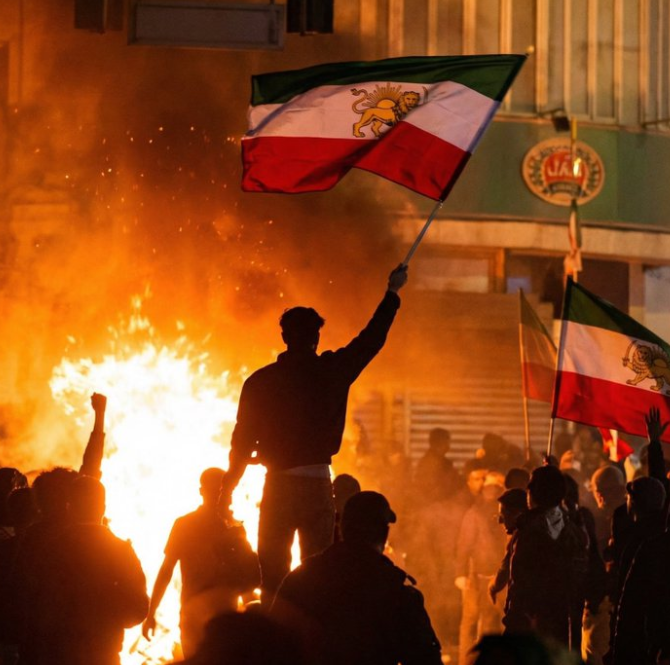
Videos received between 7 pm and 10:30 pm Tehran time on Thursday, later shared on social media and by international news outlets, showed demonstrators occupying nearly every major artery of the capital. Similar scenes unfolded again Friday night. The key difference was that much of the footage reaching the outside world was transmitted through Starlink satellite internet.
The protests followed coordinated calls from a broad coalition of opposition forces, including labor and trade unions, women’s rights organizations, Kurdish political groups, domestic political prisoners and figures abroad, including Reza Pahlavi. The movement has evolved into one of the most significant nationwide uprisings against the Islamic Republic in recent years.
In many districts, the crowds were so large that police and Basij militia units were unable to contain them and were forced to withdraw. Violent clashes nevertheless erupted late at night between protesters and security forces, leaving several people dead and injured. Estimates suggest at least 700,000 people marched in Tehran on Thursday night alone, with some reports indicating Friday’s turnout exceeded one million.
The scale of the demonstrations over the past two nights is comparable only to the early anti-regime protests following the 1979 revolution or the 2009 Green Movement. While the 2022 ‘Woman, Life, Freedom’ protests were marked by intense clashes, the current uprising has surpassed them in both density and geographic spread, particularly across Tehran.
Even northern Tehran districts, which have historically seen lower participation in protest movements, witnessed large rallies at key intersections. These neighborhoods are home to families of government officials and regime-linked business figures, making their participation a notable shift. Many Iranians are now openly referring to the unrest as a revolution.
Opposition groups have called for protests to continue. Eyewitnesses reported that beginning Friday afternoon, Islamic Revolutionary Guard Corps armored vehicles and personnel carriers deployed throughout central Tehran, effectively imposing an undeclared state of martial law.
Internet access, which had already been heavily restricted before Thursday’s demonstrations, has been almost entirely cut off for the past two days. As a result, communication has been limited largely to those with access to Starlink. Journalists report that despite high costs and logistical obstacles, Starlink usage inside Iran has grown over the past year. While Elon Musk’s promise of free service raised hopes, shortages of equipment and widespread distrust of local sellers remain major barriers.
As millions took to the streets, President Donald Trump voiced support for the protesters through social media posts and interviews. He warned that any mass killing of demonstrators would be met with a “heavy blow” against Iran’s leadership, a statement many Iranians interpreted as a direct threat toward Khamenei. After facing criticism for initially downplaying casualties as the result of people being “trampled,” Trump issued a renewed warning Friday, saying that if the regime kills protesters, the United States will “hit them very hard where it hurts.”
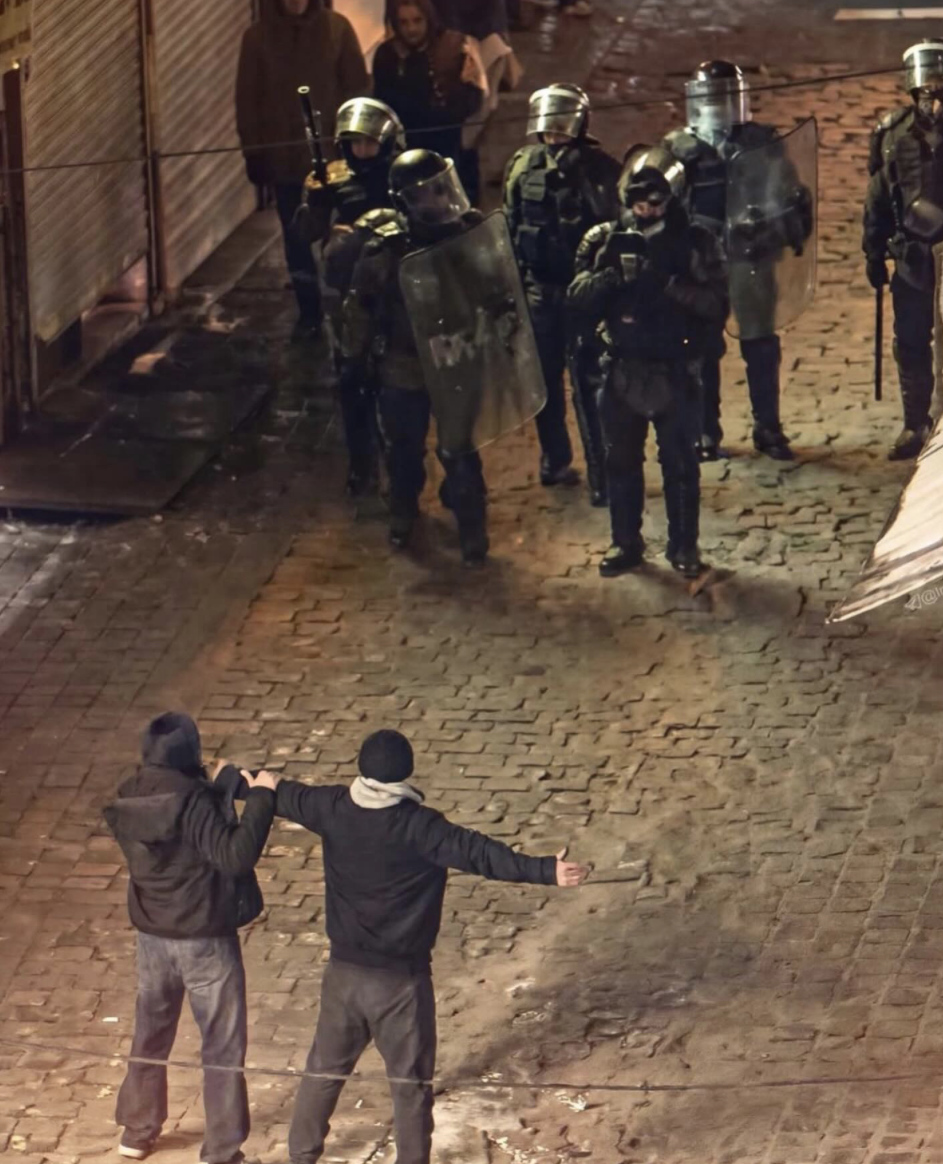
Security forces reportedly opened fire on demonstrators in Zahedan, in eastern Iran
Iran Human Rights, known as IHRNGO, reported that at least 51 people, including eight children, were killed during the first 12 days of protests. This figure does not include casualties from Friday night. Some sources now estimate the death toll may exceed 200. On Friday, security forces reportedly opened fire on demonstrators in Zahedan, in eastern Iran. Local independent media outlets, including HalVash, reported numerous deaths and injuries there.
At the same time, IRGC-affiliated news agencies, operating largely through Telegram due to internet outages and server disruptions, claimed that several police officers in Tehran and the prosecutor of Esfarayen were killed in clashes overnight. Hospital sources in Ilam and Tehran confirmed to me via messages that a significant number of security personnel have been hospitalized in critical condition.
On Friday, Khamenei appeared publicly for the first time since the protests began, dismissing demonstrators as “rioters” and vowing that the regime would not retreat. State television aired footage of property damage from the previous night, blaming what it described as “infidels,” a term used for leftists, “hypocrites,” referring to the Mojahedin-e-Khalq, and “monarchists.” Protesters on the ground, however, represented a rare unified front across ideological lines.
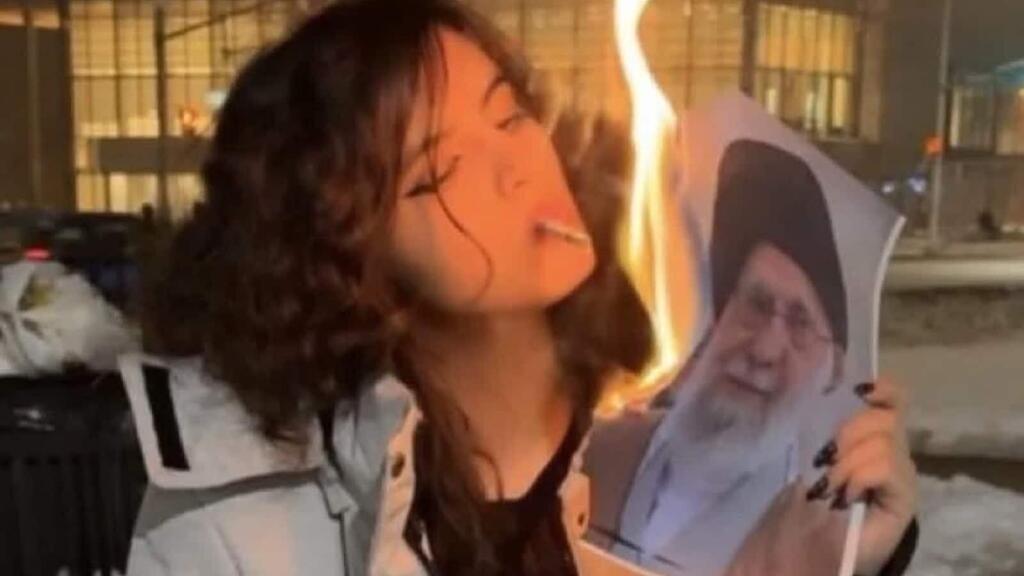
Woman burning Khamenei's picture with her cigarette
Despite the imprisonment of civil leaders, activists and students, crowds continued to flood the streets, with chants against the Islamic Republic echoing across cities and towns nationwide.
Nobel Peace Prize laureate Narges Mohammadi has recently been returned to prison, and there has been no updated information on her condition despite reports of deteriorating health after years of torture and confinement. Authorities have also expanded their crackdown to include prominent Instagram influencers who publicly criticized the regime.
While Washington appears to be relying on internal dynamics rather than direct intervention, the scale of the protests, involving millions nationwide, has led many observers to anticipate rapid and unpredictable developments. Meanwhile, state propaganda continues to accuse foreign intelligence agencies such as Mossad and the CIA of orchestrating the unrest.
IRGC-linked Telegram channels have circulated unsubstantiated claims about the arrest of “Mossad agents,” but the breadth of public anger suggests deep systemic erosion. Analysts note that many mid-ranking police and IRGC commanders, earning less than $200 a month despite additional benefits and facing the collapse of the national currency, may increasingly question their willingness to suppress the population, particularly amid fears of accountability if the regime falls.
A confidential poll partially leaked in November by the Iranian Students Polling Agency found that 92% of respondents expressed complete dissatisfaction with the country’s overall situation, particularly the economy. The sharp decline in public resilience has fueled growing belief among analysts that another revolution, 47 years after the last, may be inevitable.
As Iran prepares for another night of protests on Saturday, labor unions have called for a total strike in key sectors, including oil and energy. Such strikes played a decisive role in the downfall of the Shah in 1979 and could prove equally consequential today.
While there is no precise estimate for the number of people who flooded the streets on Friday night across Tehran, Karaj, Mashhad, Isfahan, Shiraz and nearly 300 other cities, many believe the turnout surpassed that of Thursday. Despite threats issued by the IRGC and the head of the judiciary, the scale of participation in both major cities and small towns has been unprecedented.
The protests have sparked global solidarity, drawing public support from senior government officials worldwide and from the European Union. As the unrest deepens, many Iranians believe the country has entered a decisive moment.
The clock in Iran is ticking faster toward transformative change, and the world’s attention remains fixed on its streets.