

What do you do about overdraft, how much do you pay for your home, where was your last vacation and which expense do you regret most? People across Israel speak candidly about life itself, before and amid the war. This time: the Linetsky family from Modi’in.
Family members:
Natasha (53), Vadim (55), Noa (13). Natasha’s parents: Rosa (82), Valentin (87), Maya (25), Shai (20).
The apartment?
Five rooms with a 370-square-meter garden. Natasha: “We bought it 10 years ago for 2.6 million shekels, and last year we almost sold it for 6 million.”
Why Modi’in?
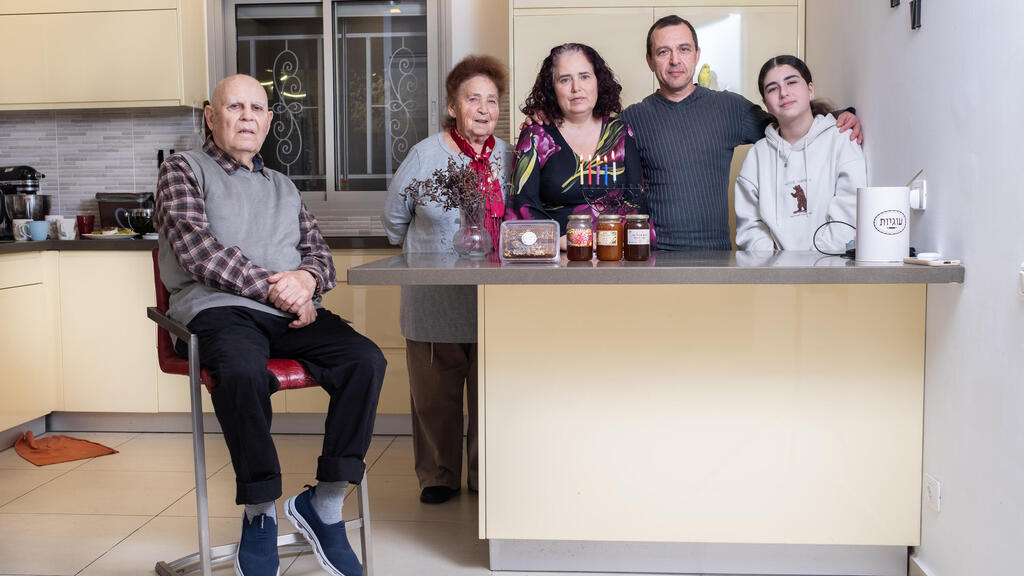
Natasha: “I worked as an economist at the Bank of Israel and we rented in Jerusalem. We once visited friends in Modi’in and loved it. When we wanted to buy, we realized the coastal plain was too hot for us and Jerusalem was too expensive, so Modi’in was an excellent solution.”
Vadim: “What really bothered me was Jerusalem becoming ultra-Orthodox. Modi’in has a more liberal atmosphere and is a modern city with nice construction.”
How did you meet?
Vadim: “We arrived from the former Soviet Union in 1993 and met in Israel at an ulpan. I studied in Ukraine at a time when you’d go to the supermarket and the shelves were empty, nothing there. For basics like bread, butter and milk you got coupons, and once a day there was a delivery. You stood in line hoping something would be left. I also suffered antisemitism at school and didn’t see myself staying. We lived in a city built around a nuclear submarine factory; everyone worked there, including my whole family. There were many Jewish engineers, and antisemitism was rampant.”
Natasha: “I lived 100 kilometers from Moscow. I studied economics at an aeronautics school, but graduates couldn’t find work and I didn’t see a future there. Representatives of the Jewish Agency came and, even though I’m Jewish, I knew nothing about Judaism, because in Russia it was better not to know or not to let others know. They suggested immigrating to Israel and said I could study at a university, so I decided to come and said, ‘At worst, I’ll go back.’”
Judaism?
Vadim: “You weren’t allowed to talk about it. I remember my grandfather suddenly bringing a crate of matzah in April, and we didn’t know why. There was no Passover seder and we didn’t celebrate holidays. The grandparents knew when the holidays were, but preferred we wouldn’t, because of antisemitism. Today we’re both atheists and not observant. The most Jewish thing you’ll see is a Hanukkah menorah and a mezuzah on the door, because of the kids.”
What do you do?
Vadim: “I’m an electrical engineer at a small startup in Rosh HaAyin. We make sensors for Israel Electric Corporation power lines that provide real-time data on current, load and faults. I love working in a small company. Every employee can really make an impact. Last year we were supposed to relocate to the U.S. through the company and almost sold the house. Natasha had already told her workplace she was leaving, but we couldn’t get work visas and the plans changed.”
Leaving?
Natasha: “I’m a data engineer. I worked at several banks, most recently Bank Hapoalim. The job was good and the salary excellent, but every day I asked myself, ‘What am I doing here?’ The relocation was an opportunity for change, but when it turned out we were staying and I’d already left the bank, I decided to turn my hobby into a profession. Today I’m a bee sting therapist.”
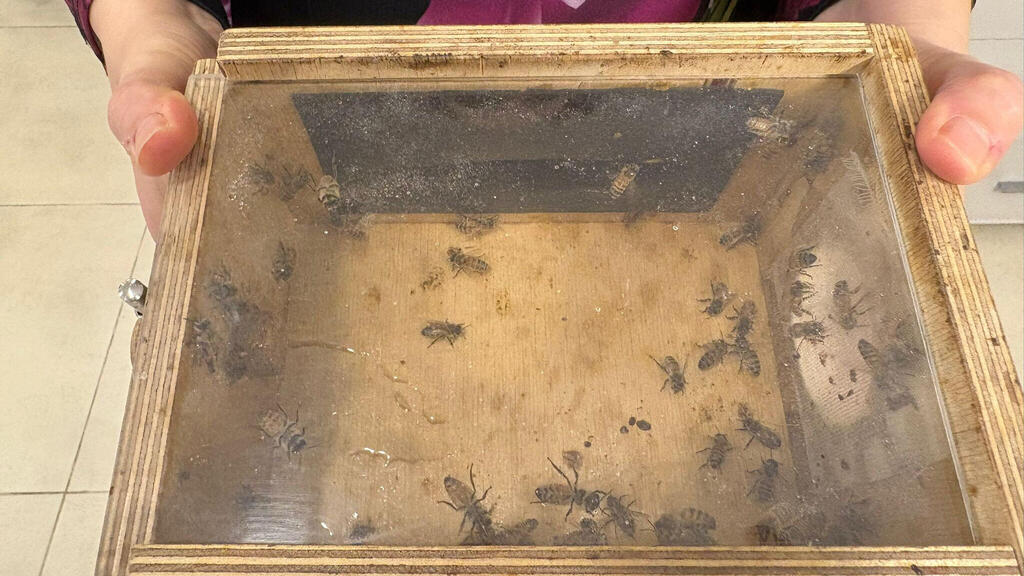
Natasha is a bee sting therapist
(Photo: Assi Haim)
You heal with bee stings?
Natasha: “We have a big garden where I grow fruit trees, vegetables and plants. During COVID I noticed there were no bees, so I brought a hive to the yard to pollinate my plants. I fell in love with bees and joined ‘Red Shield of Bees,’ a volunteer group that helps remove hives, for example from air conditioners. You get stung a lot there. Once I was badly stung on the leg. I’d had heel spurs for years and nothing helped, then a week after the sting the pain disappeared. I got interested and found a course called apitherapy, an ancient healing method using bee venom, and studied it.”
What is apitherapy?
Natasha: “I started treating myself and saw it worked. You hold the bee with tweezers and place it on points on the body corresponding to acupuncture points, irritate it until it stings. It’s like acupuncture with the added venom. I discovered it helps with fungal infections, pain, high blood pressure and even cancer. People heard and started coming for treatments, and the results are quite amazing. I need many bees because they die after stinging, so I brought more hives.”
What do the neighbors think?
Natasha: “At night bees are attracted to light, and neighbors complained there were too many bees. I covered the hives with an opaque curtain so they wouldn’t go out. Today I’m part of the city’s ‘Nice to Meet You’ project, which brings groups to see what I do.”
Where are your parents?
Natasha: “My mother was at the agricultural academy in Moscow and gardening is her passion. They come every morning to work in my garden. We try not to buy vegetables at the supermarket. You can’t compare the taste.”

Natasha's garden is flourishing
(Photo: Assi Haim)
How is your financial situation?
Vadim: “That’s a painful point. Right now I’m the only one supporting us, because what she earns barely covers expenses.”
Natasha: “I work day and night, much more than before, and also produce honey and remedies. I hope I’ll be able to make a living from this.”
Leisure?
Natasha: “Once a week we go on a restaurant date just to talk, because at home there’s always something to do.”