

Just a week ago, Blue and White chairman Benny Gantz sat in the ynet studio during the "People of the State" conference and confidently promised to remain in the election race until the end. He dismissed calls for his withdrawal, criticized what he described as the cynicism of opposition party leaders and presented polling suggesting that his message of national unity had the potential to win between six and eight Knesset seats.
Gantz appeared determined to stay. But political reality eventually caught up with him, forcing the former defense minister to announce his withdrawal eight days before the October 27 election, or, as he explained, one day before soldiers begin voting. His departure also effectively brings an end to the so-called third bloc, which sought to offer voters an alternative based on unity, reconciliation and political compromise rather than alignment with either Prime Minister Benjamin Netanyahu or the opposition parties seeking to replace him. The only remaining party in that political space is the one led by Yoaz Hendel and Yaron Zelekha.
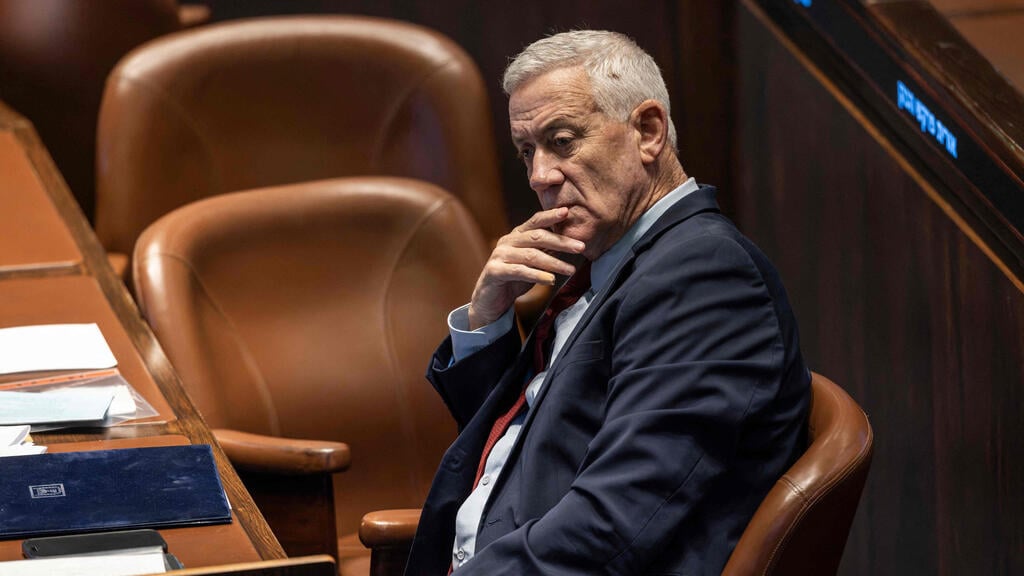
Gadi Eisenkot, chairman of the Yashar party and Gantz's former political partner, had planned to meet him and urge him to withdraw. "I'm sure he'll make the right decision and won't run," Eisenkot predicted. But Gantz was unwilling to let Eisenkot claim credit for his departure. He ignored his former ally's calls for a meeting and ultimately decided to withdraw after considerable internal deliberation.
His professional campaign team had urged him to continue, presenting polling that suggested his message could still attract a substantial number of voters. But inside Blue and White, others were increasingly concerned about the consequences of running a campaign that might end below the electoral threshold. Lawmaker Alon Schuster, who held sixth place on the party's candidate list, had remained loyal to Gantz alongside Chili Tropper, Michael Biton and other senior figures. Nevertheless, he established a clear red line: "If it's certain that the party won't cross the electoral threshold, we must not run. We won't throw votes in the trash."
On the other side were the consultants, strategists and pollsters employed by Gantz's campaign, whose work was funded through the party's election budget. Blue and White is not a party short of resources. Based on its eight Knesset seats, it receives eight public campaign financing units, each worth more than 1.8 million shekels, giving it an election budget of approximately 15 million shekels. The campaign also supports paid positions, creating financial interests alongside the political considerations.
One detail illustrated the situation particularly clearly. Shortly before Gantz's dramatic withdrawal announcement, Blue and White issued an official statement declaring that it had filled 100% of its available positions on polling station committees, including committee chairmanships. These are paid positions financed by the party. A party official explained that the appointments would remain in place despite Gantz's withdrawal because the roles concern election integrity, and the activists would continue serving at polling stations even though their party would no longer be contesting the election.
Outside the political blocs
The immediate question is who stands to benefit from Gantz's departure. At first glance, his withdrawal might appear to strengthen the opposition bloc seeking to replace Netanyahu. In practice, however, there is little reason to assume Eisenkot and his allies will gain significantly. Gantz had deliberately distanced himself from that bloc and adopted Netanyahu's line of attack over its potential reliance on Arab parties. He argued that Eisenkot, Avigdor Liberman and Naftali Bennett could form a government with Arab factions, including Balad and politicians such as Ahmad Tibi.
Nor does Netanyahu appear likely to gain substantial support from Gantz's departure. Any movement toward the prime minister's camp would probably be marginal. Gantz's remaining electorate does not constitute a large pool of voters waiting to be redistributed among the major parties.
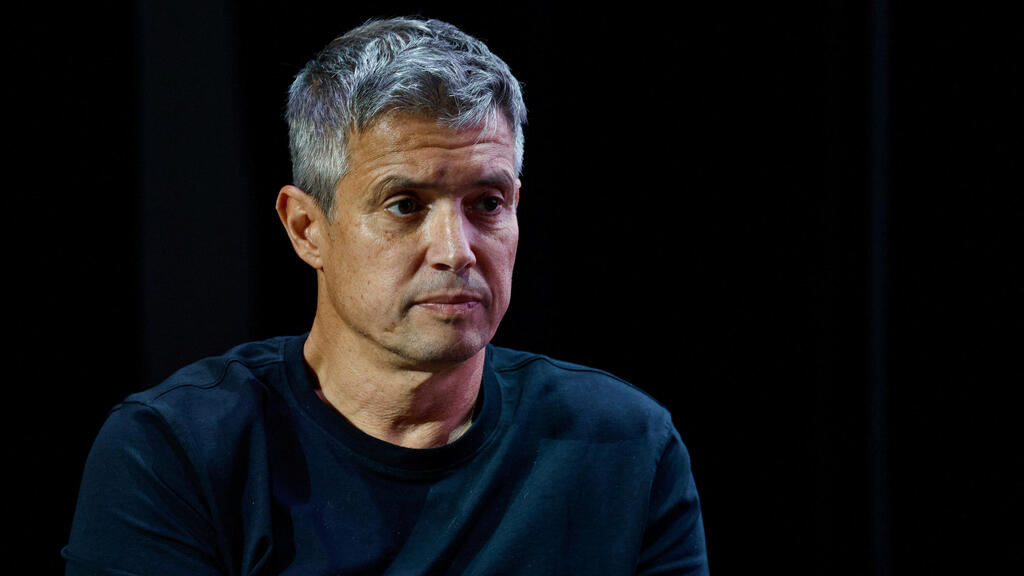
Yoaz Hendel
(Photo: REUTERS/Amir Cohen)
The politician closest to Gantz ideologically and politically is Yoaz Hendel, who decided at the last minute not to run on a joint ticket with him. Like Gantz, Hendel does not identify with either the opposition bloc or Netanyahu's political camp. He could therefore emerge as the principal beneficiary of the withdrawal, although any potential gain should be kept in perspective. Gantz is not leaving behind several Knesset seats' worth of voters, but rather a few thousand supporters who, according to the latest polling, had left Blue and White well below the electoral threshold.
Gantz has pledged to continue fighting for a national unity government from outside the election race. His decision does not mean that he is resigning from the Knesset. He and the lawmakers elected on his party's list will continue serving until the 26th Knesset is sworn in, approximately two weeks after the election.
The speed of Gantz's decline illustrates the extraordinary volatility of politics. At the beginning of the war, his party was polling at nearly 40 seats, placing him among the country's most prominent potential leaders. Now, just eight days before voters head to the polls, he has been forced to abandon his campaign after a prolonged collapse in public support.
Few political careers have demonstrated such a dramatic reversal in such a short period. From nearly 40 projected seats to a withdrawal before election day, Gantz's latest campaign ends not with the national unity government he envisioned, but with the disappearance of the political alternative he had tried to build.