


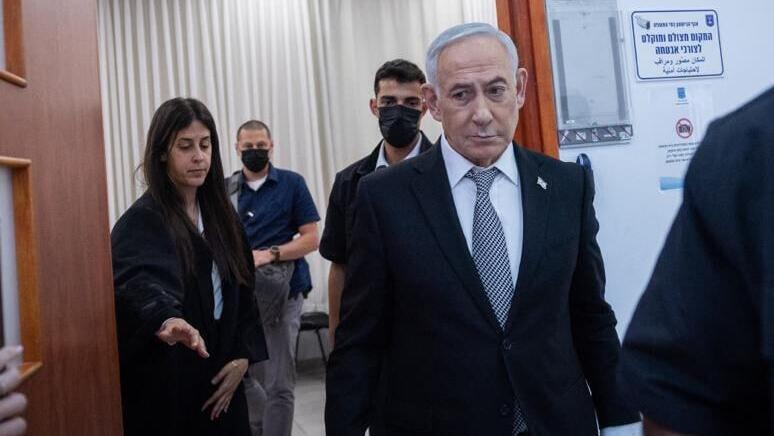
The panel of judges in Prime Minister Benjamin Netanyahu’s trial today reiterated the position it first expressed exactly three years ago: that consideration should be given to dropping the bribery charge in Case 4000.
After the judges’ initial notice that there were difficulties in proving bribery and their recommendation to withdraw the charge, Attorney General Gali Baharav-Miara and the State Attorney’s Office refused, saying they would prove the bribery allegation during the defense stage, namely in Netanyahu’s cross-examination. Now that the judges have said their position remains unchanged, the meaning is that the attempt to revive the bribery allegation in cross-examination has failed and there is no further opportunity to prove it.
What did the judges announce today?
During a hearing on expanding the trial schedule to five days a week, Netanyahu’s attorney, Amit Hadad, said that if it were made clear the bribery charge would be taken off the table, the number of defense witnesses could be reduced. After a recess, the judges returned and announced that their decision from three years ago still stands.
That decision stated that there were difficulties in proving the bribery offense and therefore recommended that the prosecution withdraw the charge. However, the attorney general and the State Attorney’s Office refused, saying they would prove bribery during the defense stage, namely in Netanyahu’s cross-examination. Now that Netanyahu’s cross-examination has ended, the judges’ statement that their position remains unchanged means the effort to revive the bribery allegation in cross-examination has failed and that the judges still believe there is no evidence sufficient to prove the offense.
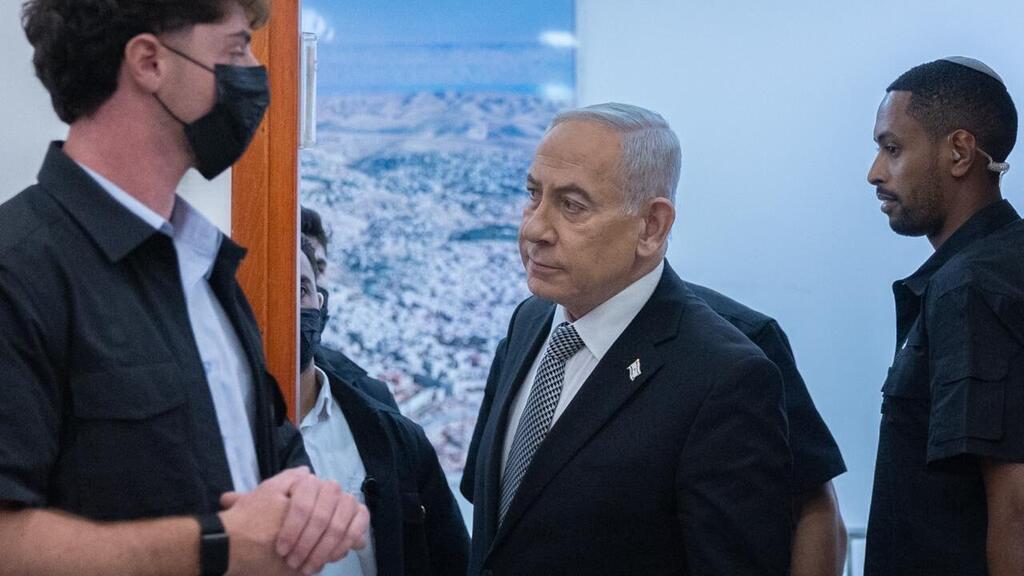
The judges did not explain the difficulties they identified; Netanyahu in court
(Photo: Yonatan Sindel/Flash90)
Can the prosecution still try to prove the bribery offense?
If it does not withdraw the bribery charge in Case 4000, the prosecution could, in theory, try to persuade the judges during closing arguments — the final stage, in which the parties summarize the evidence presented at trial in support of their positions. However, there is no further testimony or additional evidence the prosecution can present. Therefore, if after Netanyahu’s cross-examination the judges still believe bribery has not been proven, the prosecution has no further opportunity to prove the offense and that avenue is effectively closed. After a verdict acquitting Netanyahu of bribery, the prosecution would be entitled to appeal to the Supreme Court.
What are the difficulties in proving the bribery charge?
It is important to emphasize that the judges did not explain what difficulties they found in proving bribery. Still, several possible reasons can be raised.
The first is that the defense proved the central event meant to establish the bribery allegation — the “directive meeting” — did not take place on the date the prosecution claimed in the indictment and therefore likely did not take place at all. The new dates later proposed by the prosecution for the alleged meeting also were not sufficiently supported by evidence.
The second concerns the content of the meeting. During the cross-examination of state’s witness Shlomo Filber, he recanted testimony he gave to police and testified that Netanyahu’s hand gesture and instruction were not meant to benefit Elovitch, but the opposite: to act independently and distance himself from Elovitch.
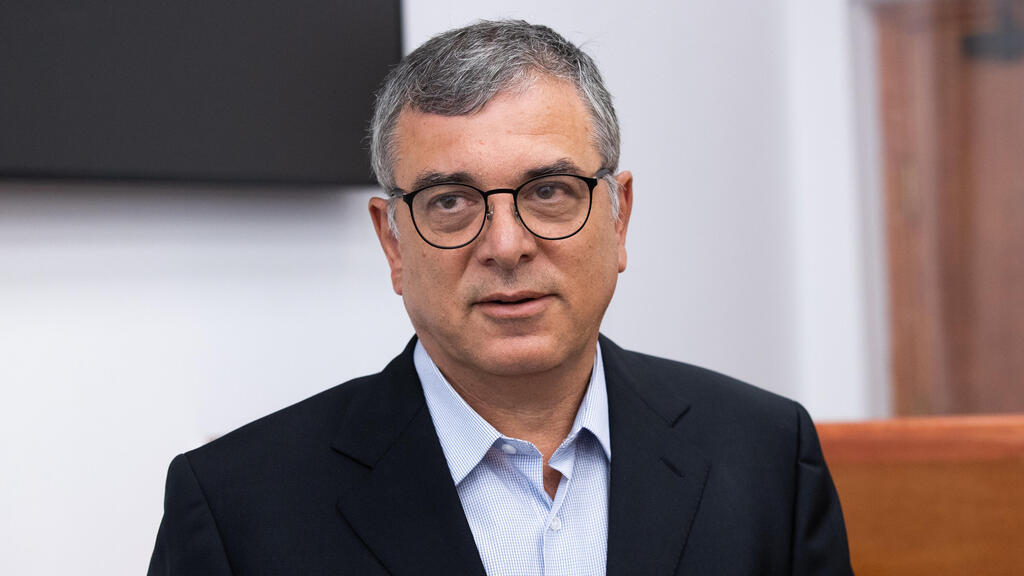
Shlomo Filber
(Photo: Alex Kolomoisky)
Third, the defense also significantly undermined the “yellow sticky note” evidence, showing that it was not a list of tasks Filber wrote following Netanyahu’s instruction after their meeting, but tasks written either before the meeting or afterward, with no connection to it.
There is another possible reason: The indictment alleges that Netanyahu received a bribe from Shaul Elovitch in the form of “exceptional responsiveness in coverage,” meaning Walla’s response to Netanyahu’s requests for coverage. On the judges’ orders, the prosecution was forced to add “Document 315” to the indictment, an appendix containing requests related to coverage on the site. It is difficult to know what the judges thought of this, but during the trial, quite a few difficulties emerged in proving the site’s responsiveness to those requests, the exceptional nature of that responsiveness and the number of coverage-related matters involved.
Must the prosecution respond to the court?
It can, but it is not required to. In concise language, the judges said their decision from three years ago still stands — meaning they still believe there are difficulties in proving bribery and that the prosecution should still consider withdrawing the bribery charge. But the judges’ notice is a recommendation, and they did not ask the prosecution to return with an update.
What about the breach of trust offenses?
The judges referred only to the bribery offense because the prosecution, apparently, did not come close to proving it — leading the judges, already during the evidentiary stage of the trial, to point to what they cautiously called “difficulties.” The judges did not refer at all to the breach of trust offense, and that does not mean they intend to convict Netanyahu of that offense.
In fact, in Case 4000, there is a connection between bribery and breach of trust because, according to the prosecution, what created the conflict of interest between Netanyahu and Elovitch was the “coverage affinity.” In other words, the allegedly exceptional responsiveness in coverage was so blatant that it created a special and clear relationship between the two, one that barred Netanyahu from dealing with Elovitch’s affairs — similar to family, business or friendship ties that can create such an affinity in breach of trust cases. A “coverage affinity,” however, is a novel concept.
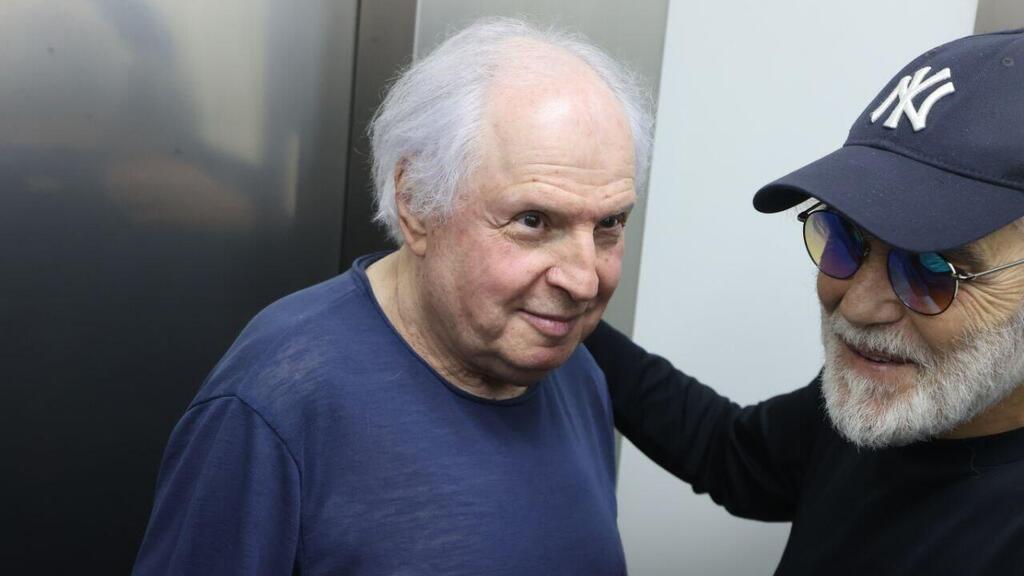
Shaul Elovitch in court
(Photo: Moti Kimchi)
To the extent the judges found difficulties in proving the bribery offense, and if they were also referring to difficulties in proving exceptional responsiveness in coverage, then there are also difficulties in proving the breach of trust offense, since both rest on a shared foundation.
What about Elovitch’s bribery charge?
The judges did not mention it, neither today nor in their original decision three years ago, and none of the parties — neither the defense nor the prosecution — asked. A journalistic inquiry sent on the matter three years ago was met with the judges’ refusal to elaborate.
One possibility is that they intend to acquit not only Netanyahu but also Shaul Elovitch. There is another possibility: In theory, removing the charge that Netanyahu received a bribe does not necessarily mean removing the charge that Elovitch gave a bribe. In other words, there could theoretically be a situation in which Netanyahu is acquitted of receiving a bribe from Elovitch, while Elovitch himself is convicted of giving a bribe to Netanyahu. As stated, the judges chose not to elaborate.