

Oman has secured support from Gulf states for a proposal that would allow Iran to collect voluntary fees from ships using the Strait of Hormuz while preventing Tehran from exercising sole control over the strategic waterway, a Gulf source told Reuters on Tuesday.
The plan could provide a path toward ending disruptions to oil and liquefied natural gas shipments caused by the U.S.-Israeli war against Iran.
U.S. President Donald Trump, who halted a renewed two-week bombing campaign over the weekend, said talks with Iran were progressing but warned that American strikes could resume if negotiations failed.
Iran, however, denied that it was seeking new talks with Washington.
The United States launched its latest bombing campaign earlier this month in an effort to break Iran’s grip on the Strait of Hormuz, through which about one-fifth of global oil and liquefied natural gas passed before the war.
Iran effectively closed the strait to vessels other than its own after the United States and Israel attacked on February 28.
A U.S.-Iran agreement reached last month partially reopened the waterway, but the arrangement collapsed in early July after Iran fired on vessels using a shipping channel it had not approved.
Tehran has said it wants to manage the strait jointly with Oman, which controls the opposite shore, and collect service fees from ships passing through it.
Washington is demanding a return to the prewar arrangement, under which vessels crossed freely without payment, and argues that mandatory fees would be illegal.
Under the Omani proposal, Iran would not exercise exclusive control and any payments would be voluntary, the Gulf source said.

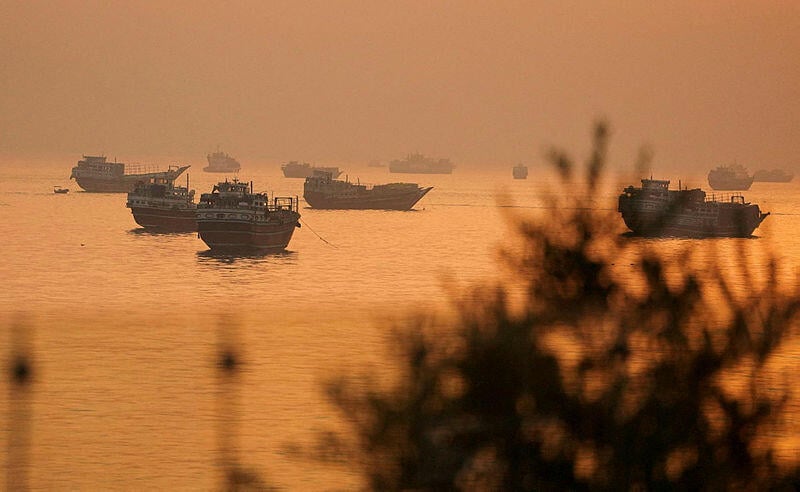
Strait of Malacca
(Photo: Shutterstock)
The arrangement would resemble the system used in the Strait of Malacca, where Indonesia, Malaysia and Singapore ask ships to make voluntary contributions toward navigation services, environmental protection and search-and-rescue operations.
Iranian Foreign Minister Abbas Araqchi discussed the Strait of Hormuz separately with his Omani and Saudi counterparts on Monday, according to an Iranian Foreign Ministry statement.
The officials stressed the importance of regional cooperation and diplomacy in maintaining stability.
Trump warns strikes could resume
Trump ended the latest U.S. air campaign after military commanders advised him that the strategy had run its course.
The 13 nights of renewed bombing killed scores of people in Iran and destroyed bridges and tunnels across the country’s south, along with military targets.
Iran responded with attacks on U.S. bases in neighboring countries that killed four American service members. It also struck civilian infrastructure in Gulf states, describing the attacks as retaliation for U.S. strikes on civilian targets.
Tehran said it would refrain from further attacks as long as Washington did the same.
Drone attacks were nevertheless reported Monday in Jordan, Saudi Arabia and northern Iran, while Jordan said another drone was intercepted Tuesday.
Trump warns strikes could resume


Trump expressed optimism Monday that a deal could be reached to end the five-month conflict, but made clear that U.S. strikes remained an option.
“I think there’s a good chance that something could happen, and if it does, good,” he said. “If it doesn’t, we go back to doing what we were doing two days ago.”
Iran said it had not requested renewed negotiations and accused Washington of violating an agreement reached last month establishing a framework for talks aimed at ending the war.
Trump was scheduled to meet Prime Minister Benjamin Netanyahu in Washington on Tuesday.
Although Israel participated in the initial bombing campaign, it has not been included in subsequent peace negotiations. Relations between Trump and Netanyahu have also become increasingly strained.
Trump has sought to restrain Netanyahu from carrying out further attacks in Lebanon against Iran-backed Hezbollah, amid concern that Israeli action could complicate diplomacy with Tehran.
The suspension of U.S. airstrikes sent oil prices sharply lower. Prices fell about 8% on Monday and continued declining Tuesday, with Brent crude futures down more than 2.5% at approximately $86 a barrel by mid-morning.
Washington and Tehran agreed in June on a framework for negotiations intended to resolve major disputes, including Iran’s nuclear program, by the end of August.
The sides remain divided over language concerning the Strait of Hormuz.
Washington says the agreement requires Iran to permit free passage, while Tehran argues that it gives the Islamic Republic authority to supervise transit through the waterway.
First published: 09:47, 07.28.26