

Exactly 78 years after it was used as a makeshift weapon to help defend communities in the Jezreel Valley, the old pistol has been found during frequent trips to the preservation storeroom in the museum shelter at Kibbutz Yifat. It is now set to become a permanent exhibit at the Valley Museum on the kibbutz.
“In 1947, we at Kibbutz Geva suffered harassment from gangs affiliated with Fawzi al-Qawuqji’s Arab Liberation Army, who had settled in the villages near us and would come out to attack us,” said Yoav Aharoni, 86, who was born at Kibbutz Geva and now lives at Kibbutz Yifat in the Jezreel Valley. His late brother Uzi made the makeshift pistol in the kibbutz metal workshop nearly 80 years ago. “They used to snipe at us from the hill above Geva, where Kibbutz Yifat stands today.”
Gallery
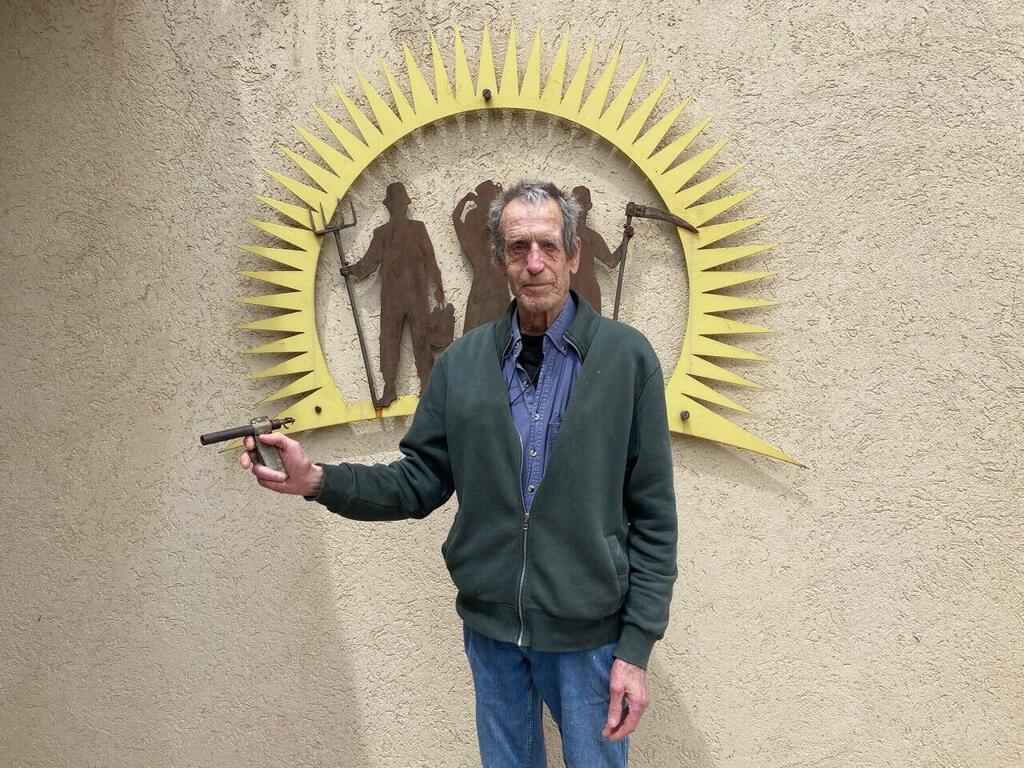
Yoav Aharoni holding the makeshift pistol made by his late brother Uzi
(Photo: Valley Museum)
Yoav recalled: “My younger brother, Uzi, was 16 years old, a 10th-grade student. He and his classmates were assigned to observation and communications duties, but without weapons, because there was a shortage of arms. Uzi worked in the kibbutz metal shop and had a rare technical talent. He used his improvisational ability to build two devices for his security missions — a telescope made of cardboard tubes and a pistol based on a pipe used in a mole trap. He took the pipe and built a pistol around it, which he hid in his pockets in two separate parts. One part was the barrel, already loaded with a bullet, and the other was the grip with the trigger, firing pin and safety, which he kept in a separate pocket.”
When needed, Uzi could assemble the parts within seconds, Yoav said proudly. “With the skill of an engineer, he carried it in his pocket throughout the War of Independence and was constantly ready to use it. He was the only boy in the valley who regularly went around with a pistol.”
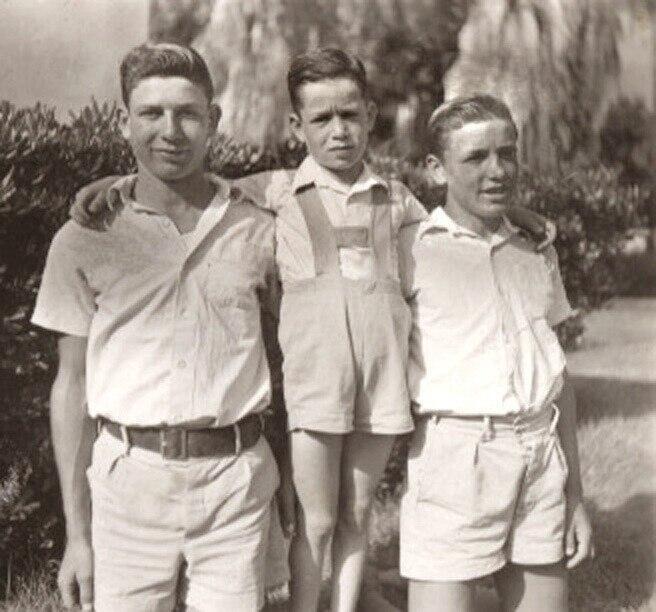
From right: Uzi, Yoav and Amos Aharoni
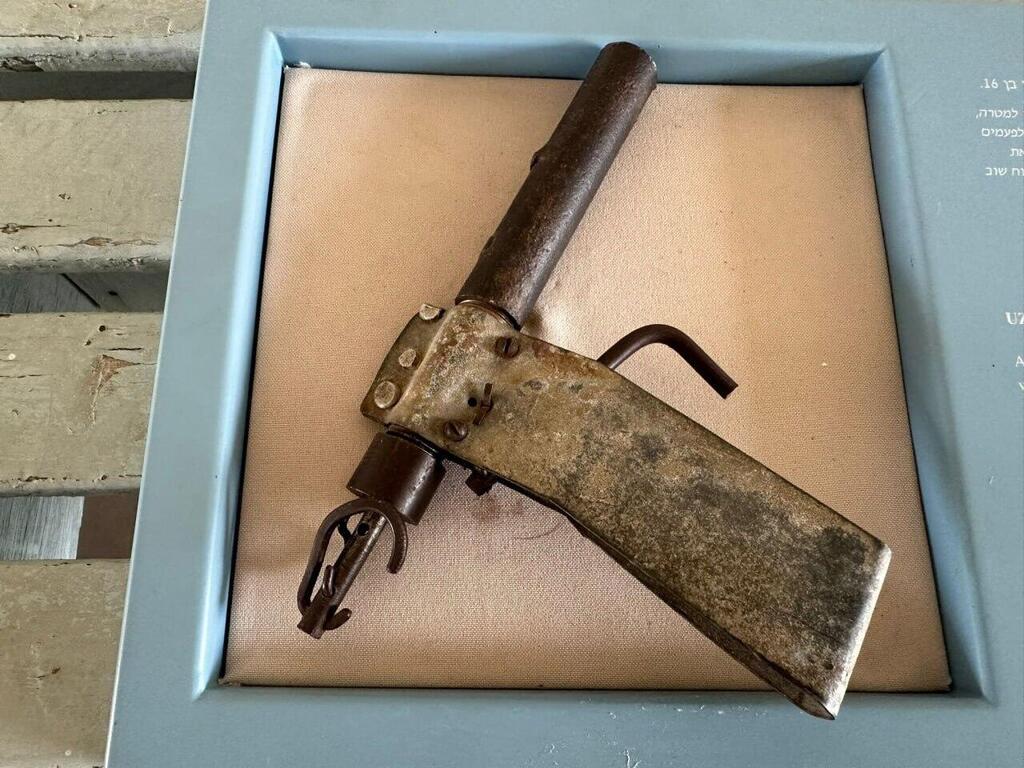
The makeshift pistol that will become a museum exhibit
(Photo: Valley Museum)
Before his death, Uzi donated the pistol to the museum along with a handwritten explanation. This is what he wrote:
“Eliahu Gozani and I decided that we needed to prepare personal weapons for ourselves. At the Geva metal shop, they were then producing fence mines, made of a barrel and a firing mechanism attached to a fence post. Touching a tripwire stretched along the fence would cause a bullet to be fired,” he wrote. He added: “The production of the mines was underground, in secret, and with great effort we obtained mine parts that had been rejected in production. We worked hard to repair them, and in the end assembled the pistol. When I was on duty, I kept the mechanism with the grip in my pocket, cocked and on safe. In my right pocket, I kept the barrel loaded with a bullet, as well as an extraction rod.”
When the Valley Museum was established at Yifat, Uzi donated the pistol and suggested hanging it on a wall in the dining hall, where it was displayed briefly before being moved to Beit HaNasi, the President’s Residence, which asked to exhibit it.
“At the end of the war, Uzi dismantled the pistol he had made and kept it in his room among his belongings,” Yoav said.
The letter Uzi Aharoni left beside the pistol:
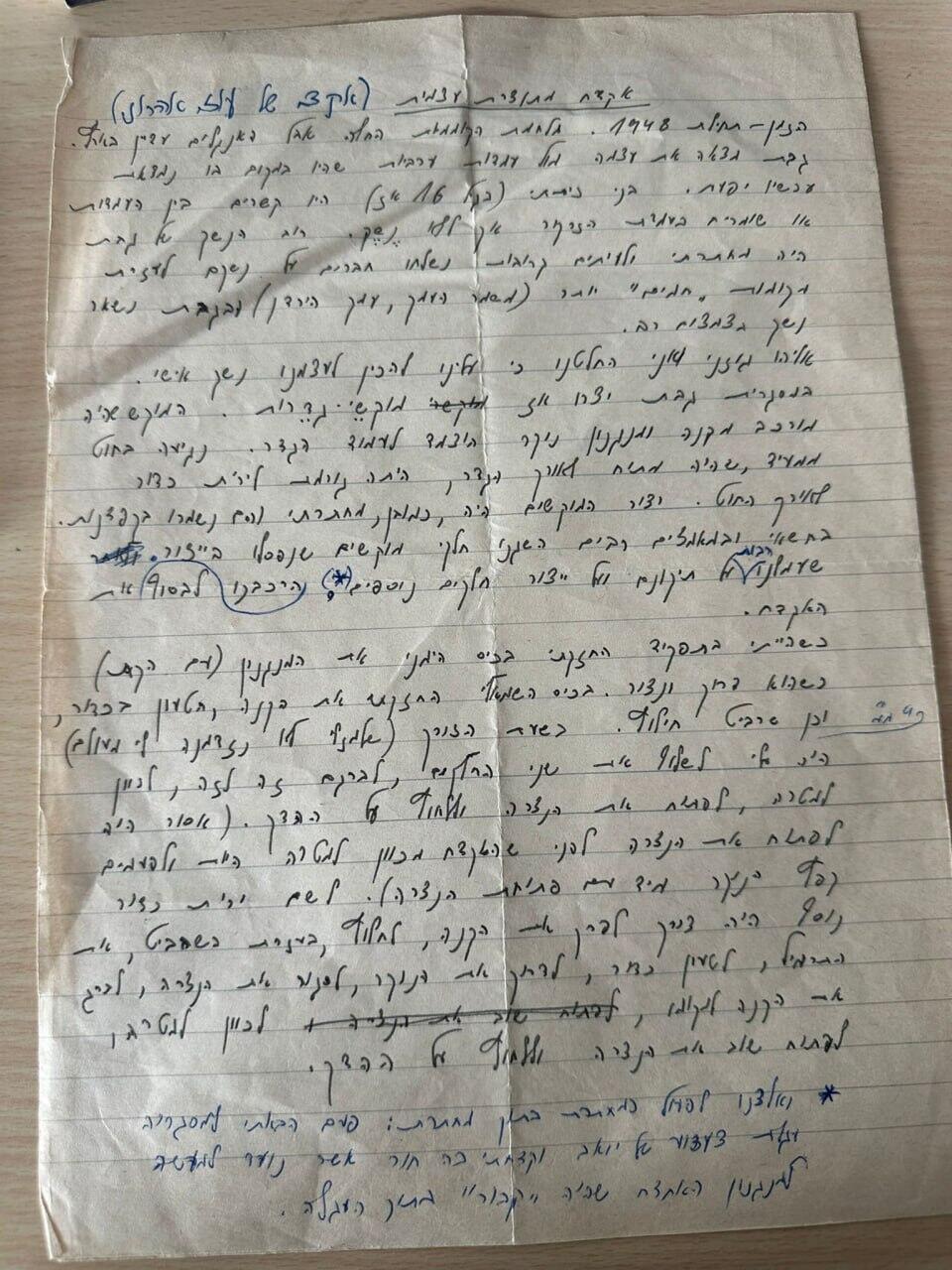
(Photo: Valley Museum)
After the war, Uzi was sent by the kibbutz to the Technion and served as an engineer in the Ordnance Corps. Later, he taught for more than a decade at the regional high school at Kibbutz Yifat. He died at age 64 after an asthma attack.
“For us, this is an important family closing of the circle. After decades in which the pistol was lying around somewhere, it will once again become a museum exhibit describing life during the Mandate period. During the War of Independence, we lost our eldest brother, Amos, who was killed in Operation Dani to capture the city of Lod. He was 18 and a half and did not have time to start a family. This pistol is also a memory for us of our brother Amos, who gave his life for the establishment of the state,” Yoav said.
Iris Groman, director of the Valley Museum at Yifat, added: “This is an important historical item that has never been displayed here and was uncovered only because of the frequent trips to the shelter during the war. Thousands of our items are kept in a special climate-controlled preservation storeroom that also serves as a shelter. While staying there, we came across this pistol, learned its fascinating story and immediately decided to make it a must-see exhibit here.”