

A secretive Iranian security hard-liner who returned to prominence after years in the shadows helped derail an attempt to reach an agreement with the United States, setting off one of the fiercest internal power struggles in Tehran since the war began, according to an extensive New York Times report.
The episode unfolded in July, shortly after Iranian President Masoud Pezeshkian had completed negotiations on a memorandum of understanding to end the war with Washington. Pezeshkian traveled to neighboring Iraq for a week of mourning ceremonies for Iran’s former supreme leader, Ayatollah Ali Khamenei, who was killed at the beginning of the war.
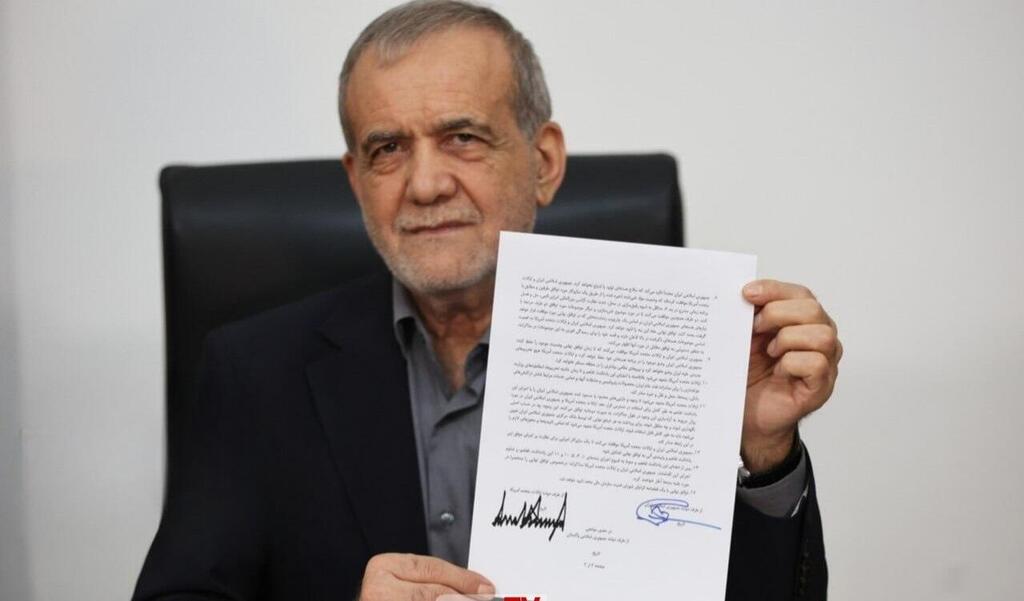
Then came news that stunned him: Iranian forces had opened fire on three commercial vessels in the Strait of Hormuz, setting a Qatari liquefied natural gas tanker ablaze and damaging other ships.
According to five Iranian officials and two members of the Islamic Revolutionary Guard Corps cited by the Times, an enraged Pezeshkian called Gen. Ahmad Vahidi, the IRGC’s commander in chief, described the attacks as “reckless” and demanded answers.
Vahidi told the president that he had neither authorized the attack nor known about it beforehand. Iran’s Supreme National Security Council had also been unaware of the operation, according to the report.
Much of Iran’s leadership, it turned out, had no idea that a hard-line faction had decided to act on its own.
The covert maneuvering ultimately thwarted efforts by Iran’s relatively moderate faction to bring hostilities with the United States to an end. The hard-liners succeeded in part because the one person with the authority to settle such disputes — Iran’s new supreme leader, Mojtaba Khamenei — has effectively become a ghost.
Pezeshkian immediately returned to Tehran. By the next morning, as the mourning ceremonies continued, the United States responded with airstrikes against Iran and fighting resumed.
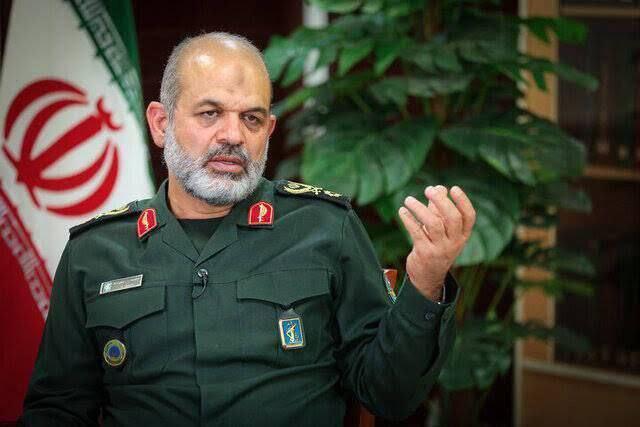
Islamic Revolutionary Guard Corps commander in chief Gen. Ahmad Vahidi
Iranian officials and an IRGC member told the Times that what followed was one of the most heated political confrontations within Iran’s leadership. Senior officials engaged in shouting matches, two high-ranking generals threatened to resign and accusations of betrayal and treason flew between rival factions.
Officials said the fallout contributed to an upheaval at the Supreme National Security Council and a decision to put Gen. Mohsen Rezaei, a veteran politician and former IRGC commander, in charge of it. Rezaei was seen as having the political skills needed to mediate between the competing factions.
But the divisions have persisted and the hard-liners are now in an even stronger position.
The conflict has continued to escalate. Over the past week, Iran and the United States have again exchanged fire, with Iranian forces attacking U.S. Navy vessels for the first time and American forces destroying at least eight Iranian oil tankers.
A hard-liner returns from the shadows
Three Iranian officials said investigations by the government and security forces determined that the decision to attack the three commercial vessels in July had been made by Hossein Taeb, a powerful intelligence figure who had opposed the agreement with the United States from the outset.
According to the officials, Taeb told the new supreme leader that Iran had made a mistake by ending the war and agreeing to the deal.
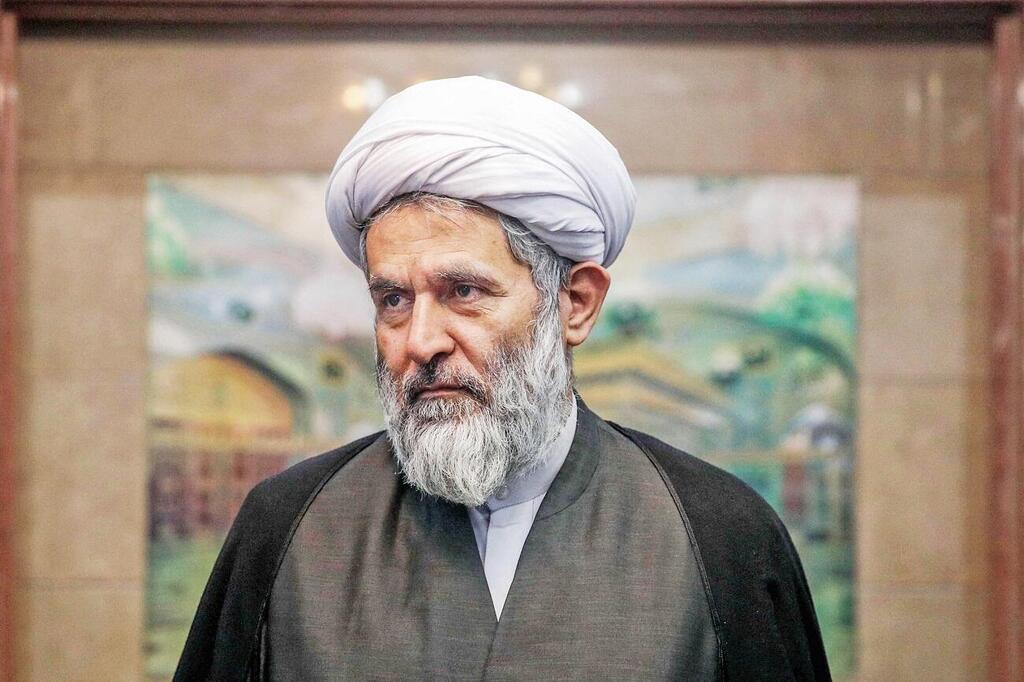
Hossein Taeb
(Photo: AFP)
In a recent speech to military families, Taeb said he was not opposed to talks in principle but drew a clear line over the terms.
“Negotiations that ignore the rights of our people and concede to the excessive demands of the enemy have no place in Iran’s politics,” he said.
Taeb, a shadowy cleric with deep roots in Iran’s security establishment, was recently appointed to lead the Basij, the paramilitary force used by the government to suppress domestic dissent.
He previously spent more than 20 years in senior intelligence positions, including as head of the IRGC’s intelligence organization, before Ali Khamenei removed him in 2022 after a series of security failures. Those included Israeli penetration of Iran’s security apparatus and the disruption of an Iranian plot in Turkey.
Taeb returned to prominence following Ali Khamenei’s killing. Officials said he played a central role in the selection of Khamenei’s son Mojtaba as his successor.
When Pezeshkian demanded to know who had ordered the attacks on the three vessels, he was told that commanders in the field had acted independently under an existing directive allowing them to attack any ship deemed to be violating Iran’s control over the strait without waiting for approval from central command.
One indication of the internal disagreement was that the IRGC’s Khatam al-Anbiya Central Headquarters never claimed responsibility for the July 7 attack, even though it had routinely done so after attacks both before and after the incident.
Iranian officials provided the same explanation to the United States and several of its regional allies in the hours after the attacks, blaming “rogue” elements. Iranian Foreign Minister Abbas Araghchi was dispatched to Oman, which has long served as an intermediary between Washington and Tehran, in an attempt to defuse tensions.
Where is Iran’s supreme leader?
The turmoil has renewed questions about Mojtaba Khamenei, whose whereabouts and role in governing Iran remain shrouded in secrecy.
This month, his mother-in-law, Tayebeh Mahrouzadeh, gave a lengthy video interview to a local journalist in which she described extraordinary security measures surrounding the family. She said relatives had no information about the whereabouts of the ayatollah or his three children.
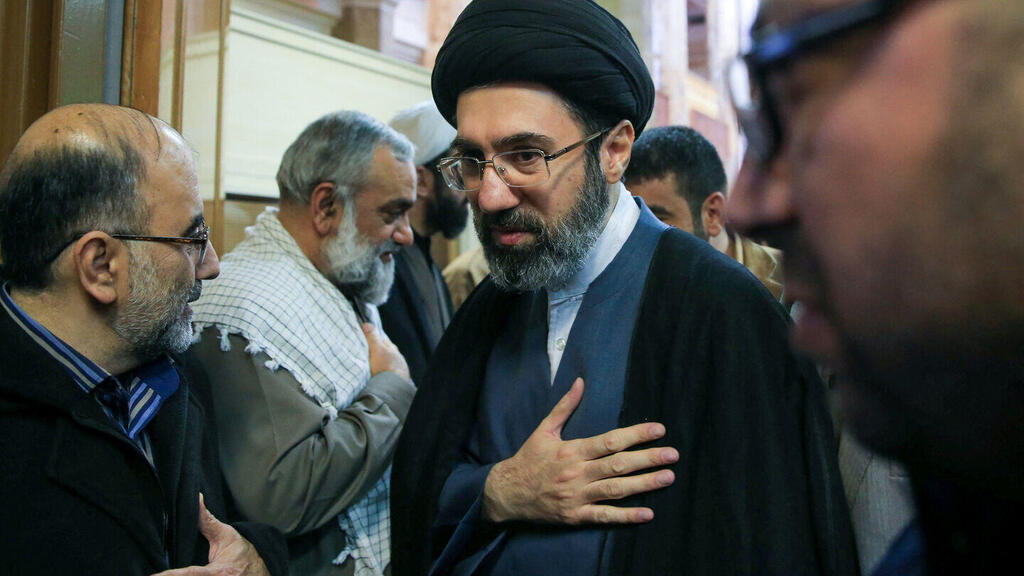
Iranian Supreme Leader Mojtaba Khamenei
(Photo: Rouhollah Vahdati/ISNA/WANA (West Asia News Agency)/AFP)
Her husband, politician Gholam-Ali Haddad-Adel, told Iranian media in July that although Mojtaba Khamenei was not communicating with anyone because of security concerns, “God willing, he is healthy.”
Pezeshkian said in May that he had met Khamenei but did not say when or where.
Two Iranian officials and a former senior official described the circumstances of that encounter as highly unusual. They said Pezeshkian was transported in an ambulance with tinted windows while a secure video connection was established.
A man who said he was acting as an intermediary for Mojtaba appeared on a screen and purportedly relayed messages between the supreme leader and the president. Officials familiar with the encounter said Pezeshkian later told a close ally that he was not certain whether he had actually spoken with the supreme leader.
Last month, however, Pezeshkian said he had received permission for a second meeting and that it lasted seven hours.
“We talked about all the issues facing the country,” the president told Iranian state television, listing the cost of living, unemployment, sanctions, national unity and resilience during wartime.
He did not describe the circumstances of the meeting or disclose what Khamenei had said.
Tehran debates talks or a wider war
For weeks, according to the Times, the political leaders and generals running Iran have debated two competing strategies for breaking the deadlock with the United States.
Under one approach, Iran would attempt to return to negotiations. Under the other, it would dramatically escalate attacks against American targets, seeking to damage U.S. Navy vessels, kill American troops and drive up global oil prices.
Both strategies are aimed at ending the U.S. naval blockade of the Strait of Hormuz, which has paralyzed trade and reduced Iranian oil sales to zero.
Hard-line generals, including Seyed Majid Mousavi, commander of the IRGC Aerospace Force, have pushed for confrontation.
They told the Supreme National Security Council that they had developed a detailed war plan under which Iran and its regional allies — particularly the Houthis in Yemen and Iran-aligned militias in Iraq — would intensify attacks, including against oil facilities across the region.
The strategy would broaden the war and sharply increase its economic and military cost for the United States and its allies.
Pezeshkian and parliament Speaker Mohammad Bagher Ghalibaf, who has been involved in negotiations with Washington, were among those warning that such a strategy could drag Iran into an abyss, risking even more devastating U.S. airstrikes and further crippling economic pressure.
For now, however, the hard-line faction appears to have prevailed.
“The war between Iran and the United States has entered the phase of escalation,” Mahdi Mohammadi, the top adviser to Ghalibaf, told the Times.