


The Mossad intelligence agency has foiled an Iranian plan to carry out attacks against the Israeli embassy in Senegal and Israeli representatives in Uganda, the opposition-linked Iranian outlet Iran International reported Wednesday.
According to the report, the plot was orchestrated by Iran’s Quds Force, the foreign operations arm of the Islamic Revolutionary Guard Corps (IRGC). The unit allegedly used a proxy network consisting of Pakistani and Bangladeshi nationals operating from Iran, as well as locally recruited operatives in Africa—many of whom were reportedly recruited via social media platforms.
Gallery

One of the African recruits in the Iranian-led terror plot is seen under interrogation after admitting to being directed by Quds Force operatives
At the center of the network was Zahid Javed, a Pakistani national who has lived in Iran for several years and was reportedly directed by three Quds Force officers: Abbas (known as Muhammad Naeem), Reza Ghobadi and Meysam Sahraei. Jawad recruited his Bangladeshi associate, Ahmed Homan, also residing in Iran, and together they activated dozens of operatives across the African continent.
The local recruits were tasked with gathering intelligence on Israeli embassies, photographing the sites, acquiring Western-made weapons—specifically handguns and grenades—and ultimately carrying out attacks. In return, they were promised payments of only a few hundred dollars.
As part of their instructions, the operatives were told to send images of the targets marked with the code “AR” and to provide proof of weapon purchases. Some of the local recruits have reportedly been interrogated and confessed to acting on behalf of Iranian elements.
The plot was uncovered through a joint intelligence effort between Mossad and African security services, which led to the arrest of several suspects and the dismantling of the network before any attacks could be carried out.
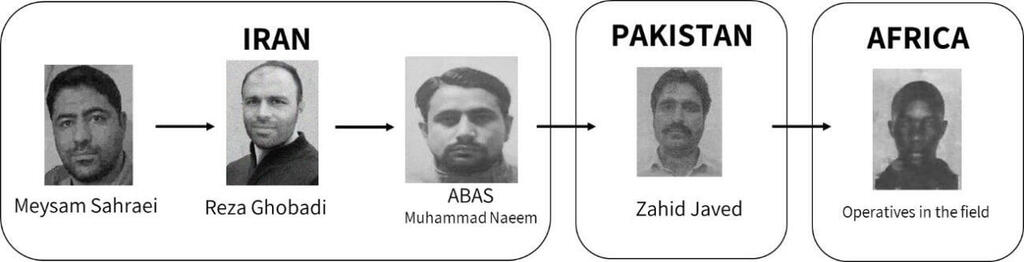
The chain of command, stretching from senior Quds Force officers in Iran to operatives on the ground in Africa, illustrates the structure of the thwarted terror plot
This is not the first time the Quds Force has attempted operations in Africa. In 2022, a planned attack by Quds Force Unit 840 in the Democratic Republic of Congo targeting Israeli and American interests was foiled. A similar network was exposed in South Africa in 2020.
The Iranian method
In each case, the same pattern repeats: the use of foreign and local proxies with no formal training, attempts to obscure direct links to Tehran and repeated failures due to the operatives’ negligence and lack of professionalism.
“Iran continues to use this method in order to distance itself from the operations carried out on the ground and to avoid the diplomatic consequences and costs associated with promoting terrorism,” a source familiar with the details said.
“Despite efforts to avoid leaving an Iranian fingerprint, the proxy strategy repeatedly exposes the incompetence of operatives in the field, who often seek to extort money from their handlers rather than carry out the assigned mission. As a result, the Iranian government wastes public funds on terror activity that is thwarted before it can be executed.”
“Iran continues to invest considerable resources in revenge attempts against Israel worldwide, including across Africa, which has become a key theater of operations," a security official added. "Mossad and the security services of friendly African nations once again demonstrate that every such attempt will be foiled early on.”