

The White House has not officially disclosed the reason for CIA Director John Ratcliffe’s unusual visit to Moscow on Tuesday, but overnight Wednesday into Thursday, at least some of the theories surrounding the trip gained support.
The Wall Street Journal reported that the U.S. intelligence chief traveled to the Russian capital to warn the Kremlin against attacking NATO. Politico published a similar report, adding that Ratcliffe also pressed Moscow to reduce its military and economic support for Iran.
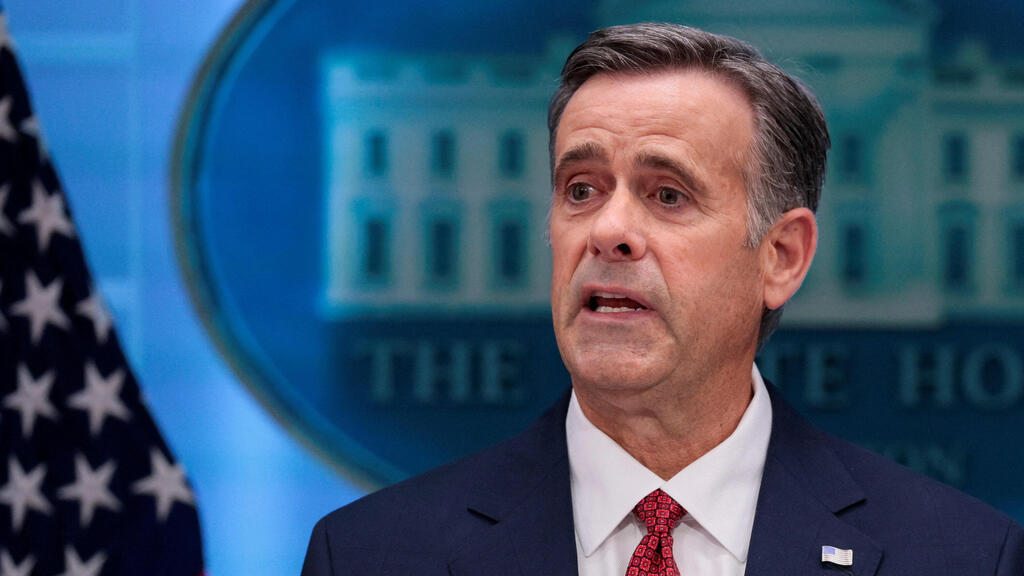
CIA director’s plane lands in Latvia after Moscow visit
(Video: Reuters)


The Journal’s report was based on people briefed on the surprise visit, Ratcliffe’s first to Russia as CIA director. Earlier this month, the newspaper reported that according to updated Western intelligence assessments, Russia could seek to test NATO’s commitment to its members by attacking an alliance country in the coming years. Leaders of the Baltic states — Lithuania, Latvia and Estonia — have repeatedly voiced concern that the region could become a flashpoint between Russia and the West.
The report also said U.S. officials are concerned that Russian President Vladimir Putin, under growing pressure in the war in Ukraine, now in its fifth year, could launch an attack ranging from a cyber operation to a limited military incursion, most likely against one of the Baltic states.
Footage from Ukrainian strike in Donetsk: Explosions in rapid succession
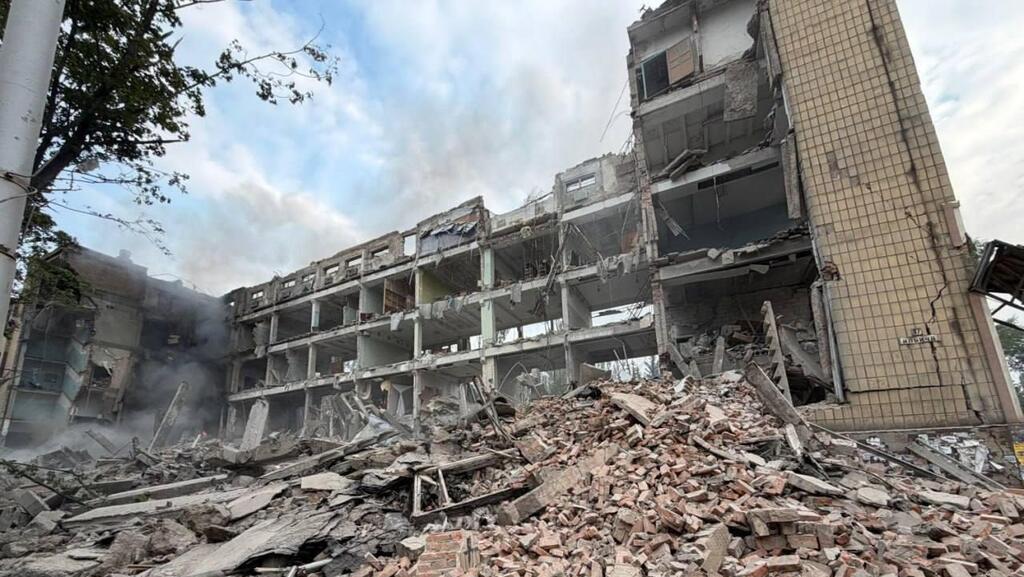
Destruction in Donetsk after the Ukrainian strike; no official details on the target
Politico, citing two people familiar with the matter, reported that Ratcliffe warned Russian officials in Moscow not to escalate confrontation with U.S. NATO allies, with a particular emphasis on the Baltic states. One person who spoke to Politico and a British official said the CIA director also used the visit to press Russia to reduce its economic and military support for Iran.
The British official said Ratcliffe raised the issue following U.S. Treasury Secretary Scott Bessent’s threat to intensify sanctions against countries that refuse to sever economic ties with Iran. According to the official, Ratcliffe made clear that Russia should stop sharing weapons and defense technology with Iran and advised Moscow not to “overreact” if it is affected by U.S. sanctions.
Neither Politico nor The Wall Street Journal said whether Ratcliffe met directly with Putin. On the day of the visit, Kremlin spokesman Dmitry Peskov initially said he did not know who had arrived in Moscow aboard a U.S. military C-17 transport aircraft. He later confirmed that the visitor was the CIA director and that Putin was aware of the trip.
Peskov said Ratcliffe did not meet Putin but came for an “interagency” meeting and that the Russian president was briefed on the talks. The Kremlin has confirmed that Ratcliffe met Russian intelligence officials during the rare visit.
One person who spoke to Politico said the meeting was intended “primarily to warn Russia against any escalatory action against the Baltic states.”
Under Article 5 of the NATO treaty, an attack on one alliance member is considered an attack on all, obligating members to come to the defense of the country under attack. Russia, however, has for years used methods such as cyberattacks and sabotage to harm other countries and carry out hostile operations on their territory without triggering the clause.
In recent weeks, various Russian figures, including former President Dmitry Medvedev, have intensified threats of escalation against “the West,” including threats against NATO. Medvedev, along with hard-line television host Vladimir Solovyov and other propagandists, frequently justifies such rhetoric by claiming Russia is already “fighting NATO in Ukraine.”
The White House declined to comment and instead referred to remarks President Donald Trump made earlier in an interview with conservative radio host Glenn Beck.
Trump described Ratcliffe’s trip as “semi-routine” and shifted the discussion to the war in Ukraine.
“Something may come out of it,” Trump said of the visit. “We’re working very hard to get that war ended, and frankly, they both want to see it ended at this point.”
The CIA declined to comment. The last known visit to Russia by a CIA director took place in November 2021, before Russia launched its full-scale invasion of Ukraine in February 2022. During that trip, then-CIA Director William Burns warned Putin against attacking Ukraine.
Unusual strike in Donetsk
Meanwhile, Russia and Ukraine continued to strike targets deep behind each other’s front lines.
Explosions were heard overnight in the Ukrainian capital, Kyiv, while authorities also reported a Russian attack on an “industrial facility” in the central city of Kryvyi Rih, President Volodymyr Zelenskyy’s hometown.
The head of the city’s military administration said Russia used ballistic missiles and that two people were wounded, but provided no further details.
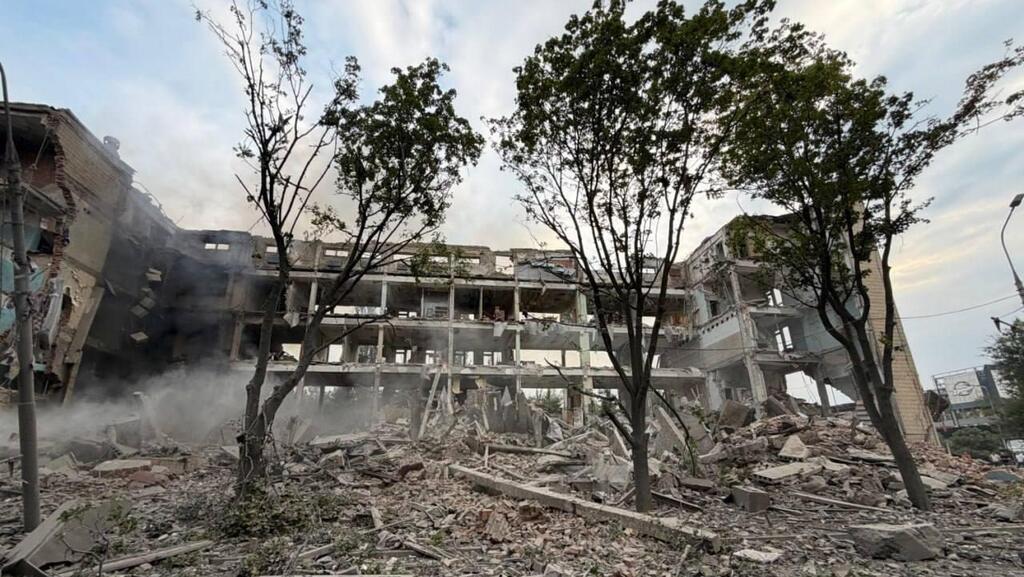
Destruction in Russian-occupied Donetsk

Smoke rises over Donetsk after the strike
Hours earlier, Ukraine carried out a relatively unusual strike, apparently using cruise missiles, on the Russian-occupied city of Donetsk.
No Ukrainian official claimed responsibility for the attack, but extensive destruction was documented in the area. Ukrainian Telegram channels reported that the target may have been the headquarters of the Russian military’s 51st Army.
The Kremlin-appointed governor of the Donetsk region did not provide details about the target and said only that several civilians had been wounded.
Earlier, the Russian newspaper Izvestia reported that 10 people were killed in the unusual strike, but the report was later removed.
One possible explanation is that the Ukrainian reports were accurate and Russian authorities did not want to disclose that military forces had been hit.
Russian state media, which operate under tight restrictions, reported that a shopping center called Donetsk City had been struck. An Izvestia correspondent, however, reported that the missiles landed “near” the shopping center building, and images of the destruction did not show the mall itself.