

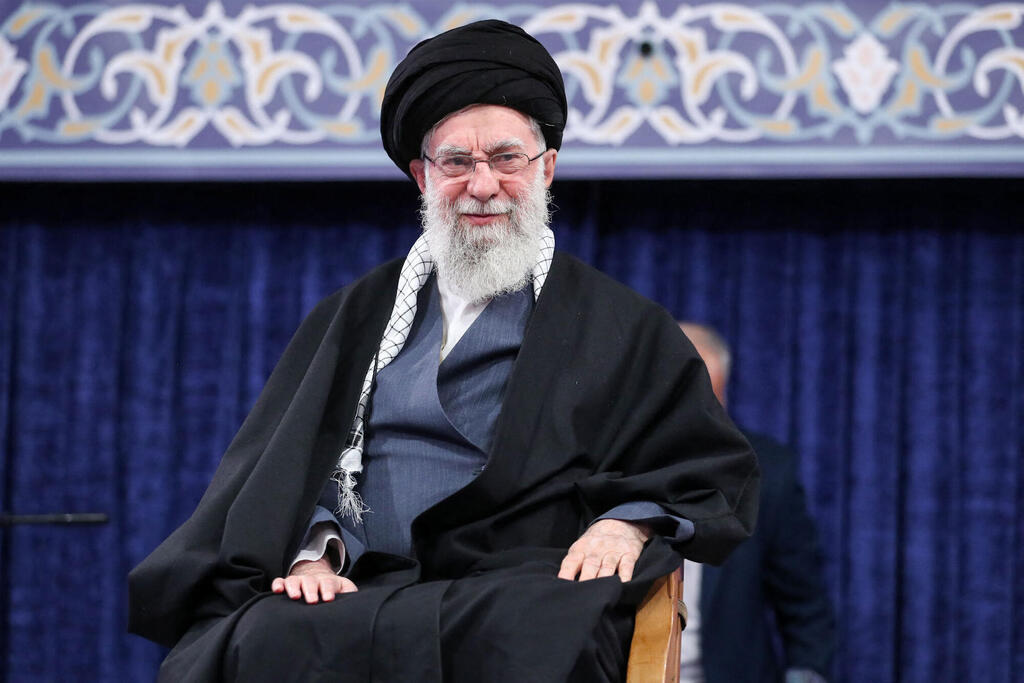
Nearly five months after Iranian Supreme Leader Ali Khamenei was killed in the opening strike of Operation Roaring Lion, Iranian Foreign Minister Abbas Araghchi has described the attack and explained how he has avoided assassination attempts since then.
In an interview with an Iranian journalist cited by The Guardian, Araghchi said he had still not met Iran’s new supreme leader, Mojtaba Khamenei, but argued that his appointment sent “a very important message to the world that there will be no change in the regime’s policies and ideals.”
Ali Khamenei’s funeral procession in Tehran


Araghchi said he had always doubted that negotiations with the United States would produce results, but maintained that diplomacy was necessary “even if there was only a 10% chance of success,” in part to demonstrate that Iran had pursued a diplomatic path. “No one will be able to say it was our fault,” he said.
Araghchi claimed Iran offered the United States a deal over its nuclear program during the latest round of talks in Geneva, but said Oman’s foreign minister told him the following day that the atmosphere in Washington had suddenly become more confrontational.
‘Everything collapsed on us, but the enemy failed’
Discussing Ali Khamenei’s assassination, Araghchi said Israel had intelligence about senior-level meetings. “This may indicate a security gap that probably still exists. It must be fixed,” he said.
Immediately after the strike, Araghchi reported to Khamenei’s deputy chief of staff. “The third explosion was almost next to our building. The section housing the chief of staff’s office was hit directly, and the left side of the building was completely destroyed,” he said.
“We were on the other side of the building, and after the explosion, the ceiling, the walls and everything collapsed on us. We made our way out through the beams, planks and pieces of wood, hearing calls for help. Water was pouring from the ceiling. Everything was destroyed. Eventually we got out, and I saw that different parts of the compound had been targeted.”
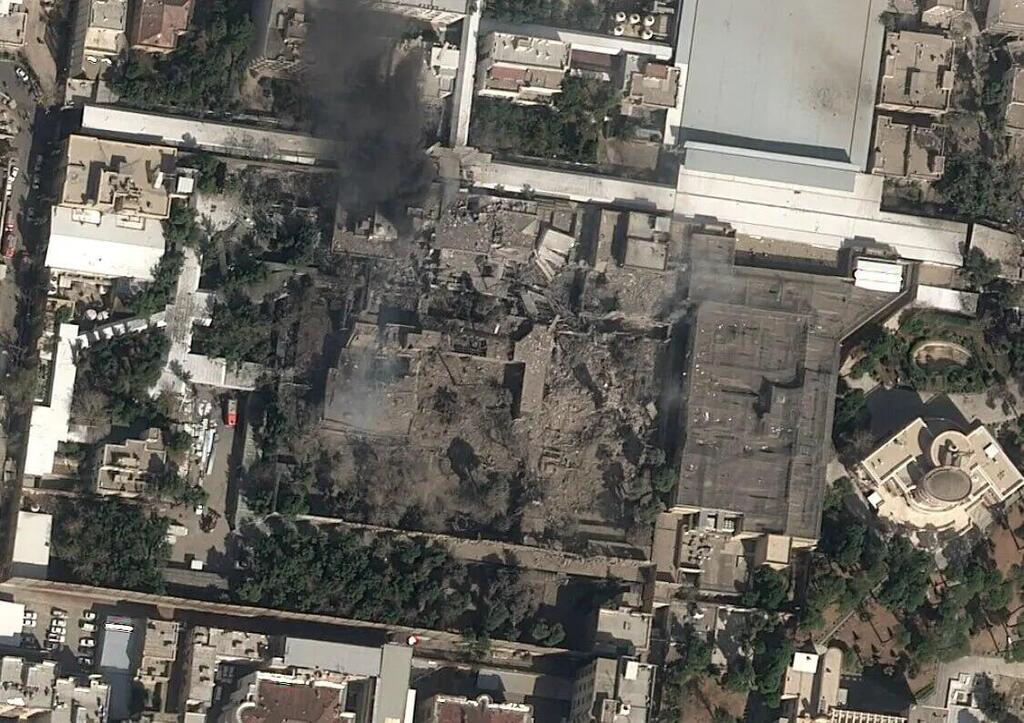
Smoke and damage at Khamenei’s secured compound during the opening strike of Operation Roaring Lion
(Photo: Airbus, New York Times)
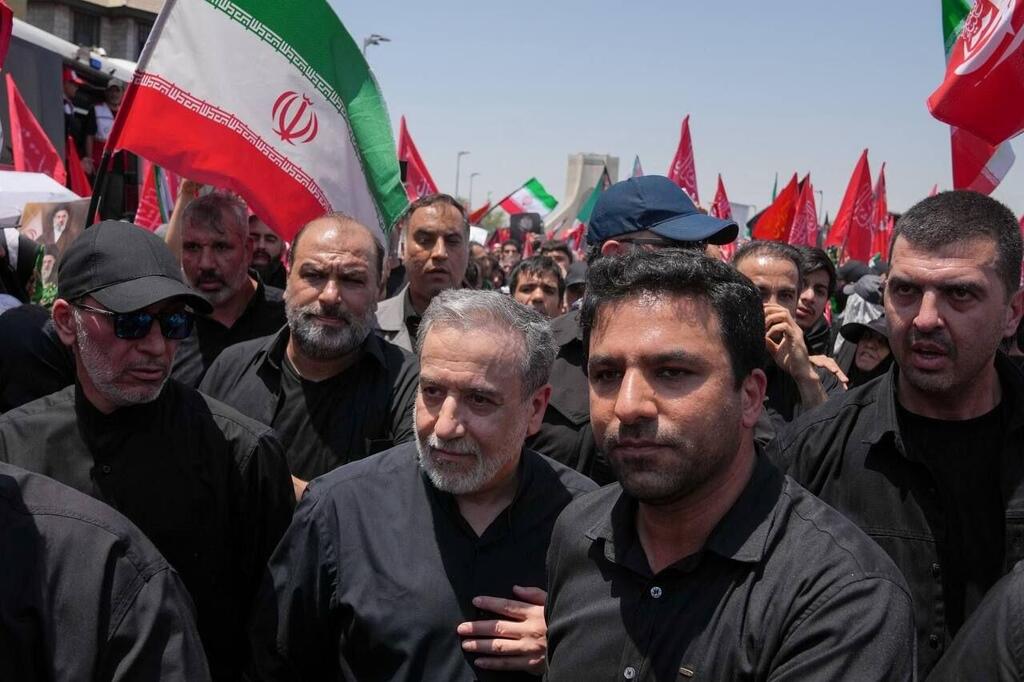
Iranian Foreign Minister Abbas Araghchi at Ali Khamenei’s funeral in Tehran
Araghchi said officials remained cut off from one another for three days after the attack. “We tried to find out who was alive and who had been killed,” he said. “The enemy thought it could paralyze us by targeting the leadership, but it failed.”
According to Araghchi, Iran had prepared for such an attack and had already drawn up a plan to close the Strait of Hormuz. The code name for that scenario, he said, was “Code 110,” a reference to the article of Iran’s Constitution defining the supreme leader’s powers.
Efforts to deepen the US-Israel crisis
Araghchi claimed the United States decided to attack because it believed Iran’s government had been weakened by strikes on its proxies and by domestic protests. He added that regional governments had advised U.S. President Donald Trump not to go to war.
“Iran is different. Its foundation is a civilization thousands of years old, combined with Shiite thought and beliefs about martyrdom. When those come together, they create something that cannot easily be defeated,” he said.
Araghchi said Iran had warned neighboring countries that any attack would be met with strikes on regional targets. “If Israel hits our nuclear facilities, we will hit theirs. Our missiles cannot reach America, so we will strike their bases, which unfortunately are located in your countries,” he said. “If they hit our oil facilities, we will make sure that no one in the region can sell oil.”
He added that Iran was working to intensify divisions between the United States and Israel. “Sometimes there are conflicts between objectives and positions that can be exploited,” he said, without providing further details.
Summing up Iran’s approach to diplomacy and war, Araghchi said: “We do not fight unless the price of not fighting is higher than the cost of fighting.”