


A company that presented itself as a legitimate political polling firm has admitted fabricating election surveys that were published by major American news organizations and incorporated into influential polling averages, triggering a scandal just over a week before the November 3 midterm elections. One former Democratic Senate candidate says the false numbers helped destroy her campaign.
Wedgewood Polls, a relatively new firm that began publishing surveys earlier this year, acknowledged on October 20 that it had fabricated most of its results. The company insisted that the deception was part of an experiment designed to expose how easily unverified polling data could gain credibility with journalists, political analysts and election forecasters.
Gallery
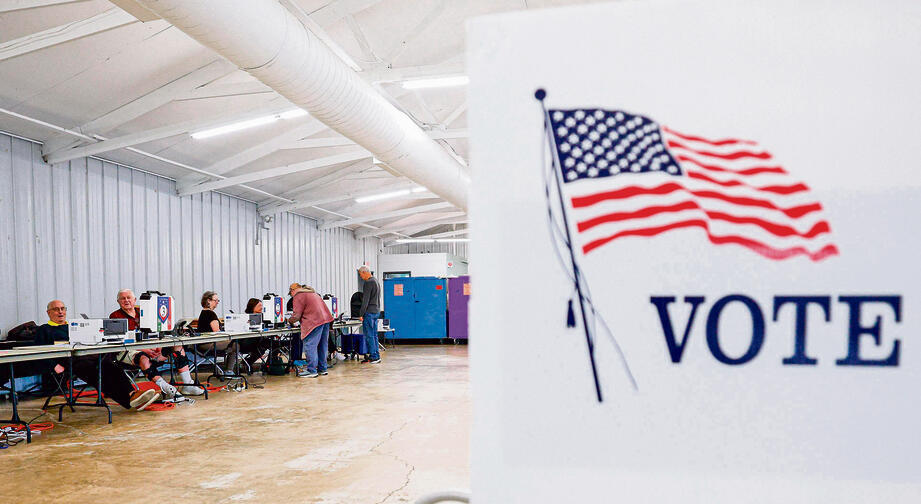
Voting ahead of the US midterm elections, scheduled for November 3
(Photo: Kamil Krzaczynski/AFP)
But the consequences may have extended far beyond embarrassing the media. The fabricated surveys reached major polling trackers, influenced political narratives and, according to candidates and campaign officials, contributed to decisions about donations, campaign strategy and whether to remain in electoral races.
More than a dozen Wedgewood surveys were included in polling databases maintained by leading organizations, including The New York Times and election analysis website FiftyPlusOne. The company also solicited donations to finance what it presented as legitimate polling operations.
The New York Times subsequently removed 15 Wedgewood surveys from its tracking project, while Decision Desk HQ removed 17 polls from its race-level lists and averages.
The admission came only after researchers at FiftyPlusOne began questioning the authenticity of Wedgewood's data and approached the company for an explanation.
In a statement posted on social media, which has since been deleted, Wedgewood described itself as an experimental project intended to demonstrate the weaknesses and lack of oversight in the modern political polling industry.
The company maintained that it had never intended to influence an election or permanently mislead the public.
Its social media account has since disappeared, and the polling operation appears to have shut down.
‘It killed us’: The Michigan candidate who says fake polling ended her campaign
One of the most prominent figures affected by the scandal is Mallory McMorrow, a Democratic state senator who competed for her party's U.S. Senate nomination in Michigan.
McMorrow had entered the race hoping to secure the nomination against two major rivals, former public health official Abdul El-Sayed and U.S. Rep. Haley Stevens.
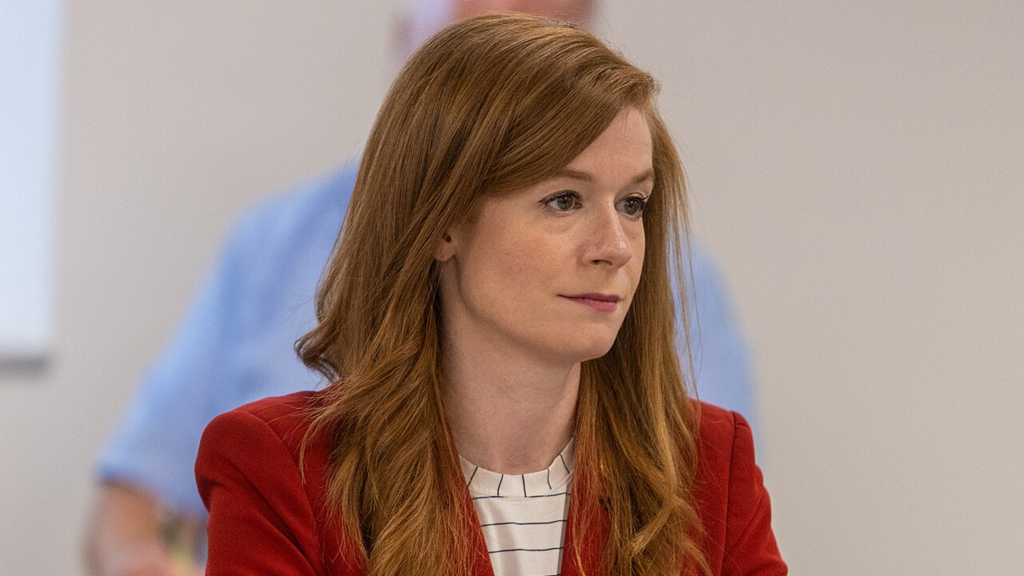
Mallory McMorrow, the former Democratic Senate candidate in Michigan who says fabricated polling contributed to the collapse of her campaign
(Photo: City of Detroit/Wikimedia Commons)
On June 29, Wedgewood published a survey showing McMorrow's support collapsing to just 9%, compared with 46% for El-Sayed and 39% for Stevens.
The findings appeared to suggest that McMorrow had little chance of winning the nomination. Six days later, on July 5, she suspended her campaign, a month before Michigan's Democratic primary.
After Wedgewood admitted fabricating its results, McMorrow publicly described the damage she believes the survey caused.
"It killed us," she said, explaining that the numbers contributed to an impression that her campaign was no longer viable.
In a post on X, McMorrow said donations dried up, volunteers became deeply discouraged and reporters repeatedly contacted her to ask whether she would withdraw.
She described the period as among the worst days of her campaign, particularly for her staff, whose morale suffered as the damaging polling figures spread.
Jennifer Holdsworth, a Democratic strategist who ran a political action committee supporting McMorrow, said several donors used the Wedgewood survey to justify withdrawing financial support.
According to Holdsworth, the funding losses were particularly damaging because McMorrow's campaign was already being outspent by approximately $80 million.
The significance of the alleged damage is difficult to establish conclusively. Other polling organizations also showed McMorrow trailing her rivals, and analysts caution that it is impossible to determine precisely how much one fabricated survey contributed to her decision to withdraw.
Nevertheless, McMorrow argues that the episode demonstrates how polling figures can become self-fulfilling political narratives, particularly when donors and campaign supporters begin making financial decisions based on them.
She has also called for greater transparency and reforms to the American campaign finance system.
The Mississippi poll that exposed the deception
The fabricated data did not appear only in Michigan. Wedgewood also published surveys involving other competitive races across the United States, including the Senate contest in Mississippi.
There, the firm released a poll showing Democratic candidate Scott Colom trailing Republican Sen. Cindy Hyde-Smith by just four percentage points, 48% to 52%.
The numbers suggested that a race in a traditionally Republican state could be considerably closer than previously expected. Colom pointed to the polling as evidence of growing momentum behind his campaign.
Democratic organizations were also increasing their attention to Mississippi, although there is no established evidence that Wedgewood's survey was responsible for their spending decisions.
The Mississippi poll ultimately became the key to exposing the company's operation.
Researchers at FiftyPlusOne were already suspicious of several newly established polling organizations that appeared to be publishing results without an established public track record.
G. Elliott Morris, a journalist and polling analyst at FiftyPlusOne, told TIME that the appearance of numerous unfamiliar polling companies had raised concerns among his colleagues.
After receiving a tip suggesting that Wedgewood's data might be fabricated, the researchers requested the underlying responses from its Mississippi survey.
Wedgewood supplied what it claimed was raw polling data collected through an online survey platform called Pollfish.
However, investigators noticed irregularities. The sample appeared unusually representative of Mississippi's electorate for a survey conducted through that method.
To investigate further, FiftyPlusOne commissioned its own Mississippi poll using the same platform and questionnaire.
The comparison exposed discrepancies in the technical identifiers associated with survey respondents and the timestamps recording when their responses were submitted.
The data provided by Wedgewood did not display the same patterns as the genuine responses collected through the platform, raising serious doubts about its authenticity.
On October 19, FiftyPlusOne contacted Wedgewood about the discrepancies. The following day, the company publicly acknowledged that its polling had been fabricated.
Rather than accepting responsibility for the political consequences, Wedgewood argued that the episode demonstrated how easily a fictional polling operation could win recognition from established media organizations.
How fake polls reached major news organizations
The scandal has also forced questions about the standards used by news outlets and polling aggregators when deciding which surveys deserve credibility.
Wedgewood argued that its experiment exposed a failure by major organizations to verify the identity, methodology and legitimacy of new polling companies.
However, both The New York Times and FiftyPlusOne rejected the suggestion that they had accepted its data without conducting any checks.
FiftyPlusOne said it had asked Wedgewood to identify its staff and explain its polling methods before including its results.
The company supplied the names of two purported polling professionals, Jack Sims and Andrew Prater, and provided methodological explanations that appeared consistent with industry standards.
Researchers also independently confirmed that Sims had previous experience in the polling industry.
The New York Times similarly said it had questioned the company about its staff, sampling methods and sources of funding before accepting its surveys.
The problem, according to the investigators, was that Wedgewood had presented convincing answers and supplied data that appeared credible until subjected to more detailed examination.
The episode illustrates how even organizations that attempt to verify polling firms can be vulnerable when those firms deliberately misrepresent their operations.
Another fake polling scandal just two months earlier
Wedgewood was not the first company to admit manufacturing political polling data during the 2026 election cycle.
In August, another organization, Median Strategies, acknowledged publishing fabricated surveys involving races in Wisconsin, Nevada and California.
Among the misleading results associated with that earlier operation was a survey suggesting that democratic socialist Francesca Hong was leading the Democratic gubernatorial primary in Wisconsin. Hong ultimately lost the contest.
Median Strategies also described its activities as an experiment intended to test whether journalists and polling organizations would accept unsupported data.
Unlike Wedgewood, however, its surveys were largely rejected by major polling aggregators.
The Wedgewood affair proved more consequential because the fabricated numbers entered established polling databases and became part of the information available to journalists, candidates, donors and voters.
The revelations have intensified concerns about the ease with which fraudulent information can enter political reporting, particularly as technological tools make it increasingly simple to generate convincing datasets and supporting documents.
With Americans preparing to vote on November 3, the scandal raises questions not only about the reliability of individual polls but also about the political consequences of publishing figures that have never been independently verified.
For McMorrow, the damage cannot simply be reversed by deleting the surveys or shutting down the company.
The fabricated numbers may have been presented as an experiment, but the campaign she believes they helped derail was real.