


On the fourth day of Operation Roaring Lion, the Israeli Air Force continued operating across multiple arenas, from Beirut to Iran, while maintaining very close coordination with the United States.
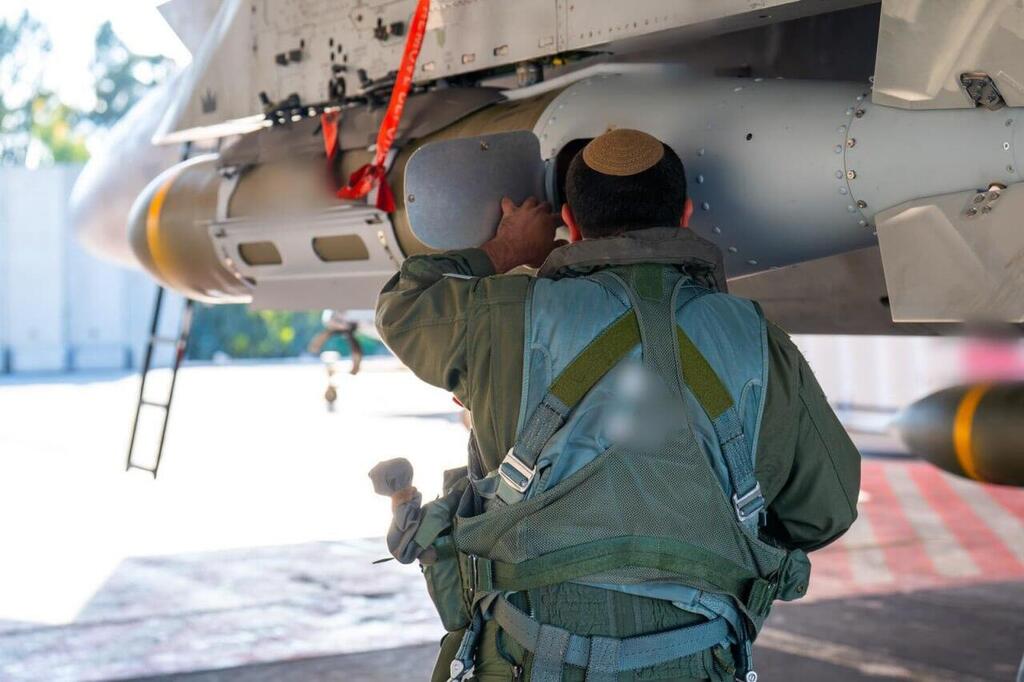
The pace of strikes is unlike previous campaigns. Tehran alone has already been targeted in eight large-scale Israeli Air Force strike sorties, during which approximately 1,000 munitions were dropped.
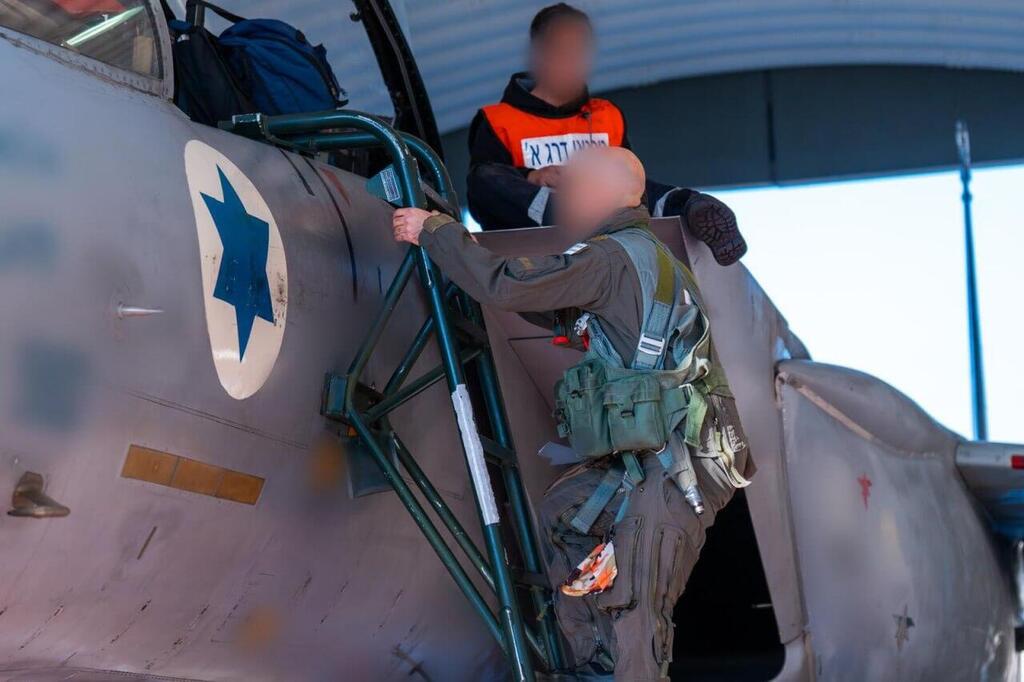
Intelligence cooperation with the United States is exceptionally close. As the skies grow more complex by the day — filled with missiles, hostile aircraft and planes from Gulf states and the United States — the Air Force is working around the clock to safeguard its aircrews.
In fact, the skies over the Middle East currently include not only Israeli and American aircraft striking in Iran, but also a coalition of Gulf states, as well as Britain and France. Amid hundreds of aircraft operating in the region, the Air Force is striving to manage increasingly crowded airspace, projecting power in Iran and returning safely.
Officials describe the situation as complex and unprecedented, made possible in part by the cooperation framework established with the United States. One of the key enabling factors was Israel’s transfer to the area of responsibility of U.S. Central Command (CENTCOM), rather than remaining under U.S. European Command (EUCOM).

Monitoring the situation from the Israeli Air Force bunker
(Photo: IDF)
From a command-and-control standpoint, this places Israel opposite the American headquarters responsible for the Iranian arena, allowing for smoother and faster coordination instead of working through two separate commands. This continuous and rapid coordination enables the projection of significant force on Iranian soil.
Following Turkish media reports of strikes along the Iran-Iraq border — described as an apparent attempt to undermine Iranian control in the area and open operational space for Kurdish opposition groups — Israel continues to advance its interests and aims to conclude the current confrontation decisively, without being drawn into repeated rounds of fighting.
One of the Air Force’s overarching objectives is to ensure that the Iranian regime, which has built a global and regional terror network around Israel, will no longer be able to project power in the future — whether in terms of missiles or nuclear capabilities.
(Photo: IDF)
For Israel, the current campaign is of critical importance. While there is a desire to conclude the operation within a relatively short time frame, the military is required to complete missions that will provide the country with years of quiet.
At the same time, officials note that a diplomatic move led by the United States or the broader international community will also be necessary in Iran, as armies alone cannot determine who will assume control in Tehran at the end of the campaign. Until then, the Air Force is operating to ensure that the Iranian military is dismantled in all its components and will no longer be able to threaten Israel or the wider world in the future.
Near-total control of Tehran’s skies
One of the objectives of the campaign is the destruction of the Iranian military. That does not mean that no ballistic missiles or military formations will remain in Iran at its conclusion. The IDF acknowledges that the ballistic missile threat will not be completely eliminated by the end of the current campaign, and the Air Force is preparing for the possibility of additional use of force in the future, if required.
(Photo: IDF)
Military destruction, officials note, generally refers to eliminating at least 70% of an enemy’s capability, depending on the specific branch, as each has its own “breaking point.” Accordingly, the end of the campaign will not be determined by the last missile destroyed, but by the political echelon and by who controls Iran.
In the meantime, the IDF and the U.S. armed forces are working to ensure that Iran will no longer be able to project power, while also moving to completely dismantle its nuclear program.
By the end of the campaign, according to goals set by Israel’s political leadership and the Air Force, Iran will no longer possess systems capable of projecting power, including ballistic missiles and its nuclear program.
Although no strikes by the Israeli Air Force or the U.S. military against Iranian nuclear sites have been publicly confirmed, the issue is being addressed and constitutes a significant component of the target bank. The military, however, is keeping details close and has provided little public information.
Meanwhile, following the downing of U.S. aircraft in Kuwait, the Israeli Air Force is preparing for the possibility that a similar incident could occur involving Israeli pilots. Such a scenario would be complex and would require unprecedented coordination with regional states. The Air Force has established such mechanisms, beginning with efforts to prevent such incidents.

An American pilot ejected over Kuwait after his jet was shot down by friendly fire
The working assumption within the force is that such an event could occur, requiring a rapid response and assistance to ensure aircrews return to Israel safely. While American pilots were received relatively favorably in Kuwait, Israeli pilots might not be treated similarly, underscoring the need for swift extraction capabilities.
In summary, as the operation enters its fifth day, officials say Iran and Hezbollah are confronting an Israeli Air Force that is sharp, lethal and highly focused. The Air Force is implementing lessons learned over the past two years of multi-front fighting and is capable of projecting significant force simultaneously across different theaters.
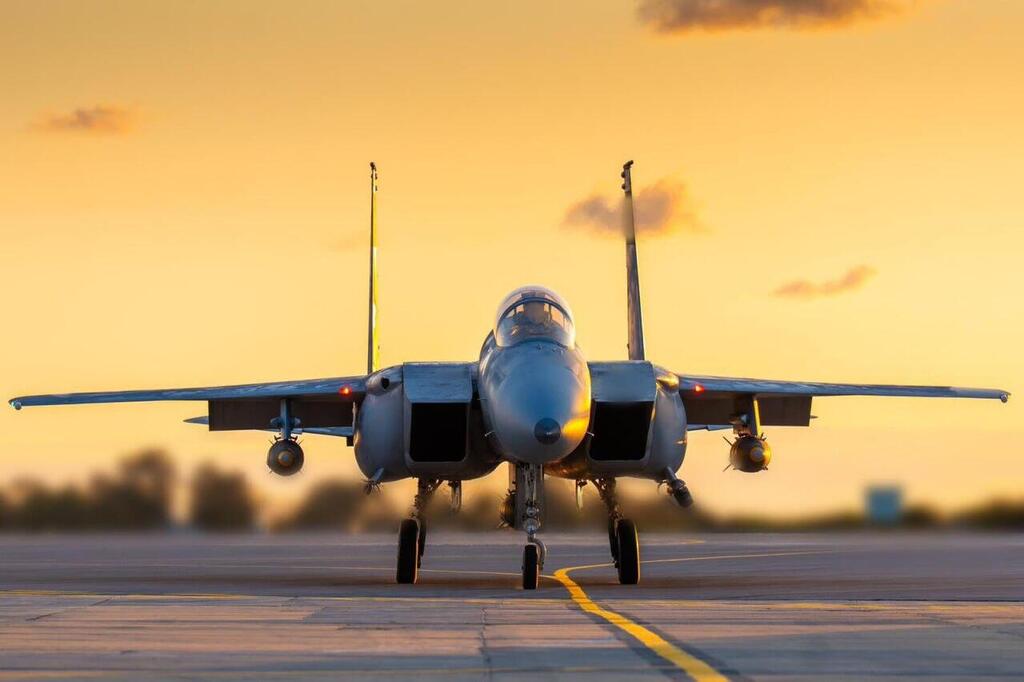
The remaining Iranian air defense array has been largely suppressed, though not entirely eliminated, allowing for near-total control of the skies over Iran and the capital, Tehran.
On the defensive front as well, the Air Force is operating around the clock in a multilayered, multi-arena effort alongside the United States and other regional partners. Within days, officials say, a marked decline in Iran’s launch capabilities is already evident, indicating the suppression of its missile array.