



Gadi Eisenkot, chairman of the Yashar! party, secured recommendations from 67 lawmakers to form Israel's next government, putting him in a strong position to receive the mandate from President Isaac Herzog. However, an official announcement will not come this week. Following two days of consultations with representatives of the parties elected to the 26th Knesset, Herzog said Thursday evening that he would announce on Sunday, November 8, whom he would task with forming the next government.
"I met with representatives of all the parties. The discussions were open, candid and at times pointed. I asked difficult questions in an attempt to encourage both the parties and the public to break free from entrenched thinking and open their minds to other possibilities," Herzog said at the beginning of his statement.
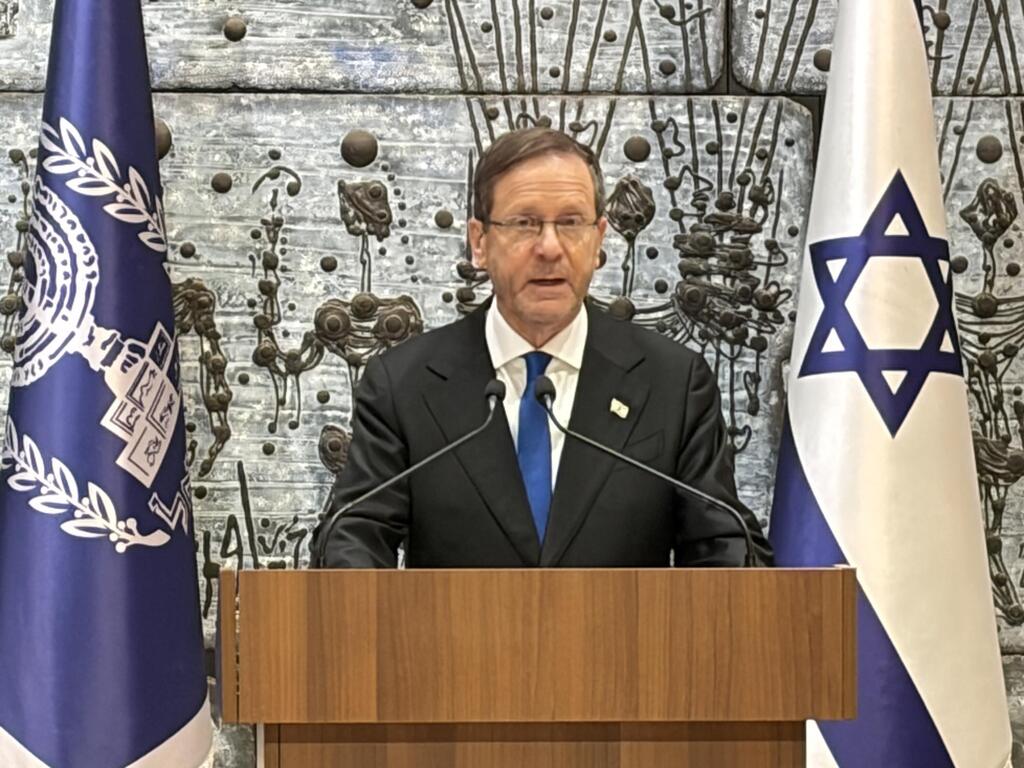
Addressing the outcome of the consultations, Herzog said: "The results of the consultations appear clear on the surface, but the authority granted to me by law requires me to examine the ability to form a government. That ability is not entirely clear, given the mutual disqualifications between the blocs and within the blocs themselves. I intend to examine this directly and swiftly with some of the party leaders in personal conversations."
The president said he intended to assign the mandate to form a government on Sunday. "In these conversations, I intend to turn every stone in an effort to encourage leaders to extend a hand toward building a stable and good government for the people of Israel," he said.
Eisenkot received 67 recommendations, compared with 46 for Likud chairman Benjamin Netanyahu, a margin of 21 lawmakers. Netanyahu was recommended by Likud, Religious Zionism, Otzma Yehudit, Shas and Zehut, while Eisenkot received recommendations from Yashar!, Together, The Democrats, Yisrael Beytenu, Ra'am and the Joint List. United Torah Judaism declined to recommend either candidate.
Following Herzog's statement, Yashar! said: "Gadi Eisenkot received an absolute majority of recommendations to form a government following the consultations at the President's Residence. This is the highest number of recommendations received by a candidate for prime minister since 2015. The public's decision and the clear parliamentary majority leave no room for doubt: Israel's citizens voted for change and expressed a complete lack of confidence in outgoing Prime Minister Netanyahu and his government. Benjamin Netanyahu is a caretaker prime minister with a minority of just 46 seats. He has no mandate, no majority and no confidence of the people."
The party added: "Given the gravity of the moment, the security challenges and the urgent need to rebuild the country, we believe it is of the utmost importance to receive the mandate from the president as soon as possible, so that a national emergency government can be established immediately and begin working for all Israeli citizens. It is now incumbent upon every public leader who has Israel's interests at heart to rise to the occasion, put narrow political and personal considerations aside and ensure that a government is formed without delay. Missing this opportunity could come at a heavy cost to Israel and lead to another election, contrary to the wishes of its citizens. This is a test of leadership."
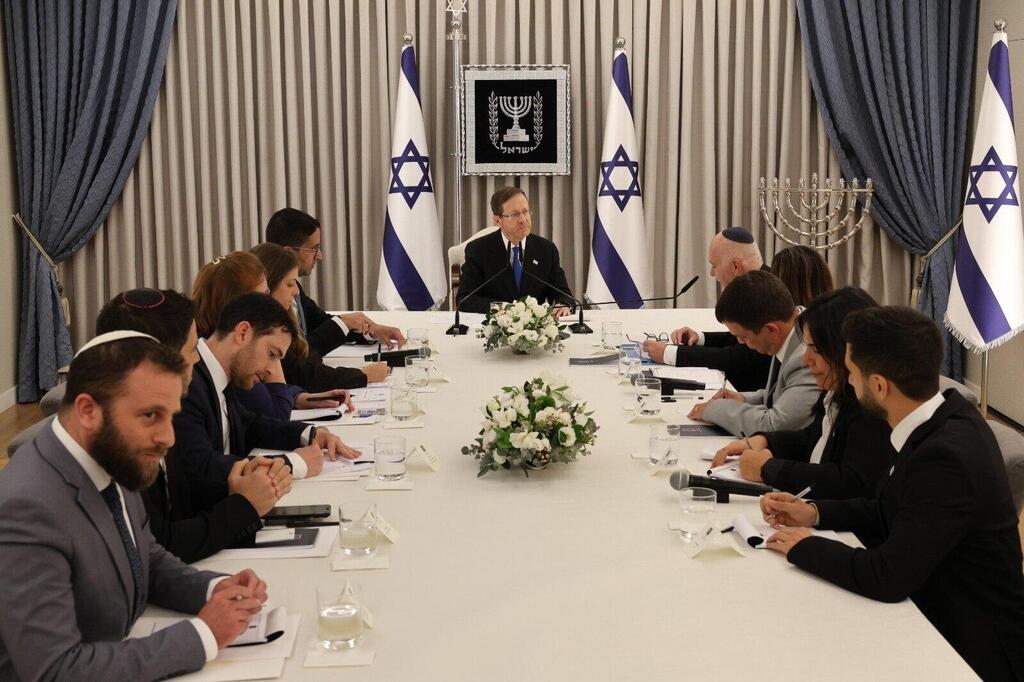
Members of the Yashar! party delegation at the President's Residence in Jerusalem
(Photo: Yigal Slavin)
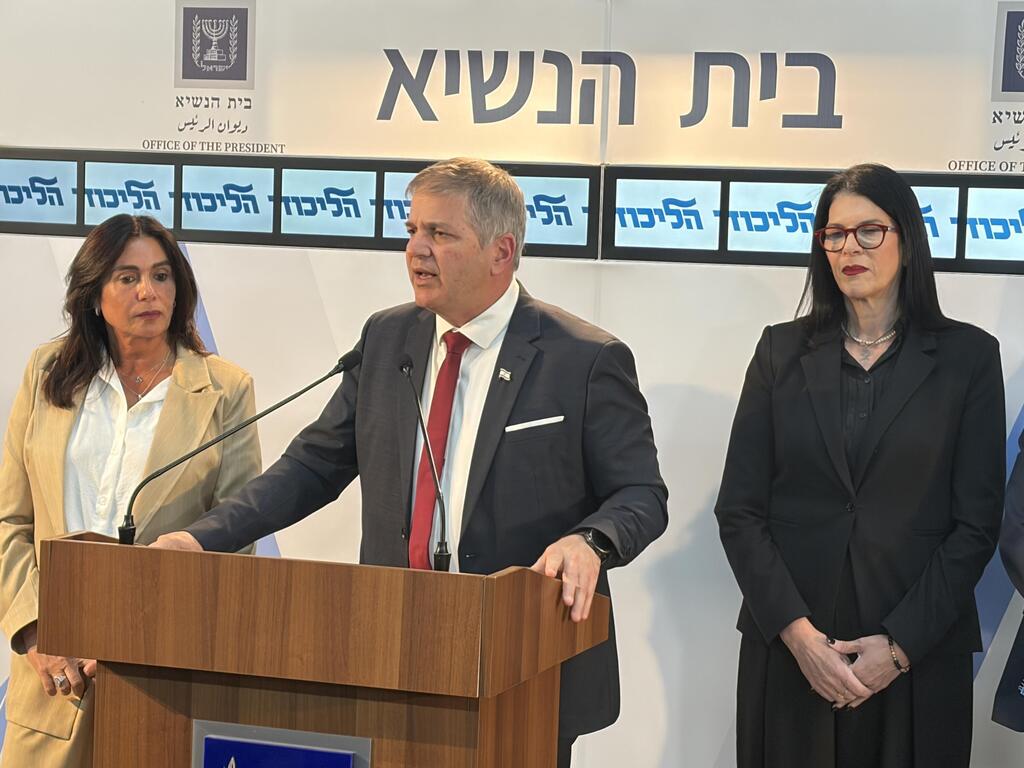
Yoav Kisch, Miri Regev and Talik Gvili following the Likud delegation's meeting with President Herzog
(Photo: Gil Yohanan)
The consultations began Wednesday afternoon with representatives of Religious Zionism, who recommended Netanyahu. Representatives of Zehut and Shas followed that evening, while Otzma Yehudit and Likud also recommended Netanyahu on Thursday. Yisrael Beytenu recommended Eisenkot on Wednesday, followed Thursday by the Joint List, Ra'am, The Democrats, Together and Yashar!.
During Yashar!'s meeting with Herzog, Yoram Cohen called for the rapid establishment of a national emergency government. "We are facing a critical emergency and must establish an emergency government quickly. Starting tomorrow, Netanyahu will be a caretaker prime minister, an unacceptable situation in democratic terms. We must form a stable and responsible government. This is an existential necessity. Establishing an emergency government under Eisenkot would give effect to the majority of 67 and express a vote of no confidence in Netanyahu," he said. Fellow party member Orit Farkash-Hacohen added: "Israel has reached a point of no return. Giving Eisenkot the mandate is nothing less than saving Israel."
Likud representative Yoav Kisch, however, warned Herzog against a government dependent on Arab parties. "We know who cannot do it. A government whose very existence depends on supporters of terrorism who reject the existence of a Jewish state as we know it," he said. Kisch added: "Likud is the largest party in Israel. We are at a historic moment, and Israel's future will be determined for generations to come. We face enormous challenges and must continue our efforts to thwart the ongoing threats posed by Iran's nuclear program and the establishment of a Palestinian state."