

Vice President JD Vance told a closed-door gathering of Jewish conservatives that supporters of Israel must make a clearer case for why the U.S.-Israel relationship serves American interests, while also defending his willingness to engage with influential commentators accused of amplifying antisemitism, The New York Times reported.
Speaking Monday evening to members of the Republican Jewish Coalition at The Venetian resort in Las Vegas, Vance addressed concerns among some Jewish conservatives about both his foreign policy outlook and his ties to media figures including Tucker Carlson.
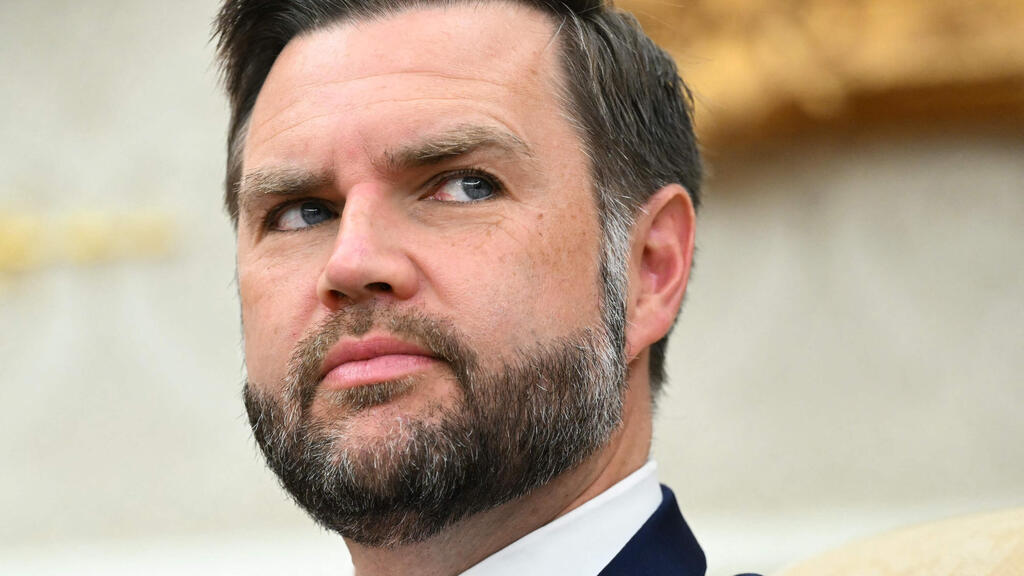
Vice President JD Vance
(Photo: SAUL LOEB / AFP)
Norm Coleman, the former Minnesota senator who chairs the Republican Jewish Coalition, asked Vance about the cultural influence of podcasters including Carlson, Megyn Kelly, Joe Rogan and Nick Fuentes, whom Coleman said had “platformed antisemitism.”
Vance acknowledged that members of the audience were likely to disagree with some of the figures whose programs he has appeared on, but argued that they should not all be treated alike.
“A lot of people in this room are going to disagree with things that Tucker Carlson or Megyn Kelly or Joe Rogan have said,” Vance said. “But I think, just to hone in on Fuentes and Rogan, I think these are two very, very different categories of people, both with their reach, but also within the ideas that are in their actual head.”
Vance described himself as a fan of Rogan and argued that engagement was generally more effective than refusing to enter such spaces.
The “best approach is to actually go in there and talk to him and make the argument as best as you can,” he said.
But Vance drew a clear distinction when it came to Fuentes, a far-right commentator with a long record of antisemitic statements.
“Obviously, I’m not going to go talk to a guy who’s attacked my wife or who said that Hitler was a good guy,” Vance said.
Vance also addressed what he called one of the “obvious elephants in the room”: increasing skepticism among younger Americans toward the relationship between the United States and Israel.
Rather than taking support for Israel for granted, he argued, advocates of the alliance need to explain its concrete benefits to the United States.
“What we have to do is articulate why this is in the best interest of the United States of America,” Vance said.
“I think it’s very, very important to talk about the concrete alignment of interest, and to hook the relationship on that,” he added.
The remarks came before an audience of conservative Jewish activists and donors, some of whom have been uneasy about Vance’s foreign policy instincts and his relationship with Carlson, whose commentary on Israel and Jewish issues has repeatedly drawn criticism from Jewish organizations and conservatives.
Vance’s comments suggested that his defense of the U.S.-Israel relationship rests less on appeals to tradition or sentiment than on a strategic argument: that the alliance must be explained to an increasingly skeptical generation in terms of tangible American interests.
At the same time, he defended a broader political strategy of engaging influential media figures even when their audiences or programs include views he rejects, arguing that entering those forums allows him to challenge those positions directly.
But his comments on Fuentes also marked a boundary to that approach, distinguishing between controversial figures with whom he is willing to debate and those he considers beyond the limits of legitimate engagement.