

The battle between Finance and Defense ministries over military spending is intensifying, with no additional funding currently being transferred to the defense establishment and 15 billion shekels ($4 billion) already approved by the government still awaiting Knesset authorization.
Finance Ministry officials told Ynet on Tuesday that there is no need for additional funding before the election, arguing that the 15 billion shekels have been stalled for 45 days, since August 2, because the Knesset Finance Committee has not convened to approve the transfer.
Gallery

Treasury warns soaring defense demands could leave Israel unable to fund future wars
(Photo: IDF, Jack Guez/ AFP)
“The defense establishment has all the money required for urgent activity,” Finance Ministry officials said. “Issues such as the procurement of Apache helicopters require funding over the next five years, and no one is delaying them.”
Defense officials dispute that account, saying Israel has already missed an urgent deal to purchase 12 Apache helicopters because the required funding was not transferred in time.
Israel’s defense budget currently stands at 143 billion shekels. The government has already approved raising it to 158 billion shekels, but the additional 15 billion shekels remain stalled in the Knesset.
The original 2026 defense budget was supposed to total only 111 billion shekels, but Prime Minister Benjamin Netanyahu decided before its final approval in March to increase it by 32 billion shekels, bringing it to 143 billion.
The defense establishment is now seeking to raise the budget further, to 183 billion shekels. Netanyahu has not yet decided whether the full additional amount is necessary.
A meeting Monday between Netanyahu and opposition leader Yair Lapid ended without agreement after the prime minister sought Lapid’s support for expanding the state budget framework.
Lapid demanded that the additional defense spending instead come from coalition funds. Most of those allocations, however, have already been transferred to Haredi institutions and the Settlements and National Missions Ministry headed by Minister Orit Strock.
‘The defense establishment’s demands never end’
Finance Ministry officials sharply criticized the way the defense budget is being managed.
“The defense establishment is managing its budget badly, unlawfully and without transparency,” they told Ynet. “If the Defense Ministry had not systematically rejected numerous proposals designed to bring in money that does not come from taxpayers, there would already be billions more available.”
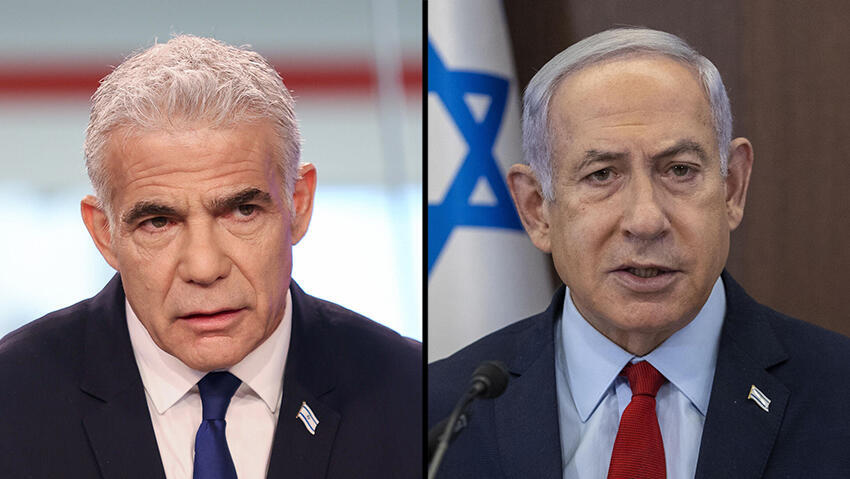
Yair Lapid and Benjamin Netanyahu
(Photo: Avigail Uzi, Amit Shabi)
“They prefer the easy route, which is to come to the state treasury and demand more and more money at the expense of education, health and welfare budgets,” they said. “Ultimately, this money comes from ordinary citizens, increases the national debt and weighs on the economy.”
Senior Treasury officials stressed that they would implement any budget change ordered by the prime minister.
“If the prime minister instructs us to amend the state budget, we will do so, even if the public ultimately bears the cost,” they said. “We are not standing in the way. We are waiting for a government decision, which will then have to be approved by the Knesset.”
“Until then, we are continuing to honor all the agreements already reached and are continuing to transfer enormous sums to the defense establishment.”
Treasury officials issued a particularly stark warning about the long-term consequences of continued military spending at the current pace.
“With its current approach, the defense establishment could find itself in several years without an economy capable of supporting the major military campaigns Israel may need to conduct,” they said. “We are very concerned about that.”
One senior Treasury official added: “The defense establishment’s demands never end. They are requesting supplemental budgets approaching the size of Israel’s entire annual health budget.”
“There is no recognition that these billions come from heavier taxation, as we have already imposed, and from money that would otherwise go to education and public services.”
The official argued that the Finance Ministry had played a central role in sustaining Israel’s wars and nearly tripling defense spending.
“We are throwing ourselves on the grenade economically to sustain this war,” the official said. “Without a Finance Ministry that made everything the IDF needed available throughout this period, Israel would not have achieved the important successes it recorded in Iran, Gaza and Lebanon.”
The Treasury also accused the defense establishment of failing to properly manage the reserve system.
“We kept transferring more and more money even though everyone knew the inefficiency there was glaring,” officials said. “In the end, the burden falls on reservists and their families, who are themselves major drivers of economic activity.”
Finance Ministry officials said billions of shekels are continuing to flow to the defense establishment even now, well beyond the amount originally approved by the Knesset in the state budget.