


As the Israeli military understands that Hamas is working to restore its governing capabilities, businessman Michael Eisenberg, an adviser to Netanyahu, said for the first time that “Israel and The Board of Peace will take action” if the terrorist organization fails to uphold the agreement. In an interview with Fox News, Eisenberg said the action would take place with the full backing of U.S. President Donald Trump, who presented Hamas with “an easy way — and a hard way.”
Eisenberg usually carries out his work behind the scenes, a kind of “shadow man” who does not typically speak publicly or to the media. His rare remarks may indicate a strengthening of his standing in the prime minister’s circle, apparently after Ron Dermer’s departure. He stressed that “all options are on the table” as long as Hamas does not disarm, effectively speaking on behalf of the Americans and The Board of Peace for Gaza as well.
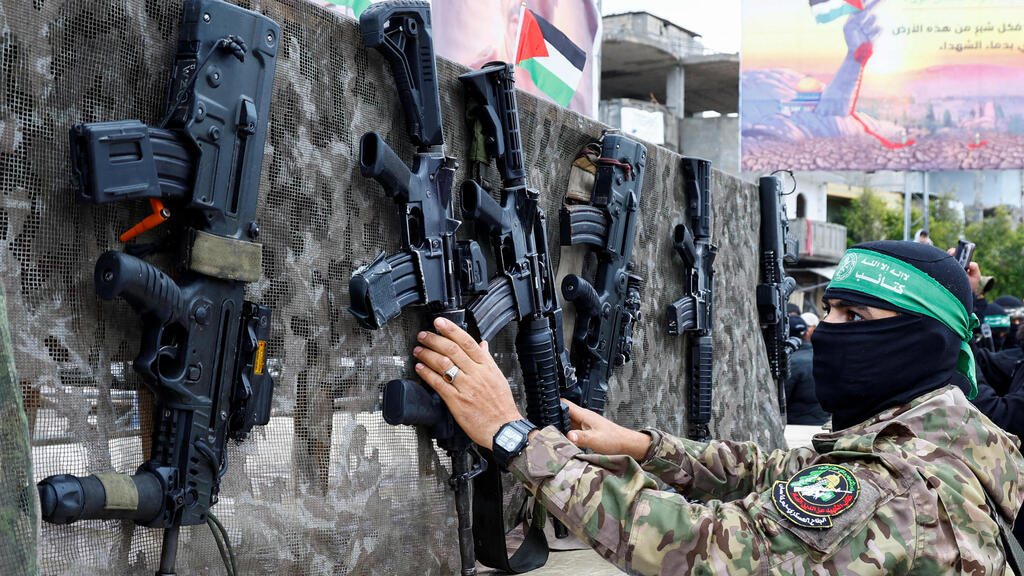
“Everyone prefers the easy way, which is Hamas. With the help of the mediators delivers the weapons, but if they don't, there's a hard way too,” he said. “Hamas is still there. But the 20-point plan says they cannot be there. They cannot be a part of government. They cannot bear arms. They have to become Swedish, basically, in order for them to stay in any role in Gaza.”
He praised Trump and his team for drafting the 20-point framework, saying Hamas had committed to Turkey, Egypt and Qatar, the mediators, to hand over its weapons and disarm, but had failed to meet the terms. He said the plan’s central principle is that Gaza must be demilitarized, Hamas must disarm and the group must undergo deradicalization. The Board of Peace, he added, had already given Hamas a long period to fulfill its commitments, while recognizing from the outset that the group might refuse to cooperate.
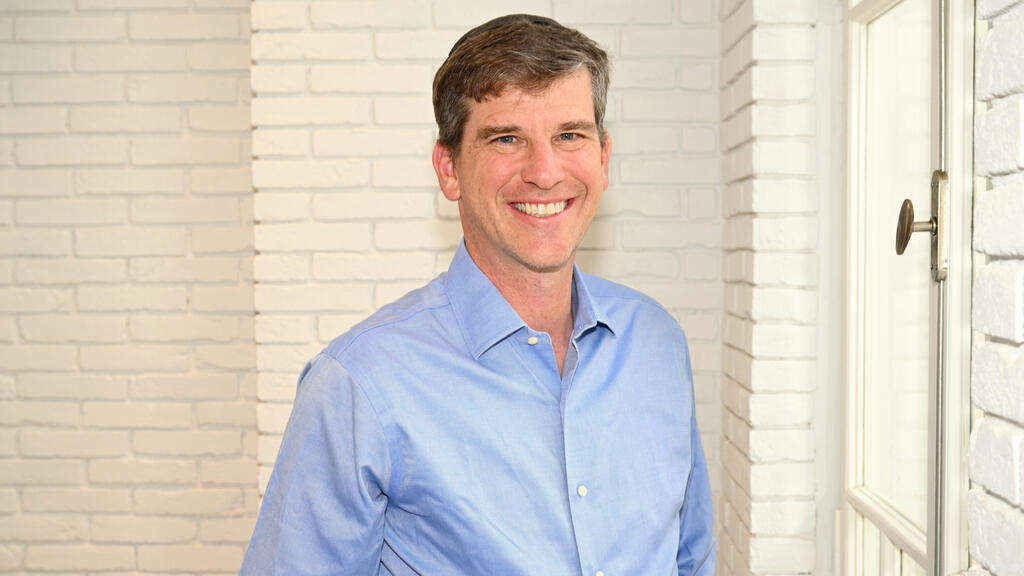
Michael Eisenberg
(Photo: Kobi Koankes)
In the interview, he disclosed Article 17 of the agreement, under which the Board of Peace is permitted to enter Gaza, take control of areas and forcibly disarm Hamas if necessary. He said Trump and his team had planned every stage of the process from beginning to end, and that Hamas was supposed to disarm months ago but had failed to do so. He said Jerusalem and Washington are fully aligned on Gaza’s future, with no gaps between them, and noted that all parties signed the agreement — the Americans, Israel, the mediators and Hamas — while Hamas remains the only party failing to comply.
He said Iran’s influence also plays a role in Hamas’ refusal, and that severing that influence will require a long, complex process. He said a 30-year problem cannot be solved instantly, and compared Gaza’s required transformation to the denazification process after World War II. Gaza, he said, will need to undergo de-Hamasification involving textbooks, teachers and schools, in a process that will take years. He added that new schools already exist in the Strip and that more than 70% of Gazans believe Hamas should lay down its weapons, but Hamasification remains in areas under the group’s control.
He said the public in Gaza has turned its back on Hamas and that many residents already believe the group should leave. Still, he said, a special international mechanism is needed to ensure Hamas hands over all its weapons and does not hide arms. He said estimates point to tens of thousands of Kalashnikov rifles, tunnels and rocket production infrastructure that Hamas is trying to rebuild. He warned against a scenario in which Hamas hands over a small number of old weapons while hiding the rest, and said the tunnels must be destroyed. Israel and the Board of Peace, he added, are preparing for the possibility of joint military action, while hoping for change and remaining fully alert.
For now, it remains unclear what such an operation would look like.