

Brad Lander is one of the most intriguing Jewish politicians in the United States today. On one hand, he describes himself as a "progressive Zionist," supports Israel's right to exist and officially opposes the BDS movement. On the other, he is one of the closest political allies of New York City mayoral candidate Zohran Mamdani and one of the sharpest critics of Israeli government policy.
He has described the war in Gaza as a "genocide," called for U.S. military aid to Israel to be conditioned on "compliance with international law" and argued that U.S. taxpayers should not fund even a defensive system such as Iron Dome, which he says Israel should finance itself.
The video Zohran Mamdani released in support of the progressive candidates in New York


Gallery
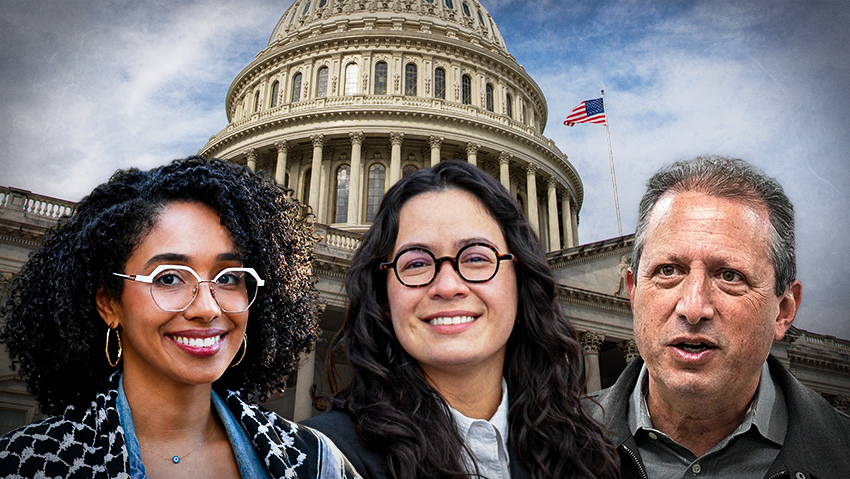
From right to left: Brad Lander, Claire Valdez and Darializa Avila Chevalier
(Photo: AP Photo/Richard Drew, shutterstock)
ynet previously reported that, as New York City comptroller, Lander dramatically reduced the city's investments in Israel. On Sunday, Lander and Mamdani were absent from New York's annual Celebrate Israel Parade, citing the participation of far-right figures such as Israeli Finance Minister Bezalel Smotrich, whom they described as "war criminals."
The complex political identity of the 57-year-old Lander has made his bid for New York's 10th Congressional District, covering Lower Manhattan and parts of Brooklyn, one of the most closely watched races of the current primary season. That is largely because he is attempting to unseat incumbent Democratic Rep. Dan Goldman, a member of the party's establishment-oriented moderate wing.
Goldman marched at the front of Sunday's parade, a gesture whose symbolism carried particular weight this year. As a result, a congressional primary in New York City has once again become a contest centered on a small country in the Middle East.
That all but guarantees deep involvement by AIPAC on Goldman's behalf, while also energizing a growing network of organizations on the opposite side.
Muslim-American donors step in
A Super PAC in the United States may raise unlimited sums to influence elections, but it is prohibited from donating directly to candidates or coordinating its activities with their campaigns.
One such group, founded specifically as a counterweight to powerful pro-Israel organizations, is American Priorities. The pro-Palestinian Super PAC has made it its stated mission to protect and support candidates, primarily Democrats, who criticize Israeli policy and call for an end to U.S. security assistance to Israel.
The goal is to provide those candidates with a financial "shield," enabling them to express independent or critical views on Israel without fear that AIPAC will pour money into rival campaigns to defeat them.
The organization is led by Hannah Fertig, a Jewish political strategist who previously worked on Bernie Sanders' 2020 presidential campaign. Under her leadership, American Priorities has pledged to spend more than $10 million during the 2026 midterm elections and has already raised about $4 million in its first months of operation from a relatively small group of wealthy donors, many of them Muslim-American technology executives and entrepreneurs. The group has also received support from progressive organizations such as Justice Democrats.
In practice, American Priorities represents an effort by the progressive and pro-Palestinian wing of the Democratic Party to replicate the fundraising and political strategies of pro-Israel groups within U.S. primary elections. It remains far smaller than AIPAC and will likely have to choose its battles carefully. But combined with growing pro-Palestinian sentiment, it could find success in several districts and help elect candidates who oppose Israeli security policy.
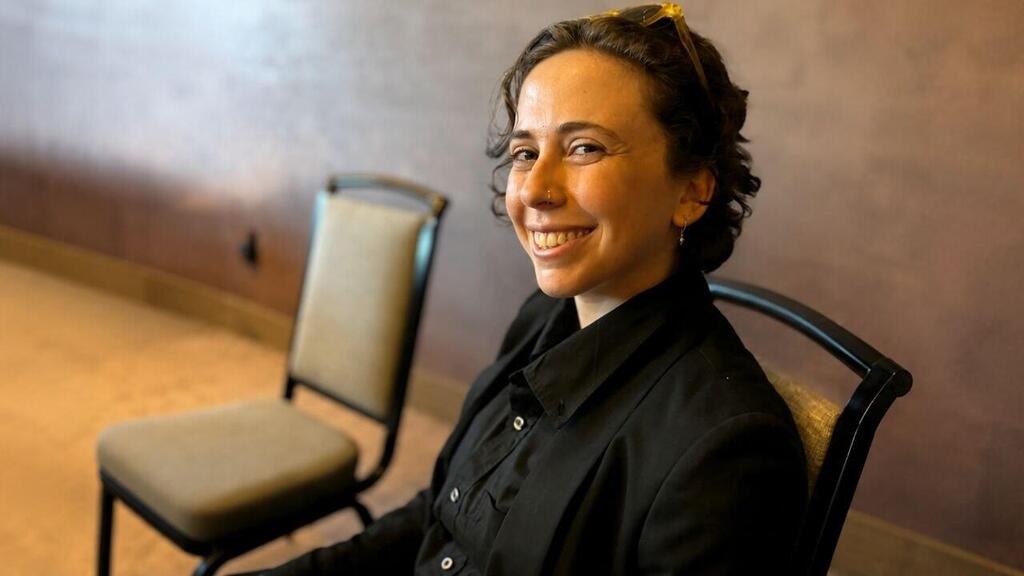
Hannah Fertig
(Photo: LinkedIn)
These congressional races carry major strategic significance for Israel. Under U.S. law, Congress controls the federal purse strings, and every security assistance package, from the annual $3.8 billion aid commitment to emergency funding for Iron Dome interceptors and artillery shells, must pass through the legislative process and secure approval from members of both the House and Senate.
Where U.S. aid to Israel once enjoyed near-automatic bipartisan support, the arrival of each additional critical lawmaker now creates new challenges. Individual members of Congress, and certainly organized blocs, can propose amendments conditioning arms transfers on "compliance with international law," delay action in key foreign affairs and appropriations committees and generate sustained political pressure that limits the administration's flexibility in Washington.
At a time when an increasing number of politicians are calling for a halt to military aid to Israel in response to what they view as the government's growing extremism, the battle over congressional districts in the midterms has become a direct fight over the future of Israel's security assistance pipeline. It is no coincidence that Israel has begun discussing plans to reduce its dependence on American aid within the next decade; many policymakers recognize that such assistance may not always be guaranteed.
Three New York candidates
One of the most prominent arenas for American Priorities is New York, where the organization pledged this week to spend $2 million supporting two left-wing challengers running against incumbent Democratic members of Congress, as well as a progressive candidate seeking an open seat.
Representatives of the group told The New York Times that the money would fund television, streaming and digital advertising promoting three candidates who are also backed by Mamdani: Brad Lander, Darializa Avila Chevalier and Claire Valdez. The influx of cash could help level the playing field for progressive, anti-Israel candidates in several expensive and highly competitive primaries scheduled for June 23.
Half of the funding is earmarked for Chevalier, who is challenging Rep. Adriano Espaillat in the 13th District, which includes northern Manhattan and the Bronx. Espaillat, chair of the Congressional Hispanic Caucus, has received support from AIPAC for years and currently leads in polling.
Chevalier, by contrast, participated in demonstrations at Columbia University following Oct. 7. One of her campaign advertisements features Mahmoud Khalil, the immigrant and pro-Palestinian activist who emerged as a leading figure in the Columbia protests, spent an extended period in detention and is currently fighting deportation proceedings. He has since become a prominent figure within the progressive movement.
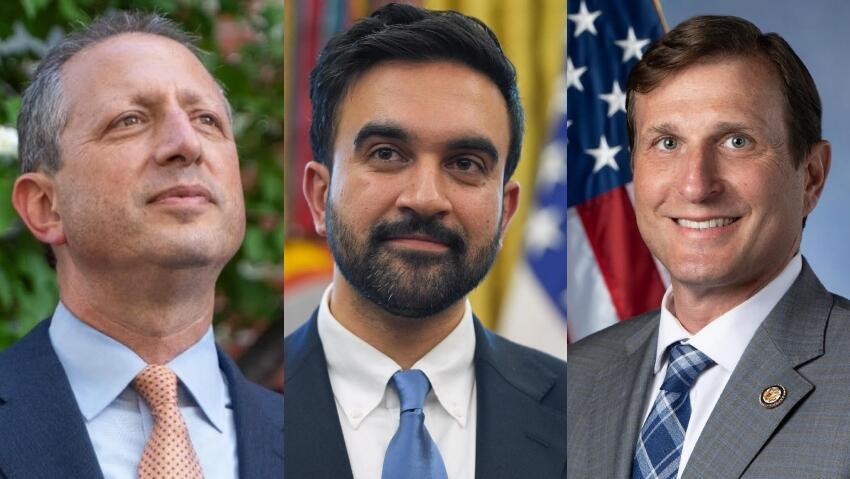
From right: Dan Goldman, Zohran Mamdani and Brad Lander
(Photo: Evan Vucci/AP)
American Priorities' spending is intended to narrow the significant gap between Espaillat and Chevalier. However, the pro-Israel incumbent is backed not only by AIPAC and other pro-Israel groups but also by Hispanic organizations, and at present appears likely to survive the primary challenge. The situation looks very different for Goldman, who was elected to Congress only four years ago and trails Lander clearly in most polls.
According to federal campaign finance records, AIPAC has directed more than $377,000 to Goldman's campaign, while other pro-Israel organizations have contributed hundreds of thousands of dollars more. Goldman, an heir to the Levi Strauss fortune and one of the wealthiest members of Congress, has also poured millions of dollars of his own money into the race. As a result, AIPAC's support serves largely as a political statement of backing against the progressive wing of the party.
The third candidate to receive support from American Priorities is Claire Valdez, who is running for an open seat in the 7th District, which spans parts of Brooklyn and the Bronx. She faces a crowded Democratic field in what is widely viewed as an open contest.
On Wednesday, Mamdani released a campaign video endorsing all three candidates, tying the message to the New York Knicks' playoff run and the NBA Finals. The video highlighted several of the candidates' policy positions while conspicuously avoiding any mention of Israel. By doing so, Mamdani threw his full political weight behind the races, turning them into a test of his influence over New York politics.
A spokesperson for American Priorities told The New York Times that the political rise of Mamdani and Rep. Alexandria Ocasio-Cortez demonstrates that the group's candidates have a strong path to victory in New York.
"The Democratic Party does not need more members who vote the right way when it's safe or protect themselves during difficult moments," the spokesperson said. "We need members who will lead, especially when the questions before us are difficult."
Notably, despite the invocation of Ocasio-Cortez's name, she has not publicly endorsed any of the candidates in question, unlike Mamdani.
AIPAC faces challenges on multiple fronts
American Priorities is not the only organization seeking to undermine candidates backed by AIPAC. Another group, The Peace, Accountability and Leadership, has supported congressional candidates and directed visitors to its website to contribute to their campaigns.
A separate organization makes its opposition clear in its name: Citizens Against AIPAC Corruption, which says its mission is to "end AIPAC's stranglehold and the Israeli lobby's grip on American democracy."
Candidates seeking the group's support must commit to several positions, including recognition of what it describes as the "genocide in Palestine," support for a Palestinian state and opposition to policies that, in its view, conflate criticism of the Israeli government with antisemitism.
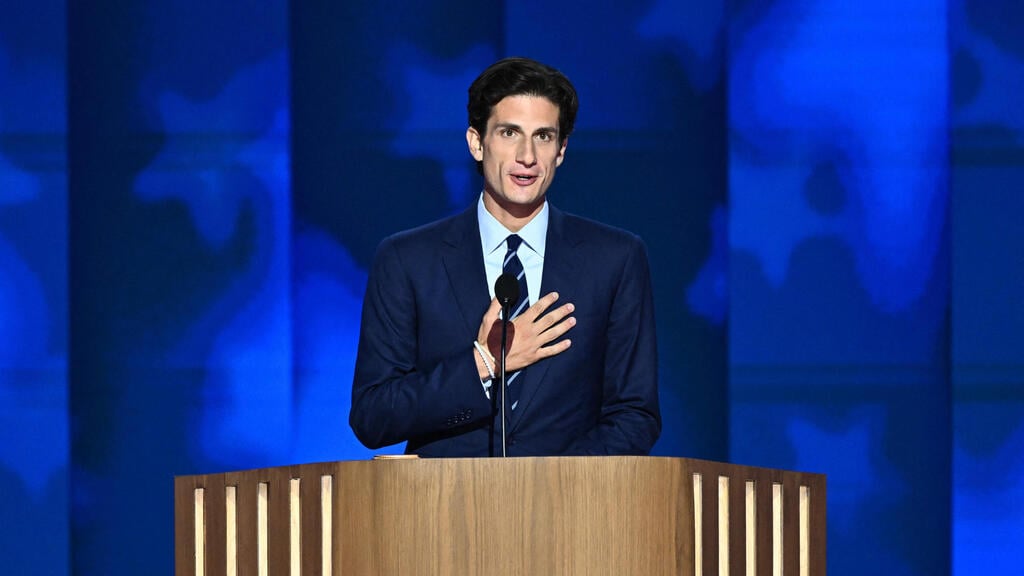
Jack Schlossberg
(Photo: Mandel NGAN / AFP)
In any event, the $2 million New York investment is American Priorities' first major expenditure in the state, following smaller efforts in North Carolina, Texas and Pennsylvania. Many of the group's largest donors are prominent Muslim-American business leaders who also supported Mamdani's mayoral campaign.
The three races in New York will likely be the only contests in which American Priorities intervenes, bypassing the best-known district of all: New York's 12th Congressional District, a wealthy and overwhelmingly Democratic district in the heart of Manhattan.
Several candidates are competing there for the seat being vacated by veteran Jewish Rep. Jerry Nadler. The race has already attracted millions of dollars from a wide range of donors, including former Mayor Michael Bloomberg, who is spending heavily to support his longtime political protégé, Micah Lasher. Lasher is widely viewed as the preferred candidate of the district's moderate Democratic establishment and has also secured Nadler's endorsement.
Yet another contender in the race, Jack Schlossberg, grandson of President John F. Kennedy, illustrates the sharp shift in attitudes toward the AIPAC brand within the Democratic Party. Schlossberg, who first gained prominence as a social media personality, has publicly stated in interviews that his campaign does not accept money from AIPAC.
On his popular Instagram and TikTok accounts, he has positioned himself as the district's most outspoken critic of Israel. He has said he supports halting shipments of offensive weapons to Israel and has criticized rivals for backing unconditional military aid.
Behind closed doors, however, Schlossberg appears to have struck a different tone. According to a Politico investigation, conversations with members of an exclusive and affluent New York club revealed a far more sympathetic stance toward Israel. During those private discussions, he reportedly suggested he would support funding for offensive weapons as well.
In response, Schlossberg said he supports Israel's right to self-defense and continued funding for Iron Dome, while opposing additional shipments of offensive weapons.
That balancing act, trying to appeal to younger progressive voters without alienating older Jewish donors and voters, is something Democratic candidates would not have had to worry about until very recently.