

Questions are intensifying in the United Kingdom after a BBC exposé reported that the Labour government has agreed to pay “significant” compensation to Palestinian detainee Abu Zubaydah, held by the United States at Guantánamo Bay in Cuba and previously detained at CIA “black sites” where he was subjected to torture. The exact amount of the compensation has not been disclosed, but it is widely believed to be in the hundreds of thousands of pounds.
Abu Zubaydah, initially suspected of being a senior al‑Qaida operative—a charge later dropped, continues to fight for his release and to pursue legal action against several countries allegedly involved in the torture he endured. Those countries include Britain, whose intelligence services are accused of passing questions to the CIA during Zubaydah’s interrogations.
Alongside calls for transparency about the agreement reached between Abu Zubaydah and the British government, members of the opposition Conservative Party in London have expressed outrage that the deal was concluded under the authority of England and Wales’ attorney general, Sir Richard Harmer. Harmer was appointed by Prime Minister Keir Starmer after a long career specializing in human rights law, during which he represented Abu Zubaydah in his legal case against Britain.
A source close to Harmer told the Daily Mail that clear and strict procedures exist to prevent conflicts of interest—suggesting Harmer himself may not have been involved in the decision to pay compensation. However, the secrecy surrounding the agreement has nevertheless raised serious questions about the process.

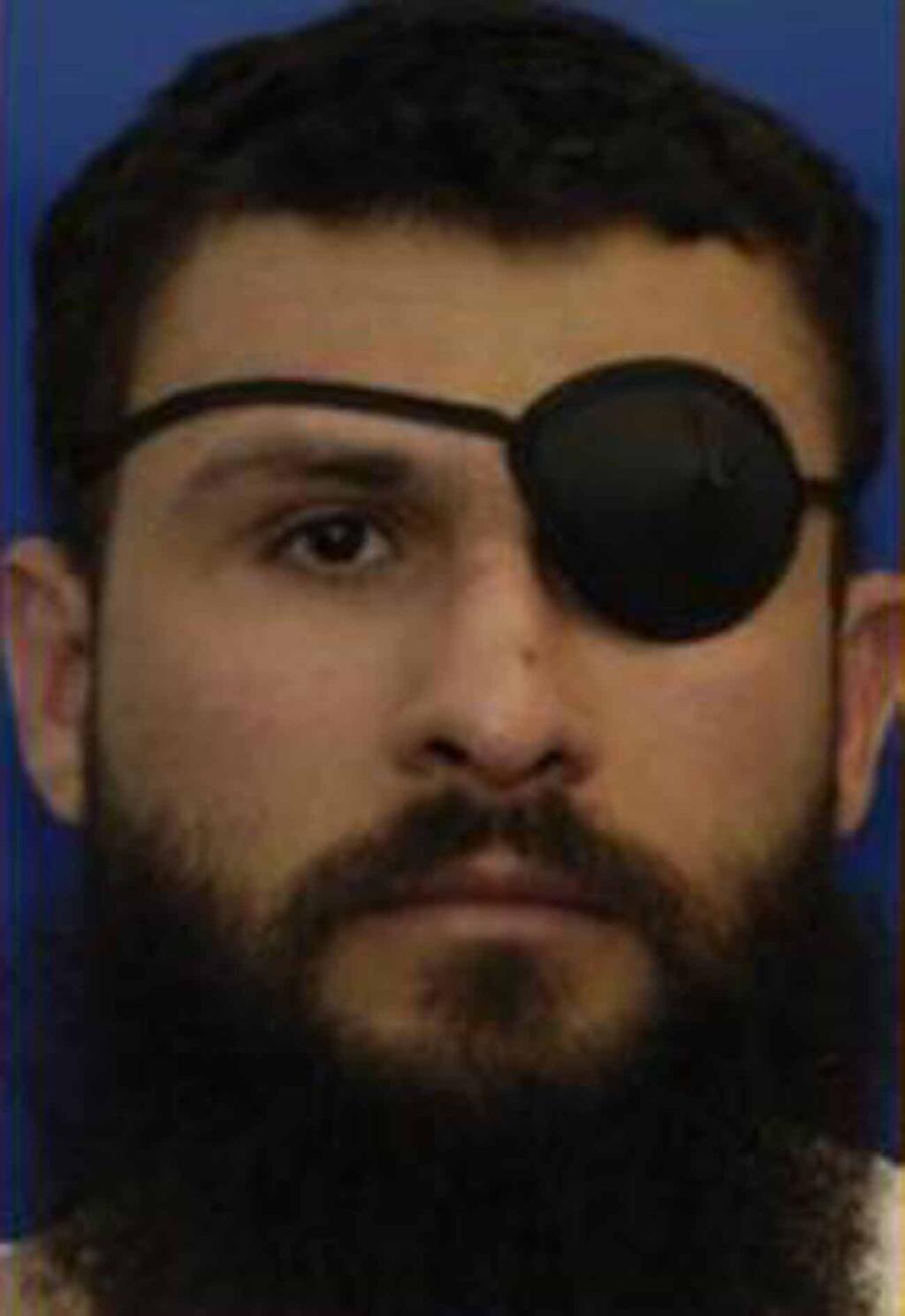
Abu Zubaydah is a prisoner of Palestinian origin held in Guantanamo Bay and suspected of terrorism.
Abu Zubaydah, now 54, was born in Saudi Arabia to a Palestinian family and was captured by U.S. forces in Pakistan in March 2002 as part of America’s “war on terror” launched after the September 11 attacks. His capture was hailed at the time as a major success for the United States, and then‑President George W. Bush personally announced it. Although the U.S. government later withdrew the claim that Zubaydah was ever a member of al‑Qaida, he remains one of about 15 terrorism suspects detained at Guantánamo whom the United States has refused to release. He has never been formally charged, and in international media he has been dubbed “the detainee of record.”
Before his transfer to Guantánamo, Zubaydah was held for four years at six CIA “black sites”—secret facilities notorious for torture that were maintained outside U.S. territory and American legal oversight. Zubaydah, who was held in facilities in Poland, Lithuania, Morocco and Thailand, is believed to have been the first to undergo torture at these sites and was described as a CIA “test case.” A U.S. Senate Intelligence Committee report examining the program after the sites were closed in 2009 found that Zubaydah was subjected to the agency’s simulated drowning technique 83 times. He was also physically beaten and placed inside coffin‑like boxes.
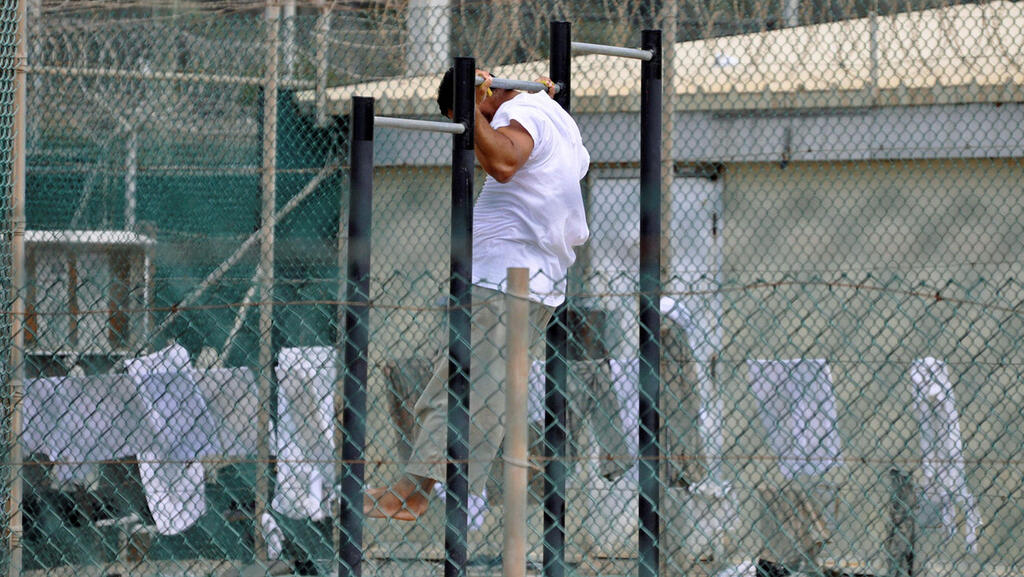
A prisoner exercises in the courtyard of the Guantanamo prison, where only 15 terror suspects currently remain
(Photo: Reuters)
Abu Zubaydah is pursuing legal action against several countries where he was held, including Britain. His lawyers argue that British intelligence agencies MI5 and MI6 forwarded questions to the CIA during his interrogation, despite knowing he was being tortured at CIA facilities, making them complicit in his mistreatment.
Harmer previously represented Abu Zubaydah in a case arguing that British courts should apply English law, not the local laws of the countries where he was held. The UK Supreme Court accepted this argument in 2023.
The BBC on Sunday disclosed the existence of the compensation agreement between Abu Zubaydah’s lawyers and the British government. Although the precise amount has not been made public, it is believed to be substantial—likely in six figures. “The compensation is important, it is significant, but it is not sufficient,” Abu Zubaydah’s current lawyer, Helen Duffy, told the BBC. She argued that the British government and other governments should acknowledge their role in his torture and work toward his release from Guantánamo. “His rights violations are not historical, they are ongoing,” she said.
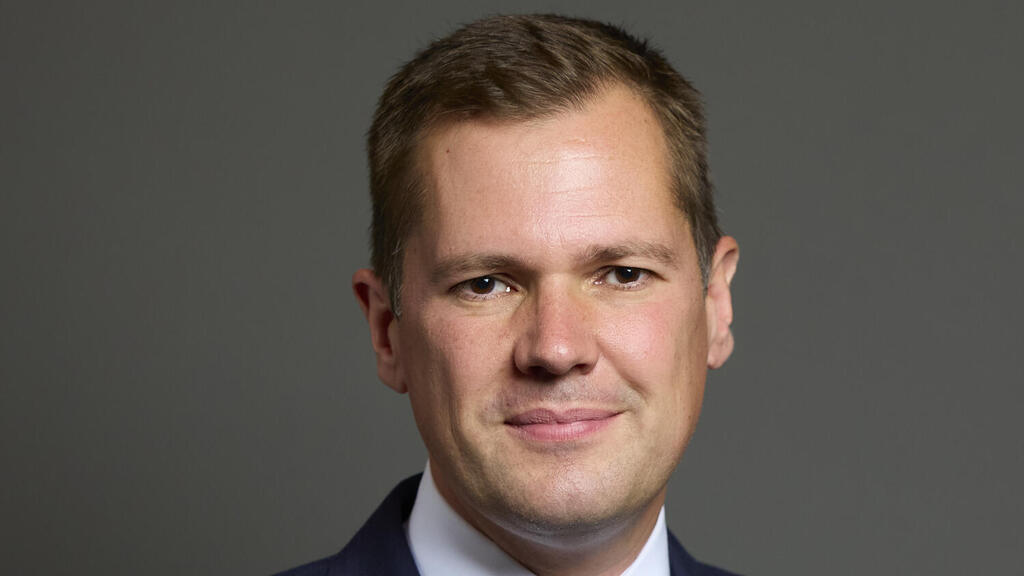
Robert Jenrick, Member of Parliament and Shadow Justice Secretary
(Photo: Roger Harris / Wikipedia)
Conservative critics in opposition have reacted sharply to the reported deal. Robert Jenrick, Member of Parliament and Shadow Justice Secretary, criticized what he described as “the payment engineered by a former defense lawyer who now sits in the cabinet that signed the cheque.” In a letter to Labour Justice Secretary David Lammy, Jenrick demanded an explanation for the authority under which the settlement was concluded: “Abu Zubaydah was accused of running terrorist training camps in Afghanistan,” Jenrick said, “and he remains held at Guantánamo by the United States under successive American presidents due to the belief he poses a first‑order security risk. Our government has never called for his release.”
In the letter, Jenrick asserted that the decision to pay compensation was a “choice” made by Labour. “You chose to succumb to legal warfare instead of defending our intelligence services in court. How can sending taxpayers’ money to him be a priority?”
Joining in the criticism, Chris Philp, the Shadow Home Secretary, called it a “humiliating surrender by a weak government.” In response, a government source speaking to the Daily Mail accused the Conservatives of “blatant hypocrisy,” noting that Shadow Attorney General David Wolfson continues to work for Russian‑Israeli oligarch Roman Abramovich, who is subject to Western sanctions, including by Britain.
Former Attorney General Dominic Grieve also criticized the secrecy of the deal. In a 2018 parliamentary inquiry, Grieve led an investigation into the involvement of British intelligence agencies in CIA torture. In an interview with The Guardian, a UK newspaper aligned with the center‑left, he said the government owes the public a clear explanation of the compensation payment—a step it has so far refused to take. At the same time, Grieve emphasized that, in his view, the payment was “almost inevitable” given the evidence of British involvement in Zubaydah’s torture—a role he argued is beyond dispute. “Someone in Parliament needs to ask the questions—and the government needs to provide the answers,” Grieve said.