


Each week, infrastructure contractors announce new road closures tied to transportation projects across the country. Because work cannot be done on Saturdays, most closures take place at night, though some occur during the day and, in certain cases, for extended periods.
Closing one route leads to heavy congestion on surrounding roads, and officials expect traffic to worsen as work progresses on major projects, especially the light rail and the metro.
Gallery
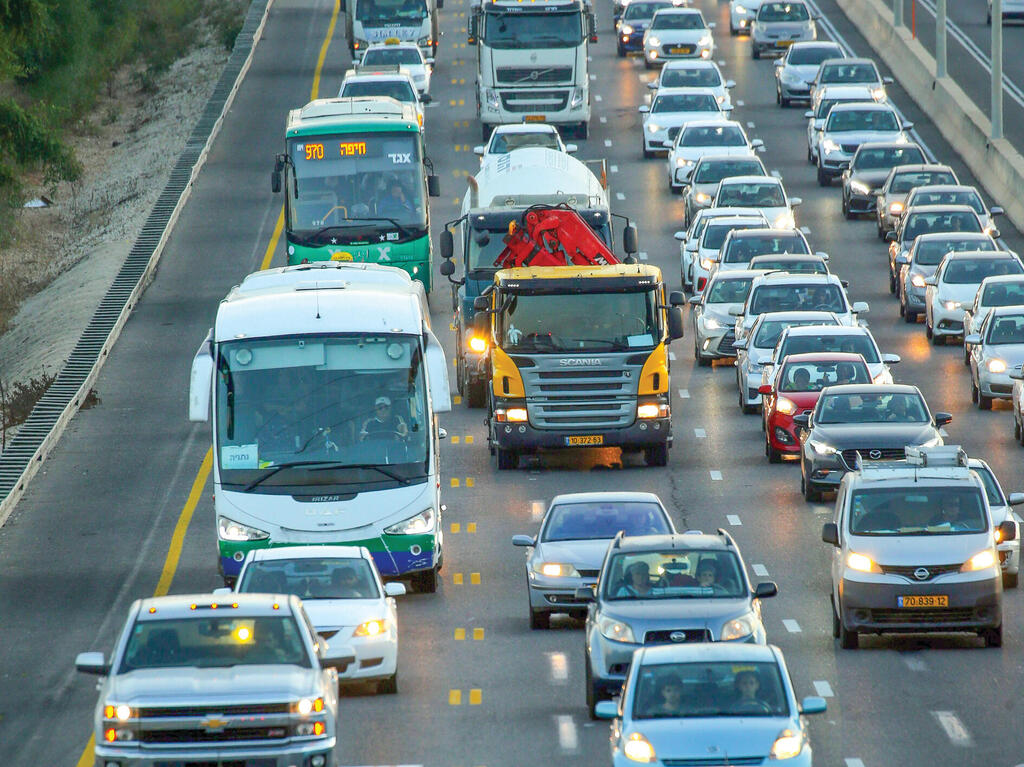
A resident of Gush Dan is stuck in traffic for an average of 100 hours a year
(Photo: Yariv Katz)
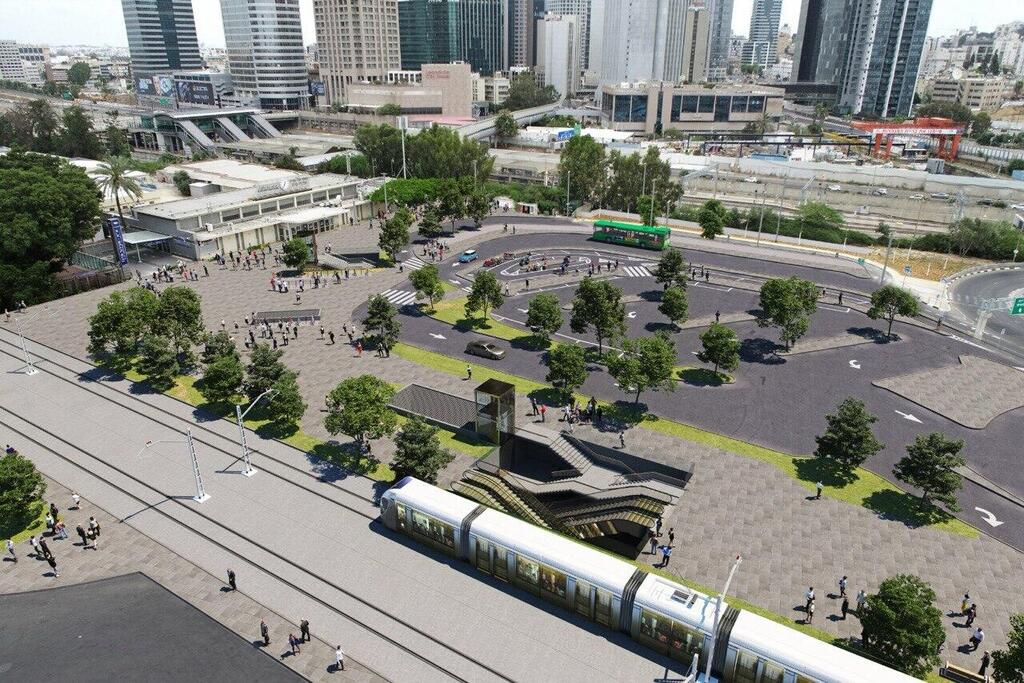
Savidor Center Station in 2040, with an above-ground light rail, an underground metro and a transition to Israel Railways
(Photo: NTA)
The current situation
A look at the Ayalon Highway illustrates the problem. On the busiest stretch near the HaShalom Bridge, morning northbound speeds average 30 kilometers an hour and drop to 17 in the evening. Southbound speeds reach 42 and 19 kilometers an hour. Across the full 40-kilometer route, average speeds hit 50 kilometers an hour in the morning and fall by dozens of percentage points during peak times, despite a speed limit of 90 kilometers an hour. Rush hours are expanding, and congestion now spans most of the day rather than only commuting hours.
Yael Shechter Sitman, head of public transportation at Lobby 99, says the state of transportation in Israel, especially in the Tel Aviv metropolitan area, is a flashing red warning sign. She says the problem is known and the solutions exist, but implementation is slow and cumbersome. Traffic jams are not only frustrating, she explains, they are an economic burden. A 2022 state comptroller report found that a resident of the Tel Aviv area spends 98 hours a year stuck in traffic. This means lost work hours, reduced productivity, environmental harm and unequal access to employment centers for people living in the periphery. All of it amounts to 35 to 40 billion shekels a year.
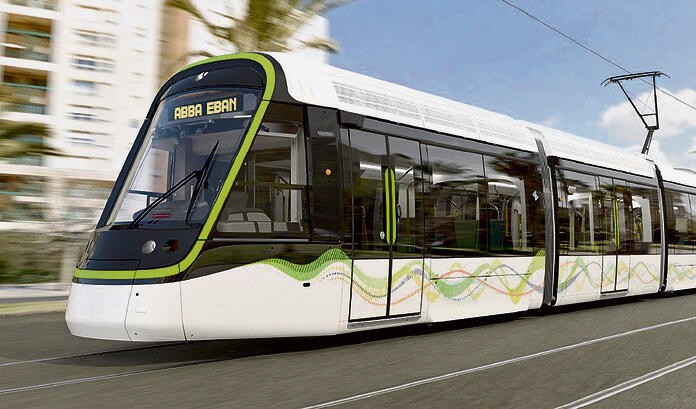
The planned appearance of the Green Line of the light rail
(Photo: NTA)
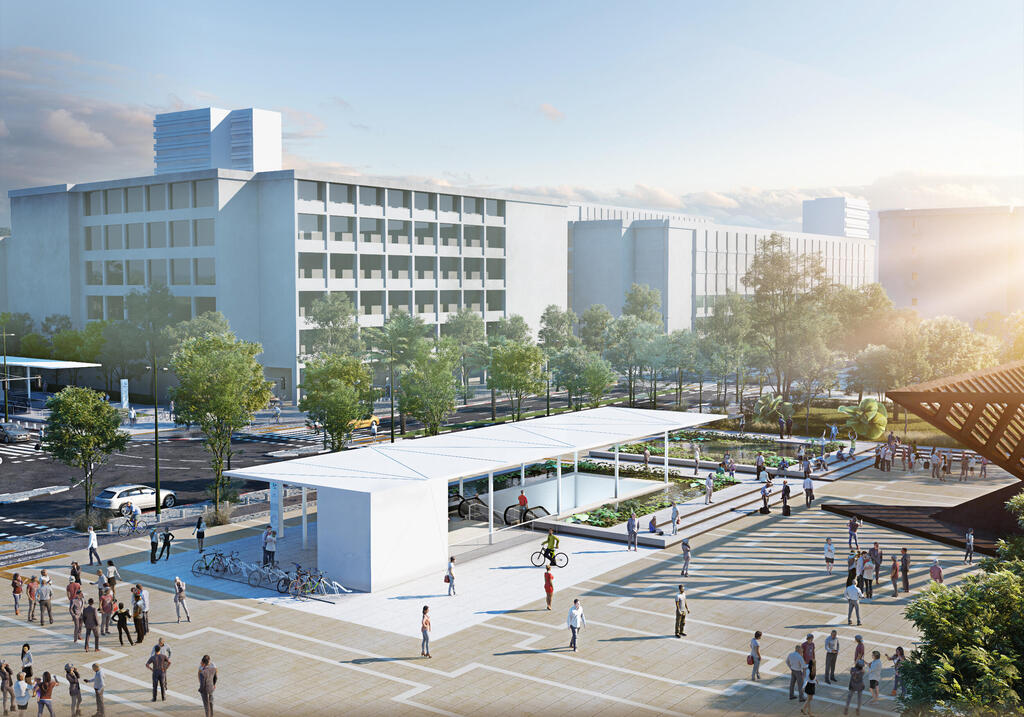
Rabin Square Light Rail Station on the Green Line
(Photo: NTA)
Israel is already one of the most densely populated countries in the Western world and the Central Bureau of Statistics projects population density will continue to rise. As a result, road congestion in Israel is the highest among OECD member states, and the number of vehicles per kilometer of road keeps growing. Despite a construction boom over the past decade, development is not keeping pace with population growth, especially in Tel Aviv and the central region. The same is true for the transportation projects designed to improve public transit, which are lagging and delayed.
Because of the state of public transportation and long-standing habits, 90 percent of travel in Israel is done by private car. In 2021, a congestion pricing plan was proposed to reduce peak-hour car travel, encourage public transportation use and help fund projects, but the plan faced political and public resistance and never moved forward. Transportation Minister Miri Regev argued it was a regressive tax that would hurt residents of the periphery and low-income communities because viable public transportation alternatives still do not exist.
Israel eventually recognized, albeit very late, that the solution to gridlock is mass transit. Hundreds of billions of shekels have been invested in the metro, the light rail and new rail lines. Once all of them operate together, the country’s public transportation system will begin to resemble what Israelis experience when traveling abroad. Yet in reality, reaching that European-style dream of advanced, reliable transit that offers a true alternative to private vehicles will be long and difficult.
The short term: Years of traffic
Shechter Sitman says the country is entering a particularly challenging period with massive simultaneous construction on major projects. She says the projects are essential, but in the short term they will cause closures and traffic pattern changes that will worsen congestion.
According to her, the public will need patience, and authorities must treat the public as a partner. She says authorities must adhere to timelines and be transparent. Large projects tend to face delays, and the public needs updates. She says people only experience frustration when their route to work is blocked, but do not understand where the project stands. She adds that communicating the stage of each project is essential so the public feels it is part of a shared effort to improve conditions. She says foot-dragging must not be allowed.

The Metro HaShalom Complex in 2040
(Photo: NTA)
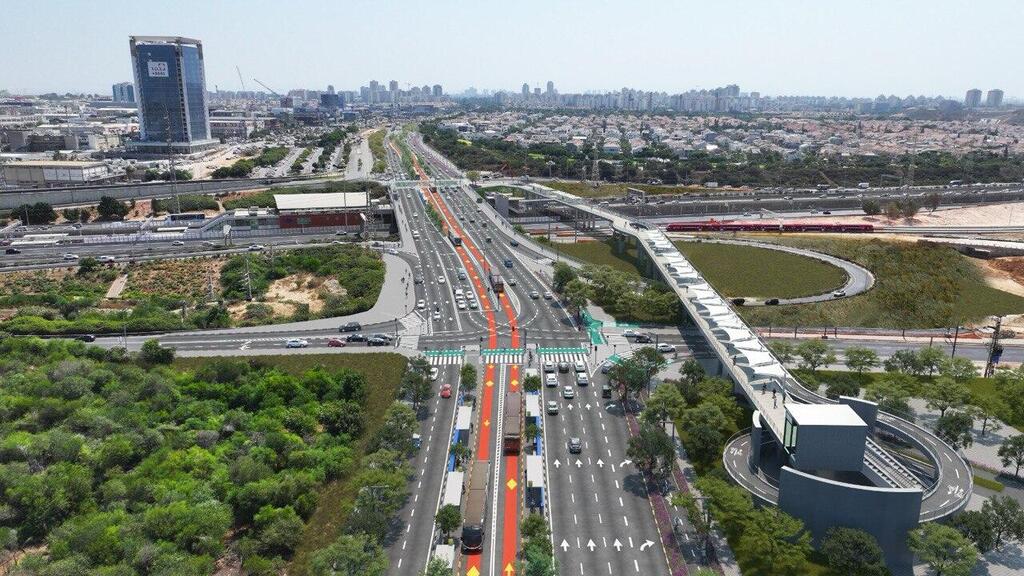
The planned appearance of the Metronit system in Rishon LeZion
(Photo: Ayalon Highways)
Ola Axelrod, head of the metro and mass transit division at Planning Administration, also says the coming years will be difficult. She says people must show patience and understand that temporary discomfort will eventually lead to better accessibility that will allow them to leave their cars at home. She adds that the state began these projects decades too late.
Axelrod points to South Korea, which became independent in 1948. In Seoul, she notes, 60 percent of trips are made by mass transit and the first metro line opened in 1974. She says the goal is that within a decade, 40 percent of travel in the Tel Aviv area will be by public transportation.
As a Jerusalem resident, she says the city’s light rail changed her life. For several years, there was construction, she recalls, but today there are no traffic jams and the improvement is dramatic. She says the public must be patient and think not only of itself but of future generations. Some areas will lose parking spaces to public transportation lanes, she says, but that is necessary to achieve high mobility. She warns that stopping the work will only ensure that even by 2040 the system will not be ready. The longer Israel waits and the slower the planning, the worse the outcome will be.
The long term: The projects expected to ease the crisis
First, it is important to note, as Shechter Sitman put it, that Israel excels at delaying projects. Infrastructure construction in the country often drags on for years through bureaucracy, and many of the projects listed here are still in their early stages. Though there are estimated completion dates, they are far from guaranteed. Many of these initiatives were supposed to begin long ago but were stalled for years during planning and budgeting, as well as ministerial changes, political battles and pressure from interest groups. Even so, within about a decade, a significant change on the ground is expected, one that will only grow over time.
One of the major mega projects meant to ease traffic is the Tel Aviv metropolitan metro, which will include three lines spanning roughly 150 kilometers and more than 100 stations. The lines will connect Kfar Saba and Ra’anana in the north with Rehovot and Nes Tziona in the south, running through Tel Aviv, Ramat Gan, Bnei Brak, Petah Tikva, Holon and Rishon Lezion, reaching a total of 24 municipalities. Forecasts show the system serving about two million passengers a day, and the hope is that it will place Israel alongside major European capitals.
Initial preparatory work for the metro began in recent months. Next year, the tender for the companies that will build this giant underground network is expected to be issued. Completion is not expected before 2040.
Long before that, the additional light rail lines in both the Tel Aviv region and Jerusalem are set to be finished. In the Tel Aviv area, work on the Purple Line is scheduled for completion in 2028. It will connect Kiryat Ono, Yehud and Givat Shmuel to central Tel Aviv and then south toward the Rishon Lezion industrial area. That same year, work is set to finish on the southern section of the Green Line, which is expected to open fully in 2030 and link Herzliya and Ra’anana with Tel Aviv, Holon and Rishon Lezion.
In Jerusalem, the Blue Line is now being expanded to additional neighborhoods such as Neve Yaakov in the north and Hadassah Ein Kerem Hospital in the south. At the same time, work continues on the Green Line, which will connect the Gilo neighborhood in the south to the French Hill in the north. The line will also include a branch to the Hebrew University on Mount Scopus, easing congestion at the city’s entrance and along major routes.
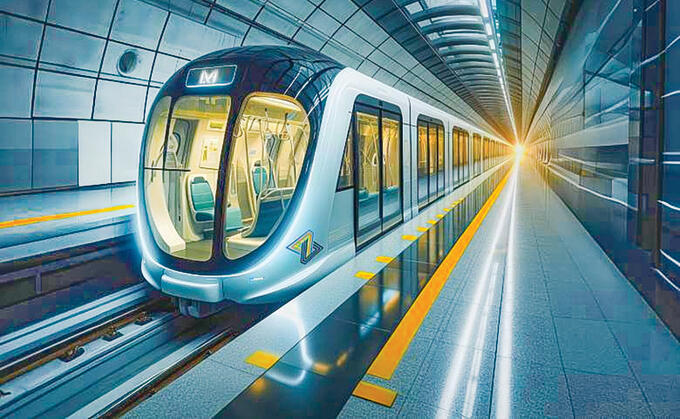
The planned appearance of the metro complex in Kfar Ganim in Petah Tikva
(Photo: NTA)
Another major initiative is Ayalon Highways’ Fast Lanes project, intended to reduce traffic at the entrances to Tel Aviv by creating lanes dedicated to public transportation and high occupancy vehicles, along with large park and ride lots such as those in Shapirim and Rishon Lezion, from which free shuttles will run to employment centers.
Ayalon Highways is also responsible for the new Metronit system in the Shfela region, which will establish bus rapid transit routes along major arteries in several cities and link them to the Tel Aviv metropolitan area. The Blue Line will connect Rehovot, Nes Tziona, Kiryat Ekron, Rishon Lezion, Ramla and Lod. The Brown Line will run east to west through Rishon Lezion and link the city with Be’er Yaakov, Ramla and Lod, passing major destinations such as Shamir Medical Center, the 1000 Business District, Lod’s train station and the western Rishon Lezion park.
At the same time, Israel Railways is undergoing major upgrades. By 2027, about 100 kilometers of new tracks will be added, along with seven new stations and updated service routes. The Route 431 rail line will connect the Shfela and central region to Jerusalem and Modi’in across roughly 30 kilometers, with two new stations, Rishon Lezion Tashach and Ramla South. The Eastern Line will span 65 kilometers, adding another north-south rail corridor, significantly increasing train frequency and adding five new stations: Hadera East, Tayibe, Tira Kochav Yair, Elad Petah Tikva South and Shoham.
Another project just beginning is the high-speed coastal railway, intended to cut travel time between Haifa and Tel Aviv to about 30 minutes. The new tracks, which on paper are slated to open in 2032, are designed for trains traveling up to 250 kilometers an hour.
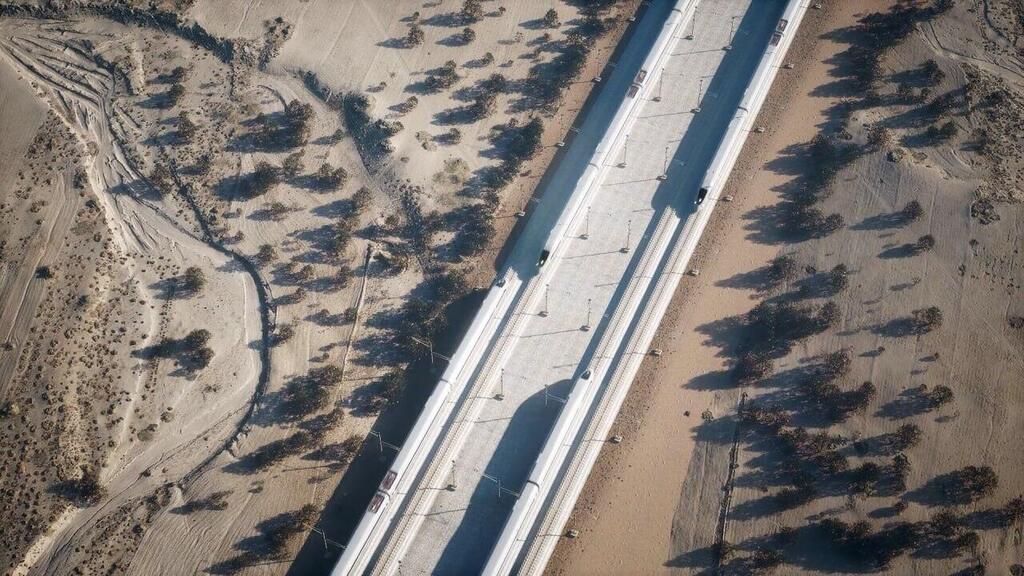
The coastal high-speed rail project
(Photo: Penguin)
Orly Stern, CEO of Ayalon Highways, says the country is at the height of construction. She says each year another project will open, but Israel continues to import vehicles in large numbers. She says a change in behavior is needed, in which people understand that public transportation is essential and should be their way to work. Traffic jams will not disappear soon, she adds, and those who choose to drive will not find relief. But there will be a strong alternative for those who choose not to.
According to her, the vision is a public transportation network in which the light rail, the metro and the Metronit system are fully connected. She says that once that happens, people will be able to move easily from one mode of travel to another. She says Israel once had one central bus station, but now the focus is on transportation hubs where networks meet. This, she explains, is what guarantees a reliable and effective alternative to private cars, and that is the direction the country is moving in quickly.
Experts say that until the major public transportation projects are complete, there are steps that can be taken immediately to improve service. These include increasing bus volume, adding frequencies, improving reliability and completing the long-delayed network of dedicated public transportation lanes. Until then, Israelis will have to make do with the current system or crawl through traffic.