

Senior IDF officials are recommending an immediate stop to the flow of some 4,200 supply trucks Israel has been allowing into Gaza each week as part of the truce deal tied to the release of hostages by Hamas, saying the terrorist group is showing signs of recovery and is far from disarmed.
The trucks have been entering Gaza under the first phase of a U.S.-brokered ceasefire agreement between Israel and Hamas. But Israeli warnings focus less on the aid itself than on what officials describe as a lack of proactive Israeli strategy for what comes next, leaving Hamas the space to rebuild rather than being disarmed.
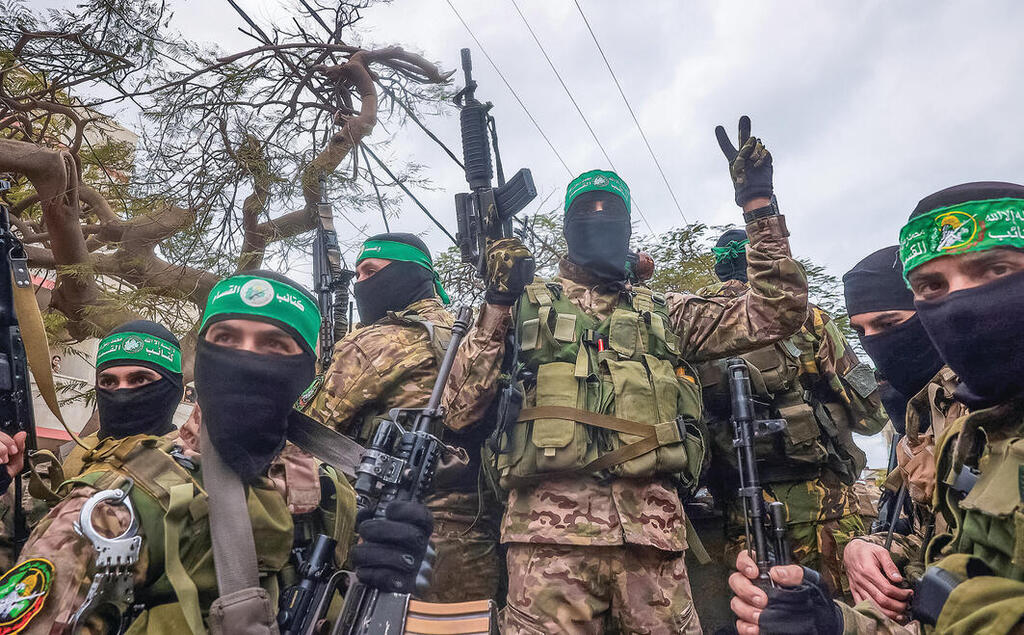
In private assessments, senior defense officials say the current “stalemate” in Gaza continues to benefit Hamas as it recovers, with Israel increasingly appearing reactive rather than in control. They also complain that regional influence over Gaza is tilting toward Qatari and American diplomatic pressure three months after the war ended.
Hamas rebuilding, Israel cautions
Israeli commanders are sounding the alarm over what they describe as a “Hezbollah model” taking root in Gaza, where a violent terrorist group continues to dominate territory adjacent to Israeli communities, with no sign of dismantling or destruction of its capabilities.
“In Gaza in 2025, roughly 60,000 babies were born — about 10,000 more than the annual average — and we expect similar numbers in 2026 and every year,” senior officers said. “During the war itself, we estimate about 70,000 Gazans were killed, not including the missing, and we are now engaged in the painstaking work of distinguishing terrorists from civilians.”
IDF forces remain in place with more than 40 manned positions along the Israeli side of the so‑called “yellow line” — the ceasefire demarcation line — and in the buffer zone near the border. Meanwhile, Hamas — despite having been militarily degraded by Israeli forces — continues to produce rockets and explosives, staff its command centers, rebuild damaged tunnels and solidify its rule over nearly two million people in Gaza. Many civilians are not only not opposing Hamas but are experiencing a relative return to normalcy, including reopening banks, restaurants and markets. Farmers have returned to their fields and schools have reopened, officials said.
According to the military, Hamas is even collecting millions of shekels in taxes from the very supply trucks entering from Israel and may soon stage fake handovers to give the impression it’s surrendering some of its weapons.
Meanwhile, Gaza faces mounting infrastructure problems. Garbage heaps are reported to be as high as 60 feet (18 meters), and the IDF says the most urgent need is restoring sanitation and sewage systems, a process expected to begin soon under elements of the truce agreement.
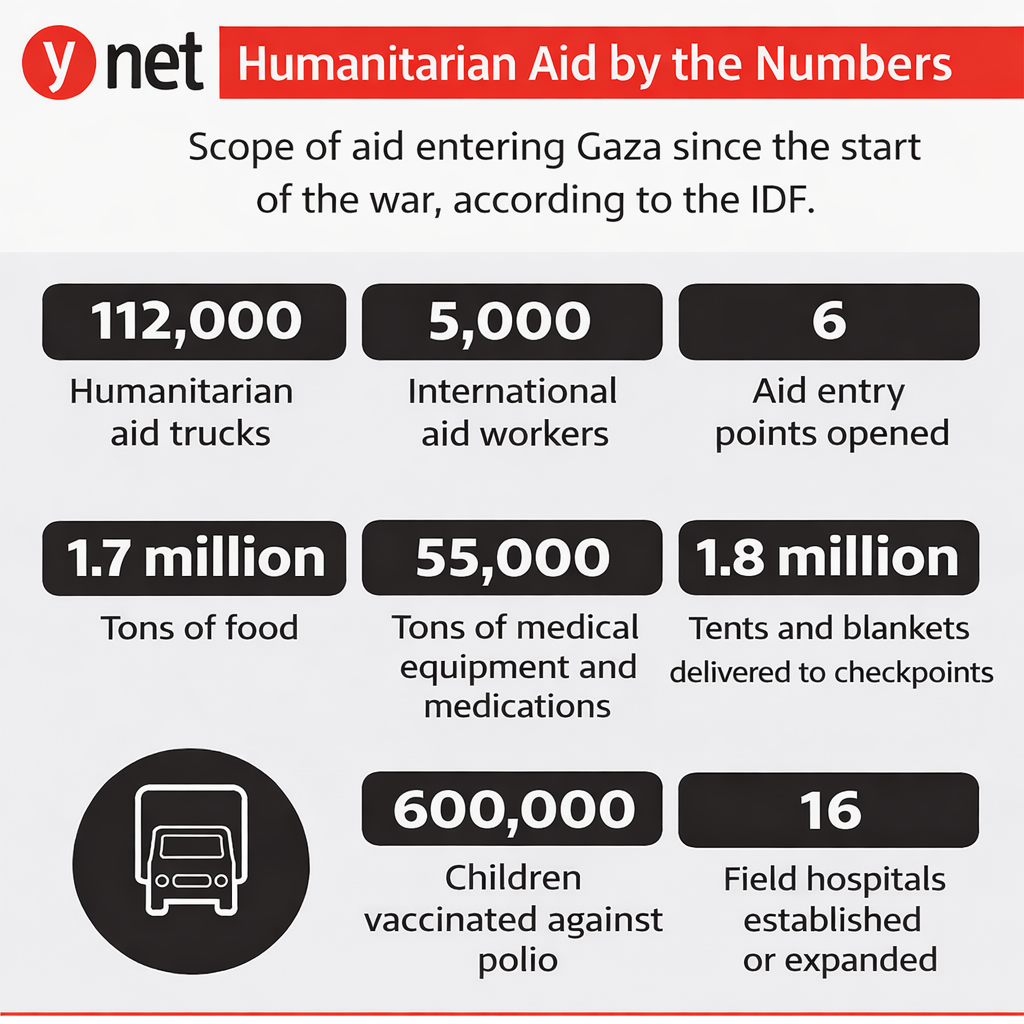
“What would be worst,” Israeli officers warned, “is if we agree that its weapons are stored in warehouses in Gaza. We must immediately stop the 600 trucks we are sending in daily, three to four times what Gaza needs according to the UN. We hope we can convince the U.S. of this.”
Citing United Nations figures, Israeli officials said Gazans need about 80,000 tons of food per month to survive. But Israel currently allows in four times that amount, with roughly 25 tons of food per truck, and Hamas levies about a 15% tax on those shipments, in addition to other fees paid at the crossing. The military said Gaza is now “flooded with food, water, medicines and more,” and even the UN has complained it no longer has space to store supplies arriving from international aid organizations.
Warning ahead of Rafah crossing reopening
As part of Phase II of the Gaza ceasefire agreement, approved by the Security Cabinet under Prime Minister Benjamin Netanyahu’s direction, the Rafah crossing is expected to reopen in both directions in the coming days, offering significant relief to Gazans.
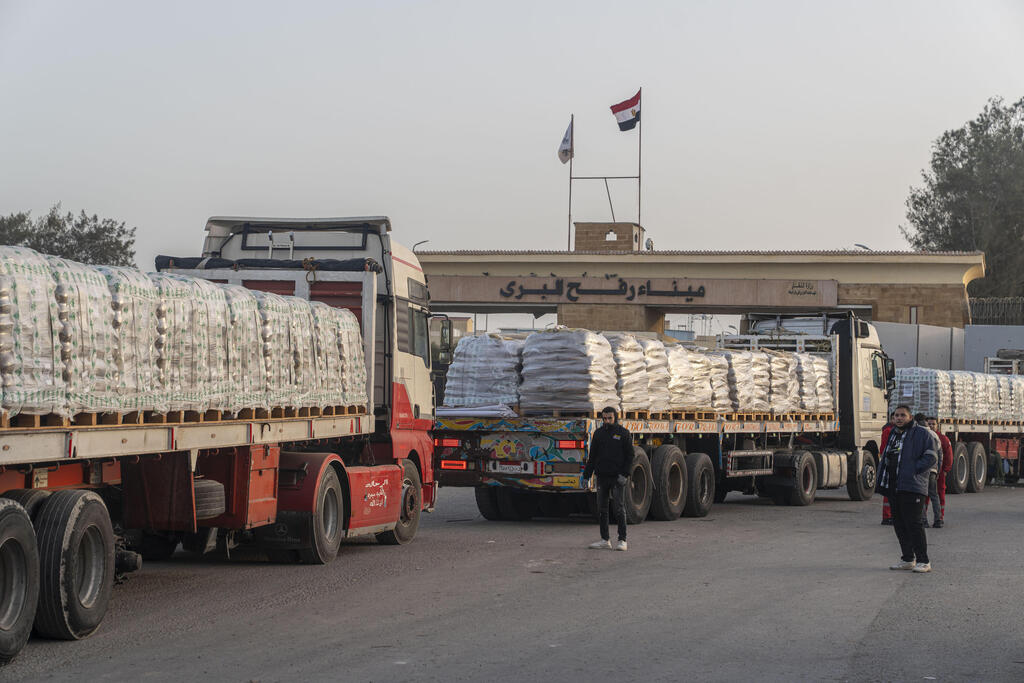
Rafah crossing
(Photo: Ali Moustafa/Getty Images)
The crossing is expected to be managed by Palestinian Authority officials, with an international body involved and external security checks — mainly for those entering Gaza — alongside the IDF. Under the plan, which may not be implemented right away, the crossing would feature facial recognition cameras and remote Israeli control over the gate to Egypt. However, if a low-level Hamas operative wishes to leave, Israel is not expected to prevent it.
The most serious concern about Rafah is the possibility that it could become a cargo crossing in the future. The military warns this would be a disaster: “In the months leading up to Oct. 7, some 11,000 trucks entered Gaza unchecked via Rafah, four times higher than in previous years. Aid to Gaza must go through Israeli crossings under supervision. At most, Kerem Shalom could one day serve as a border triangle or resemble the cargo terminals at the Allenby crossing with Jordan.”
Summary of the war by COGAT
The Coordinator of Government Activities in the Territories (COGAT), a Defense Ministry body responsible for implementing civilian policy in the West Bank and Gaza Strip, has reviewed the long Gaza war and emphasized multiple Israeli efforts that, in its view, prevented a humanitarian disaster or a UN declared famine during nearly two years of largely ground operations across much of the territory.
From the earliest Security Cabinet meeting in October 2023, shortly after the war began — when ministers declared that not even a bottle of water would enter Gaza — to the massive official aid deliveries that Israel eventually allowed into the enclave, COGAT says the Israeli government played a central role in managing humanitarian access, even as those deliveries also indirectly helped sustain Hamas.
The IDF identified what they describe as one of the war’s most significant failures: the absence of a coordinated national public diplomacy effort capable of countering and deflecting Hamas information campaigns, some of them enhanced by foreign actors, particularly in the second year of the war.
“Each agency did a bit on its own — COGAT, the Foreign Ministry, the IDF Spokesperson’s Unit,” military officials said. “We only succeeded in countering campaigns, such as claims about starving Gazan children last year, when we formed special integrated teams that included Military Intelligence, which helped find evidence that images of extremely thin children were due to genetic diseases, not hunger. But those teams were one offs, and the world decided the war was over, regardless of what we did.
“Anyone who thinks we had broad legitimacy because of global sympathy after the Oct. 7 massacre is wrong. Within two weeks of the war’s start, we were already hearing voices opposing and condemning our actions, including in Europe.”
Regarding the new technocratic government intended to oversee civilian affairs in Gaza — expected to operate under the Palestinian Authority — the IDF acknowledges that many of its members are seen as aligned with Hamas, and believes the terrorist group may accept the arrangement to buy more time to recover.
“Tens of thousands of civilian clerks and administrators in Gaza are affiliated with Hamas,” the army explained. “We will see real change only when at least the Hamas‑aligned city mayors and the senior management layer still dyed green begin to be replaced. Hospital administrators, municipal workers, department heads who run day‑to‑day life — they all belong to the Hamas administration, and so the military wing can continue to exist alongside them.”
Pessimistic outlook for the year ahead
The military envisions one of three scenarios in the coming year: Hamas continues to rule its territory, while any multinational force, if established, operates in a yet‑to‑be‑built “new Gaza” on the Israeli side of the yellow line; Hamas shifts into a “Hezbollah model,” acting as a powerful terrorist organization alongside a Palestinian civilian authority that is not part of it; or Hamas refuses to disarm and returns to fighting.
Security officials also worry about a scenario in which Israel is forced to accept Qatar and Turkey as the primary financiers of Gaza’s reconstruction. “There must not be Turkish troops on our border with Gaza, and as for Qatar, we don’t see other countries agreeing to lead reconstruction financing. In any case, the agreement states there is no reconstruction without Hamas disarmament,” they said.
Last month, outgoing COGAT commander Major General Ghassan Alian banned further entry by Doctors Without Borders (Médecins Sans Frontières) into Gaza after the group refused to provide in advance a list of its personnel operating in the enclave. The controversy stemmed from an incident in which one aid worker killed by IDF fire was a physiotherapist, but another was an engineer who had developed weapons for Hamas. On this issue, the army said it is concerned about the constraints of the new reality in Gaza, contrasting sharply with the freedom to strike Hezbollah targets in Lebanon.
Additionally, the military identified a growing problem: illegal smuggling of supplies and goods from Israel into Gaza, especially in areas where reservists and civilian elements operate in the buffer zone. “About 70% of Gaza will be rebuilt in the coming years, that’s a huge amount of money, contracts and exploitation of the current situation,” the army said. “A truck smuggled into Gaza worth about 100,000 shekels (roughly $32,000) could fetch about 500,000 shekels (about $160,000).”
Rising tensions in the West Bank
Despite Israel’s policy of distinguishing between the West Bank and Gaza, and the dangerous stagnation in the enclave, the Palestinian population in the West Bank is beginning to feel pressures that could raise tensions in an area that has been relatively calm. The IDF is enforcing more restrictive movement policies for Palestinians, and Israeli authorities have not yet approved the return of roughly 120,000 Palestinian workers to Israel, even though the war is over.
Some military officials are pressing for decisive action on the West Bank front, including engaging the Palestinian Authority over thousands of armed men, rather than waiting as was done during the earlier period of relative calm with Gaza. “The most dangerous thing is to get stuck, to not initiate or lead. COGAT had previously recommended changing policy on Gaza after Operation Guardian of the Walls (the Hebrew name for the 2021 Gaza war), suggesting Israel should take full control of the territory and dismantle Hamas while moving away from a policy of containment,” they said.