


Qatar, Turkey and Egypt are leading a behind-the-scenes diplomatic effort to broker an agreement between U.S. President Donald Trump and Iran to end the war, a senior Israeli official said Sunday, as the deadline for Trump’s ultimatum on the Strait of Hormuz approaches.
“Israel has no choice but to align with Trump,” one official said. “We would prefer to continue the strikes, but we will do what he decides. Tomorrow we will know where things stand, when the ultimatum expires.”
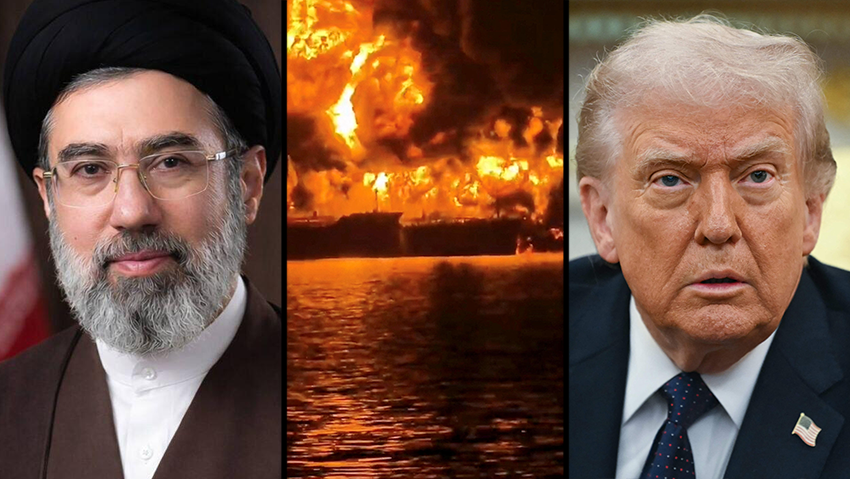
According to the official, Trump is unlikely to end the war under conditions that suggest Iran forced his hand.
“He fears it could end with the perception that they bent him on Hormuz,” the official said. “He wants to present a different outcome, but the Iranians are difficult.”
One possible scenario under discussion is a phased arrangement in which Iran would reopen the strait, while the United States would scale back its attacks and begin to withdraw. However, Israeli officials said it remains unclear whether Tehran would agree to such terms.
“If we hear there is diplomatic engagement and Iran is considering it, then this could move forward in stages,” the official said.
Israel is preparing for the possibility that the initiative will fail.
“If there is no agreement, we are heading toward escalation that could last for months,” the official added. “Trump will pursue a ground achievement, including the seizure of Kharg Island.”
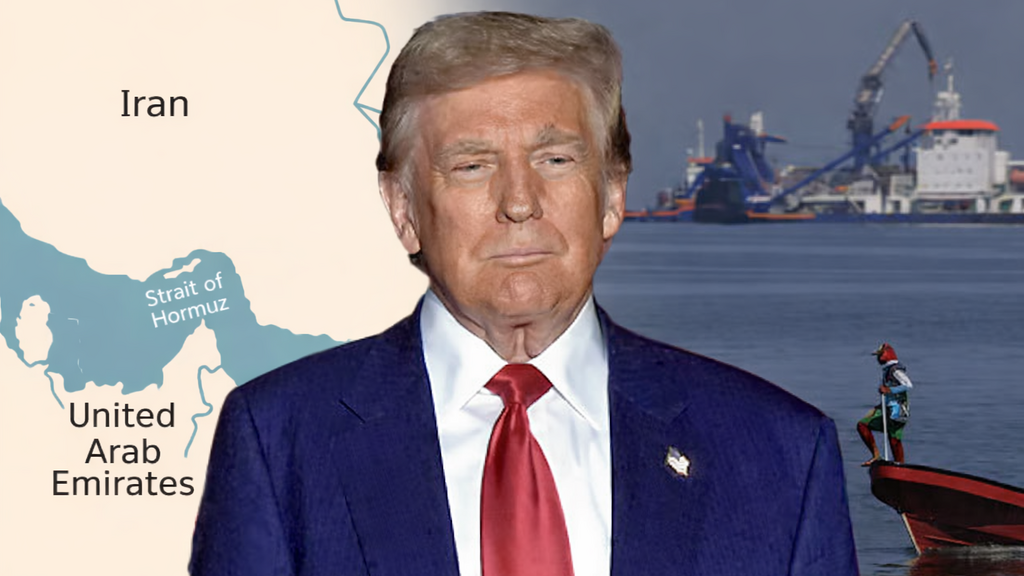
In the meantime, Israel is intensifying its strikes in Iran, targeting government assets, nuclear infrastructure and missile stockpiles.
The official also addressed the decision to limit passenger numbers on flights from Israel, saying Iran has been challenging Israel’s air defense systems and there are concerns about concentrated efforts to strike Ben-Gurion Airport.
Trump issued his ultimatum overnight, writing on his Truth Social platform that if Iran does not fully reopen the Strait of Hormuz within 48 hours, “the United States of America will hit and obliterate their various power plants.”
Since the war began, Iran has effectively blockaded the strategic waterway, through which roughly a fifth of the world’s oil supply passes, driving up global energy prices.
Before the war, more than 130 vessels passed through the strait each day. That number has now dropped to just three or four, according to estimates.
As diplomatic efforts continue, Iran has simultaneously escalated its threats, warning that any strike on its energy infrastructure would trigger a wider regional response.
Iranian officials said attacks on the country’s power grid would lead to retaliatory strikes on energy, water and oil facilities used by the United States, Israel and their allies across the Middle East.
“An attack on Iranian infrastructure will lead to a complete blackout of the region,” Vice President Mohammad Reza Aref said.
Parliament Speaker Mohammad Baqer Qalibaf added that critical infrastructure across the region would become “legitimate targets” and could be “irreversibly destroyed” if Iran’s power facilities are hit.
Iran’s military also warned the Strait of Hormuz could be fully closed, with one spokesperson saying it would remain shut until damaged power plants are restored.
At the same time, Iranian President Masoud Pezeshkian signaled a more selective approach, saying the strait is “open to all except those who violate our soil.”
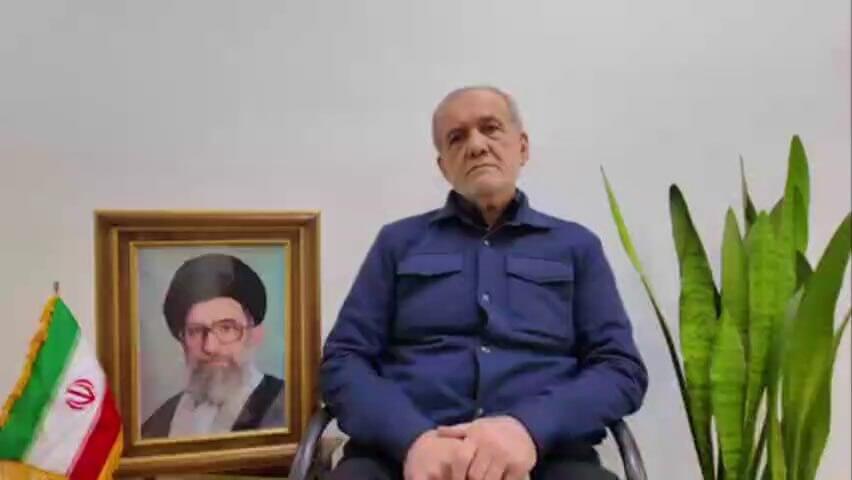
Iranian President Masoud Pezeshkian
In practice, vessels from countries considered friendly to Tehran, including China, India and Pakistan, have been allowed to pass, while many others remain stalled amid growing security concerns.
Iran has also intensified efforts to shape public opinion online, according to reports, shifting its messaging toward the war and targeting audiences in the United States.
The campaign includes AI-generated videos and memes mocking Trump and Prime Minister Benjamin Netanyahu, as well as fabricated footage depicting attacks on U.S. and Israeli assets.
Experts say the information campaign has become a central component of Tehran’s broader strategy, alongside military threats, as it seeks to influence global perception and deter further escalation.
With diplomacy racing against the clock and both sides signaling readiness to escalate, the coming hours may determine whether the conflict shifts toward a negotiated outcome or a broader regional confrontation.