

Maj. Gen. (res.) Nitzan Alon, who served as the Israeli military’s point person on hostage negotiations after the October 7 Hamas terror attack, sharply criticized Israel’s political leadership in an online discussion hosted Friday by the Washington Institute for Near East Policy.
“Israeli society is strong, but we now need different leadership that will make the necessary changes and lead this wonderful people with a realistic approach, not one based on slogans such as ‘total victory,’” Alon said.
Maj. Gen. (res.) Nitzan Alon, former coordinator for hostages and missing persons: 'We now need different leadership to lead this wonderful people with a realistic approach'
(Video: The Washington Institute for Near East Policy)


He added that the weekly mass demonstrations held during the war had helped sustain him personally while he worked on efforts to secure the release of the hostages.
“The sight of the masses coming out to demonstrate every week gave me the strength to continue working,” he said.
Alon took part in a Washington Institute forum marking three years since the Oct. 7, 2023, attack, alongside other Israeli, Palestinian and American experts examining the consequences of the war and changes across the region.
During the discussion, Alon also expressed optimism about the possibility of progress on the Palestinian front and developments involving Syria and Lebanon, while arguing that Israel’s future course required a more realistic political approach.
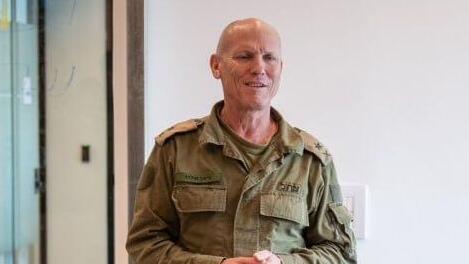
Maj. Gen. (res.) Nitzan Alon
His remarks followed criticism he voiced in late August at an event organized by LEAD, an Israeli youth leadership development organization, where he warned of what he described as a significant erosion of IDF values among some soldiers and commanders.
“There is significant erosion in IDF values among some of the soldiers and commanders. It is impossible not to notice it,” Alon said at the time.
Speaking against the backdrop of violent incidents in the West Bank involving soldiers, Alon said the problem was partly a consequence of the prolonged war, but also reflected broader disputes inside Israeli society over the values that should guide it.
“There are incidents in which soldiers do not behave properly in Judea and Samaria,” he said, using the Israeli term for the West Bank. “There are cases in which they stand by in the face of illegal and immoral acts, and sometimes even cooperate.”
“The responsibility lies with the commanders in the military,” he continued. “First and foremost, the responsibility is to see what is happening and not ignore it. If the State of Israel wants to exist for generations, we must preserve our moral foundation. It is not only because of what the world will say, but so that we ourselves can look in the mirror.”
Alon also addressed responsibility for the failures surrounding the Oct. 7 attack.
“In my view, the political leadership bears responsibility for the overall concept regarding Hamas in Gaza,” he said.
He argued that the intelligence accumulated before the attack, together with warnings from female surveillance soldiers and indications detected during the night before the assault, should have been treated as a concrete warning requiring action.
“That is the essence of the failure, both at the intelligence level and at the military level,” Alon said.