


Drone smuggling attempts from Egypt into Israel have surged sharply this year, with nearly 900 incidents recorded in just three months, according to military and local officials. The IDF have deployed new interception systems along the border to combat the growing threat, which has disrupted life in small desert communities near Nitzana.
For much of the past year, residents along the Egyptian border were accustomed to the constant buzz of drones flying overhead. “This whole area was a drone highway,” said Idan Bismut, security coordinator of the Ramat HaNegev Regional Council. “Some flew low, some high. They came straight to the smuggler, wherever he wanted.”
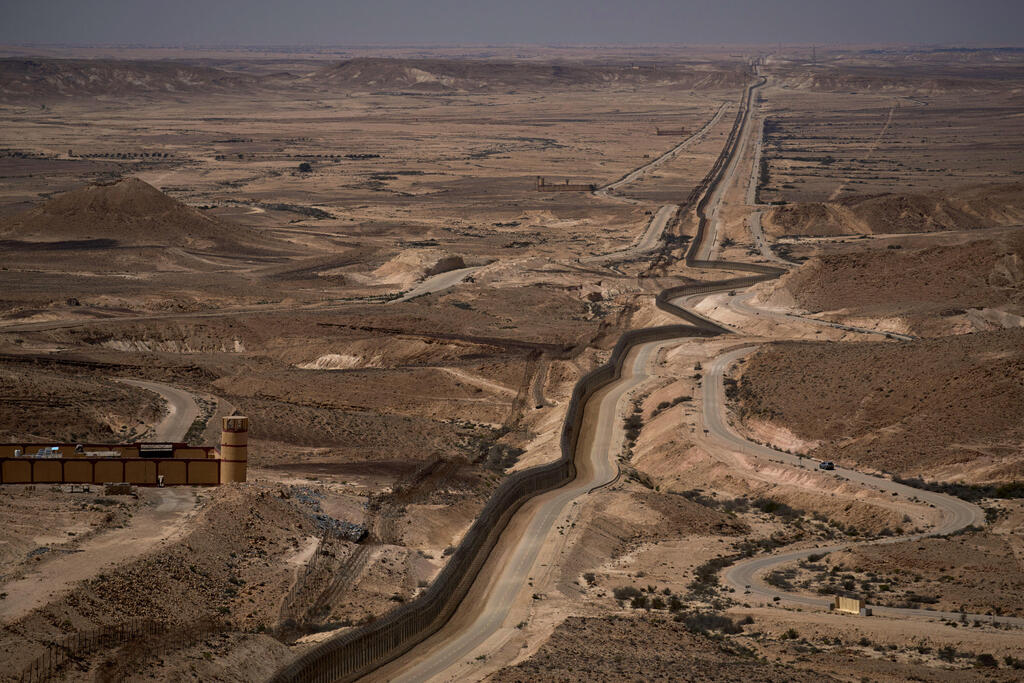
The drones typically crossed from Egypt’s Sinai Peninsula into Israel at all hours, carrying contraband ranging from cigarettes and drugs to firearms and grenades, according to residents and security officials.
On the eve of Yom Kippur, the IDF began installing interception systems in the sector. Col. G., the new commander of the Paran Brigade, told local security coordinators that “some systems will operate immediately, others after the holidays, and more are expected to arrive after Sukkot.” Additional forces, he said, would be deployed to seize smuggling tools and equipment.
Since the installation, residents of Kadesh Barnea, Be’er Milka, Nitzana and Ezuz say the familiar buzzing has all but disappeared. “That means the systems are working,” Bismut said. But the smugglers, he added, have simply shifted operations about 10 kilometers north and south of the main crossing points.
A local security coordinator said the systems require constant maintenance. “Last week the generator ran out of fuel, and within half an hour they made a smuggling run and vanished,” he said. “It starts with cigarettes, crystal [meth] and marijuana — but there are endless weapons: grenades, pistols, brand-new Kalashnikovs. The first stop is Bir Hadaj, where the weapons are hidden for a day or two before being sold. Then we hear test shots in nearby communities.”
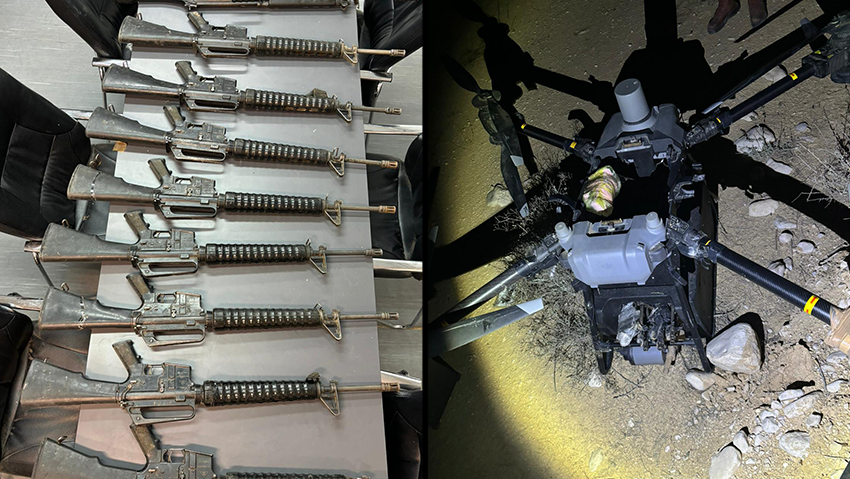
(Photo: IDF)
The rising wave of drone smuggling has drawn the attention of lawmakers. In mid-October, the Knesset’s Foreign Affairs and Defense Committee held a special discussion initiated by MK Tzvi Sukkot of Religious Zionism. Diaspora Affairs Minister Amichai Chikli of Likud and Yair Golan, head of the Democrats party, toured the area in the days leading up to the hearing.
The far-right Otzma Yehudit party is preparing legislation to limit civilian drone use, and lawmakers from several other factions have expressed support for tighter regulations.
“The drones of 2025 are the camels of the past,” said Bismut. “Smuggling has always existed — and always will. But when the state treats it as a priority, it can be significantly reduced.”
Eran Doron, head of the Ramat HaNegev Regional Council, called the phenomenon a nationwide threat. “The illegal weapons smuggled into Israel don’t stop in the south,” he said. “Much of it continues northward, deeper into the country. In Nitzana we see the smuggling, in Revivim we hear the test shots — and elsewhere people meet these weapons only when they’re fired.”
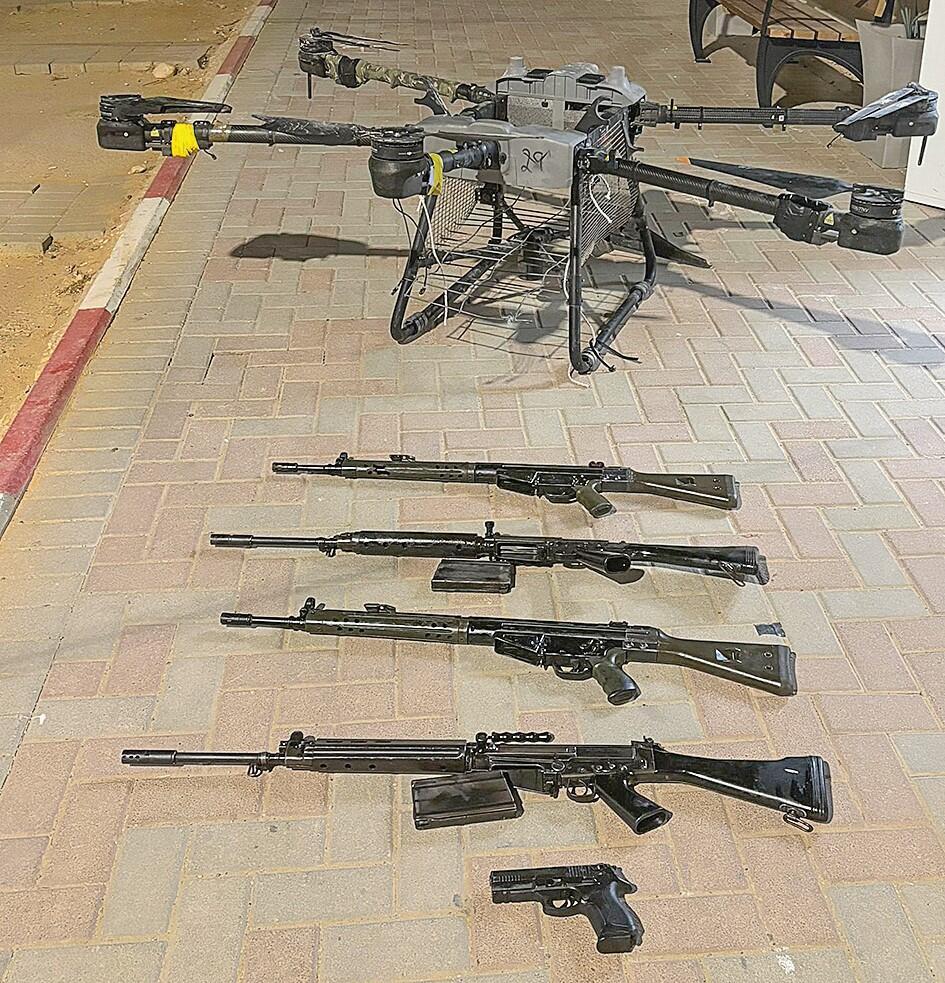
(Photo: IDF)
Doron urged the government to strengthen the communities of the Nitzana region, the only area of civilian settlement along the Egyptian border between Bnei Netzarim and Eilat. “The government must act decisively against smuggling and immediately approve plans to expand the Nitzana settlements,” he said.
According to figures presented to the Knesset last month, 896 drone-smuggling attempts were recorded along the Egyptian border over the past three months — nearly double the 464 attempts during the same period in 2024.