


Families of fallen hostages, released captives and hundreds of supporters gathered Saturday night at Tel Aviv’s Hostage Square, calling for the return of the remains of 13 hostages still held in Gaza by Hamas — now for 750 days. Survivors of captivity Eitan Horn and Yosef Chaim Ohana joined the rally.
Anat Angrest, mother of freed soldier Matan Angrest, shared her emotional testimony, thanking those who fought for her son’s return and urging continued pressure to bring home those left behind. “Even at the darkest moments, I never doubted we would succeed,” she said. “Now, Matan feels a life-or-death need to bring back his fallen brother, Itay Chen, to Israeli soil. He carries within him the breath of his comrades who died beside him on October 7.”
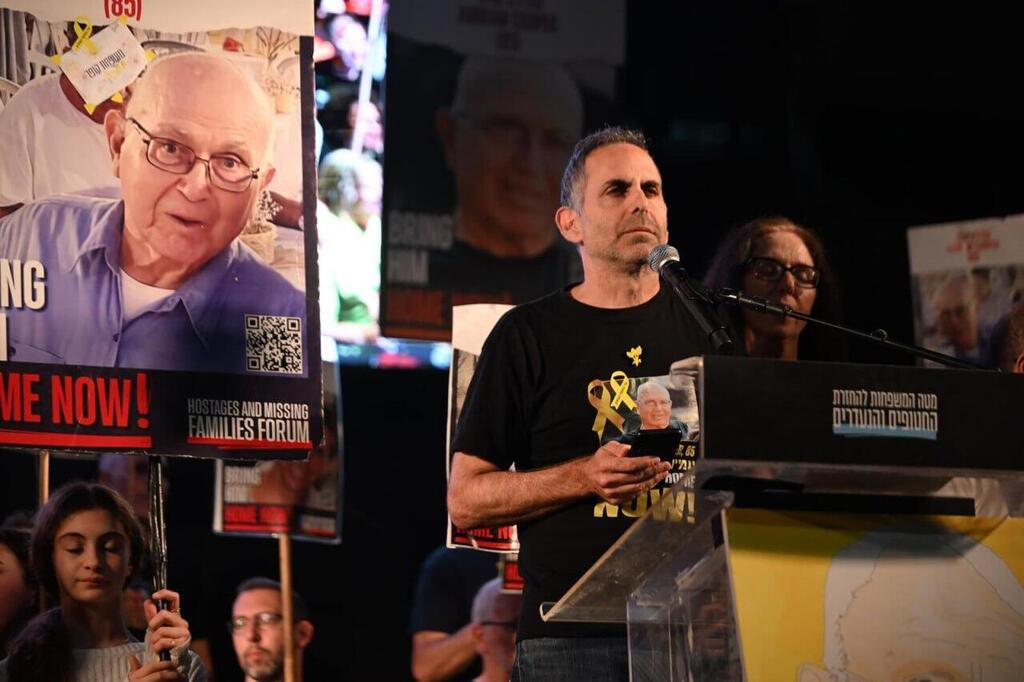
Angrest called for a state commission of inquiry into the failures of October 7, the conduct of hostage negotiations, and the prolonged war. “We celebrate Matan’s return, but it is joy born of pain — a burden too heavy to ignore,” she said. “We will not stop until all hostages are brought home. Not until the last one.”
Rotem Cooper, son of slain hostage Amiram Cooper, delivered a harrowing speech imagining the final moments of the captives left in Gaza. “Seven men — exhausted, forgotten — lying in narrow, filthy tunnels, wondering if they were abandoned. Then, airstrikes. Chaos. A bomb pierces the steel door. Their captors arrive and open fire. Silence. Dust settles on their lifeless bodies. Trapped in a cursed Gazan tomb, waiting for someone to recover them, to tell their story, to bring them home.”
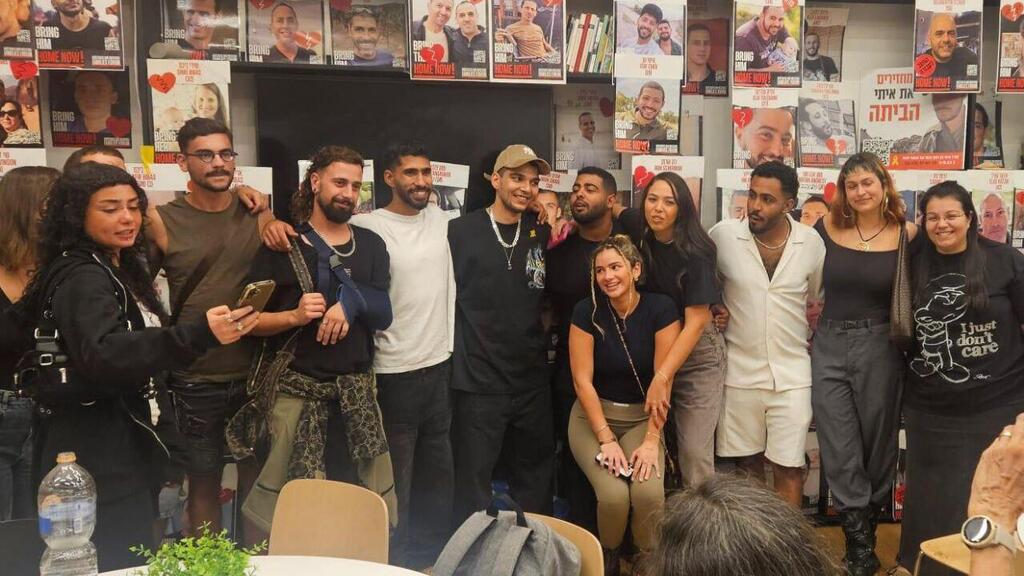
Yosef Chaim Ohana in the square
(Photo: Hostage Families Forum)
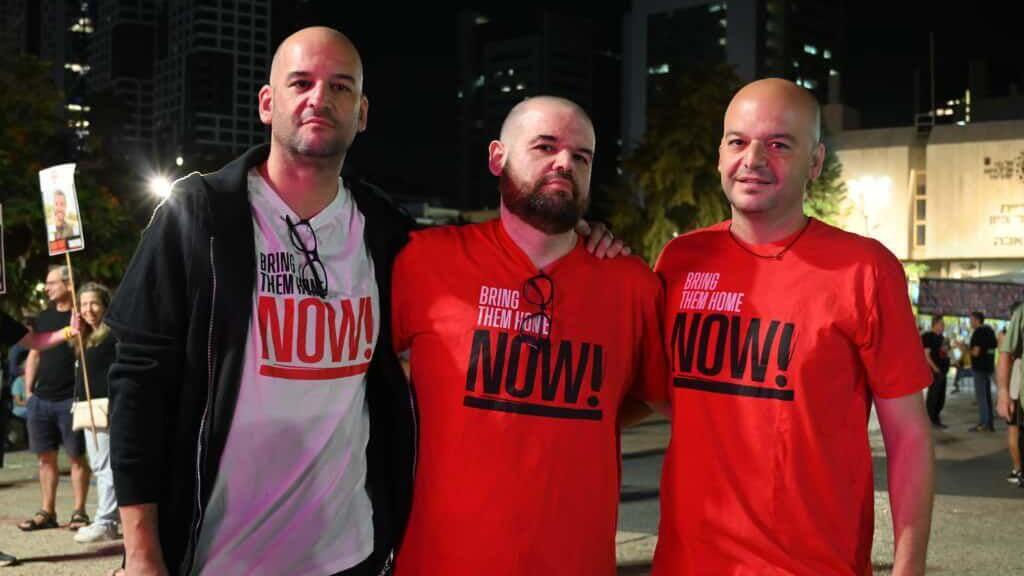
Eitan and Iair Horn in the square
(Photo: Paulina Patimer)

(Photo: Paulina Patimer)
Yosef Chaim Ohana, released in the most recent hostage deal, made his first visit to the square.
Nira and Ofir Sharabi, wife and daughter of Yossi Sharabi — who was kidnapped and later killed in captivity — also addressed the crowd. “We never took that trip to Thailand we dreamed of,” Nira said. “But we went, the girls and I, and Yossi was with us — in the wind, in the sea, in the food. The pain is unbearable. When we didn’t know, we held onto hope. Now, the finality is crushing. We will continue fighting until every hostage is returned for a proper burial.”
Ofir added, “In two days, we will bury the man we loved most. My father came home dead. All the hostage families have become one family. This suffering wasn’t our choice, but it must end — for our society to move forward. Please, don’t stop fighting until every single one is home.”
Alon Nimrodi, father of Tamir Nimrodi, whose body was recently returned, said, “740 days of hope were shattered the moment we were told Tamir was gone. Not knowing nearly drove us mad. Now, with his return, there is no relief. This was not the ending we hoped for.”
He continued, “Our story is over, but not complete. Thirteen hostages remain — including five IDF soldiers from our small family of captured soldiers. They are the reason we can live here. Israel bears the responsibility to bring them all home. No one is more or less worthy.”
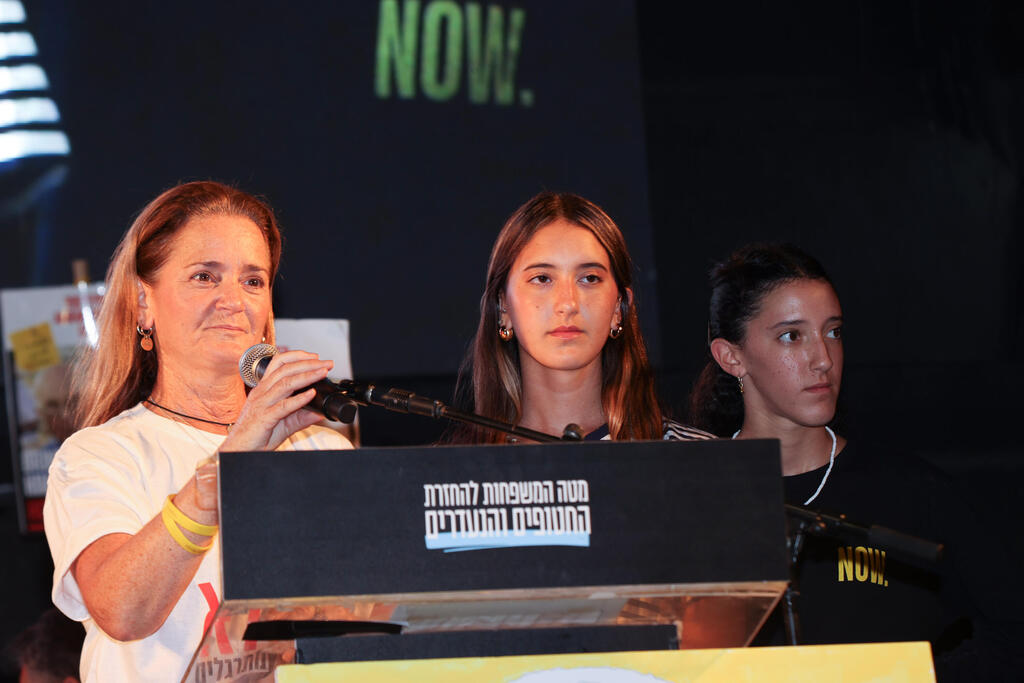
Nira and Ofir Sharabi
(Photo: Yariv Katz)

Alon Nimrodi
(Photo: Yariv Katz)
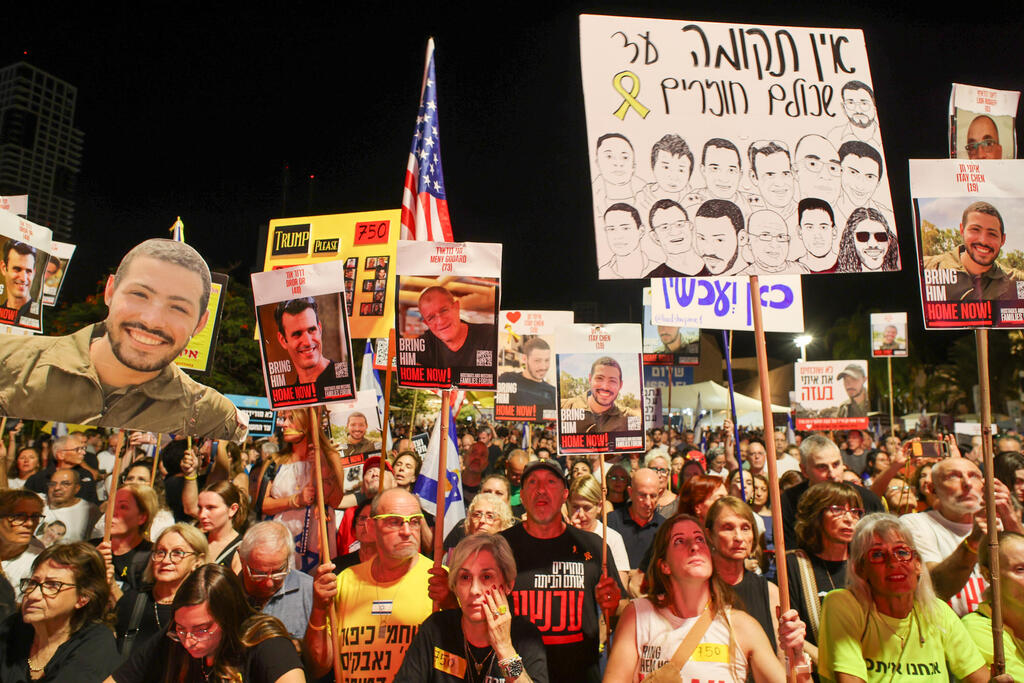
Protesters at the rally
(Photo: Yariv Katz)
Noam Katz, daughter of fallen hostage Lior Rudaeff, shared a deeply personal plea. Rudaeff was kidnapped alongside fellow kibbutz defender Tal Haimi during the Hamas attacks on October 7, 2023. “This week, we buried Tal,” Katz said. “He and my father stood alone that morning—no army, no state, just citizens with courage and love for their home.”
“They were the final barrier between our families and dozens of terrorists,” she continued. “They knew no help was coming. They fought until the end.” After saving their community, the two were captured and taken to Gaza. “Tal was returned. My father is still there.”
Describing two years of trauma, Katz said, “Some mornings, my body refuses to move—every muscle, every bone aches. I keep going because I want a grave to visit. A place to lay a flower. Today I only have a void.”
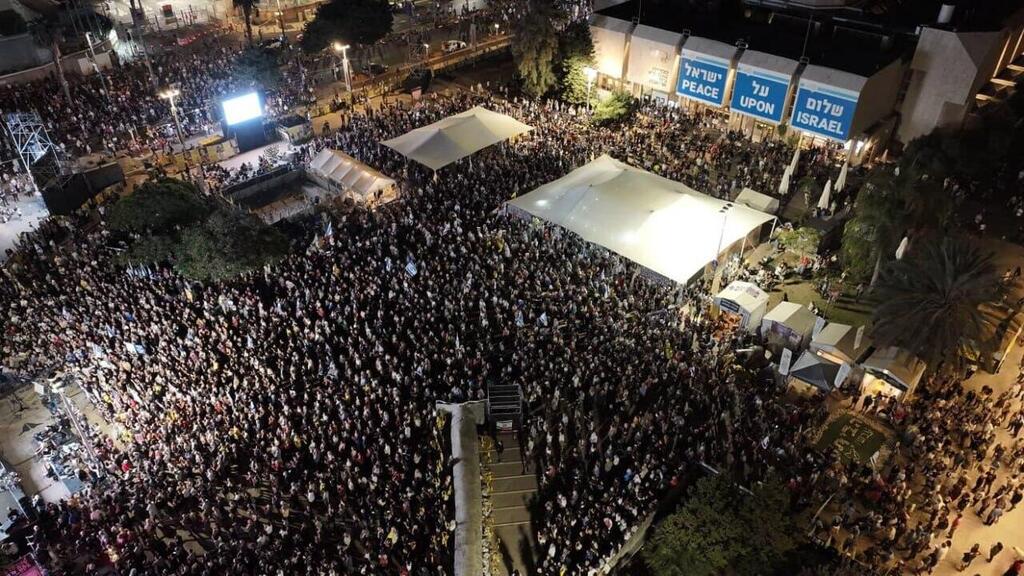
Rally in Hostage Square
(Photo: Yair Palti)
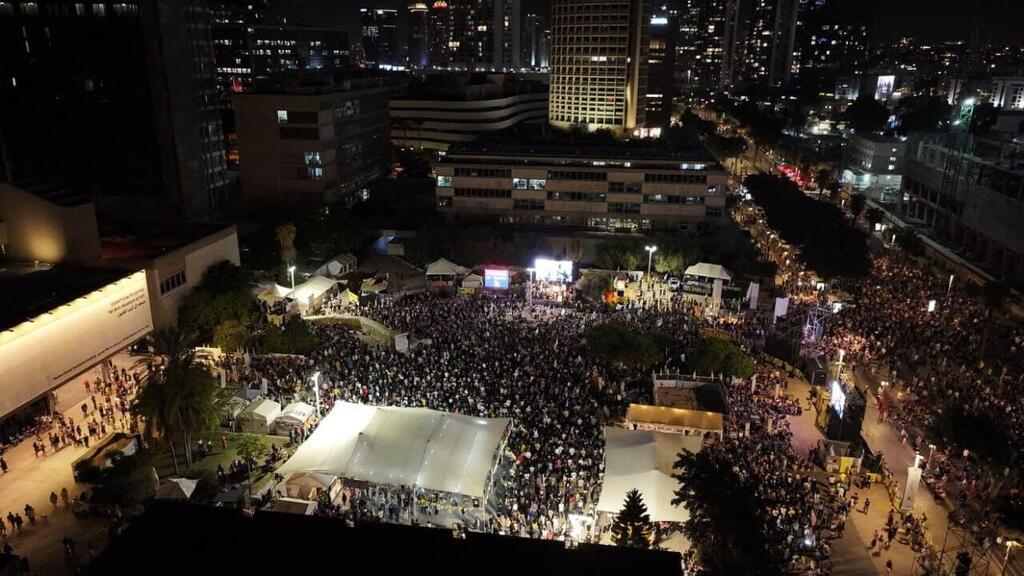
(Photo: Yair Palti)
Turning to the crowd, Katz asked them to imagine one peaceful Saturday—no protest shirts, no signs in car windows. “A Shabbat of breathing. Of healing. Of quiet. Can you picture it? I can, because of all of you who refuse to give up.”
She emphasized that the hostage deal currently on the table, though imperfect, offers the best chance of resolution. “It exists thanks to families’ resolve, soldiers’ bravery, the judgment of world leaders, and the brilliance of intelligence officers—some of whom collapsed with us on October 7 but rose and achieved the extraordinary. We know now: we can bring them all back.”
“But if we miss this opportunity, we’ll return to endless bloodshed—more graves, more broken hearts,” she warned. “We must not let that happen. If we stay united, without cynicism or despair, that peaceful Shabbat will come.”
Lishi, wife of freed hostage Omri Miran, reflected on her husband now being home, helping their daughters with dinner and bedtime. “It’s no longer a dream — it’s our reality,” she said. “And it’s thanks to all of you.”
She recalled their daughters asking if it was time to remove the hostage magnets from the car. “We took down Omri’s. But the one with Lior Rudaeff and the words ‘Until the last hostage’ stayed. We told them: Yes, Omri is back — but Lior isn’t. Our wait may be over, but others are still waiting. And we’re waiting with them.”
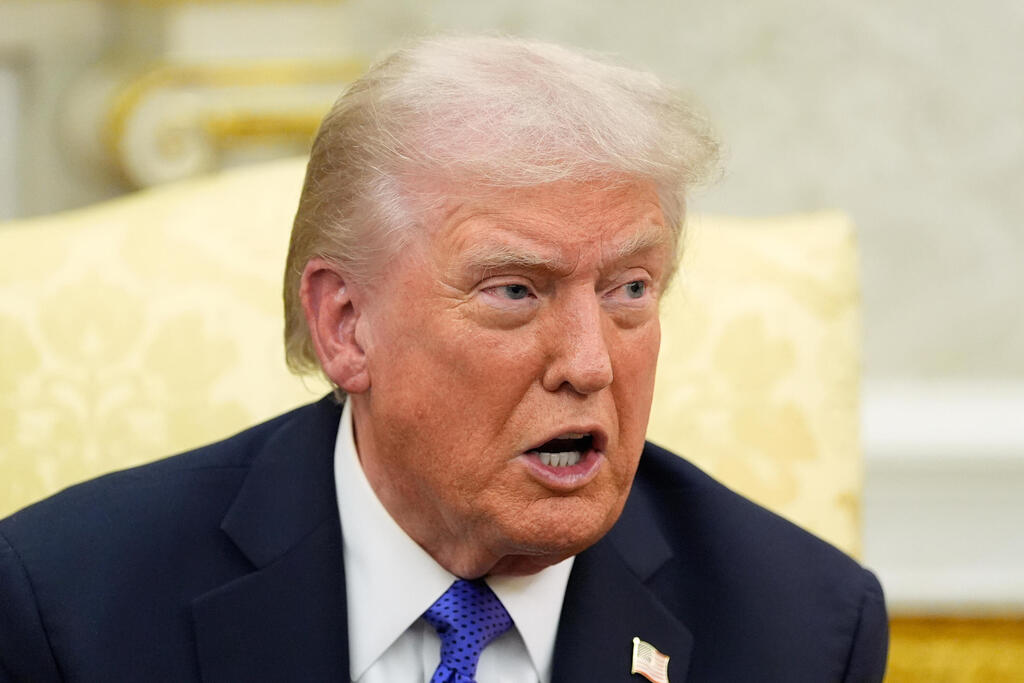
Donald Trump
(Photo: AP Photo/Alex Brandon))
Also speaking was Eyal Eshel, father of IDF observer Roni Eshel, who was killed on October 7. “More than two years have passed,” he said. “We hoped for leadership. We believed someone would finally say, ‘We were wrong.’ It hasn’t happened.”
“This government hides behind slogans, renames wars, forms political commissions — instead of saying the truth: We failed. The truth will rise. A national commission of inquiry will be formed. It must be. A nation that doesn’t investigate itself is lost — but we are not lost. We are a generation that remembers, demands and still believes.”
“No one will forget October 7 — not the parents, not the siblings, not this nation. It is a national scar and a call for healing. We won’t give up — not on memory, not on truth and not on the hope that Israel can return to the country it once was: one of heart, responsibility and integrity.”
The rally came four days after the last transfer of hostage remains. A senior Israeli official said Saturday there has been progress in talks that could soon lead to another return, but no such transfer was expected that night. In parallel, an Egyptian team entered Gaza to search for remains — the first foreign team allowed in since the cease-fire, using coordinates provided by Israel.
U.S. officials believe Hamas is stalling, using the hostage remains to prolong the truce and avoid disarmament. Washington is applying pressure through mediators but continues to oppose new Israeli sanctions — for now, allowing more time for diplomacy.
First published: 21:40, 10.25.25