


From the early days of the war with Iran, the Israeli military warned that some missiles launched toward Israel could carry cluster munitions capable of dispersing smaller explosive charges.
Home Front Command officials stressed the importance of seeking shelter and exercising caution even though the damage caused by cluster missiles is typically lower than that caused by larger warheads.
Interception of Iranian cluster missiles


Since the start of the war, Iran has launched more than 800 missiles of over 300 different types, and cluster missiles have already caused widespread damage at several sites across Israel.
Dr. Yehoshua Kalisky, a senior researcher at the Institute for National Security Studies (INSS), said the purpose of cluster munitions is “to cause environmental damage over a large area and to strike as many targets and casualties as possible without distinction.”
Missile releases dozens of small explosives
Last week, defense officials revealed that about half of the missiles launched were equipped with cluster warheads. Since then, Iran appears to have focused more heavily on using them, apparently recognizing their wider potential impact radius.

Such missiles have been launched toward Israel daily in recent days.
Earlier Monday, Iran fired another missile of this type toward Israel, which reportedly caused damage at several locations in central Israel.
In recent days, the effects of cluster missiles have been seen at multiple locations from north to south. The small explosives dispersed in the air have detonated in areas including Eilat, Tel Aviv, Lod, Be’er Ya’akov, Rishon Lezion, Ramat Gan, Ness Ziona and Bnei Brak.
How cluster missiles work
Kalisky explained that, unlike conventional warheads containing a single high-explosive charge, cluster missiles carry a bundle of smaller bombs that disperse in the air and fall over a wide area.
“When a conventional missile hits its intended target, the damage is concentrated around that target and its immediate surroundings due to the explosion,” he said.
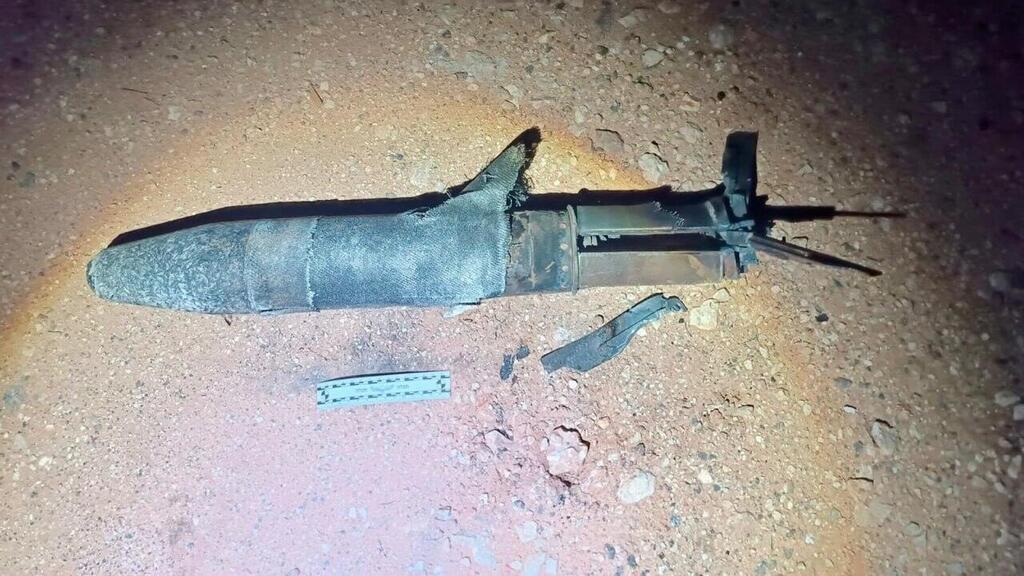
(Photo: Drom HaSharon Regional Council)
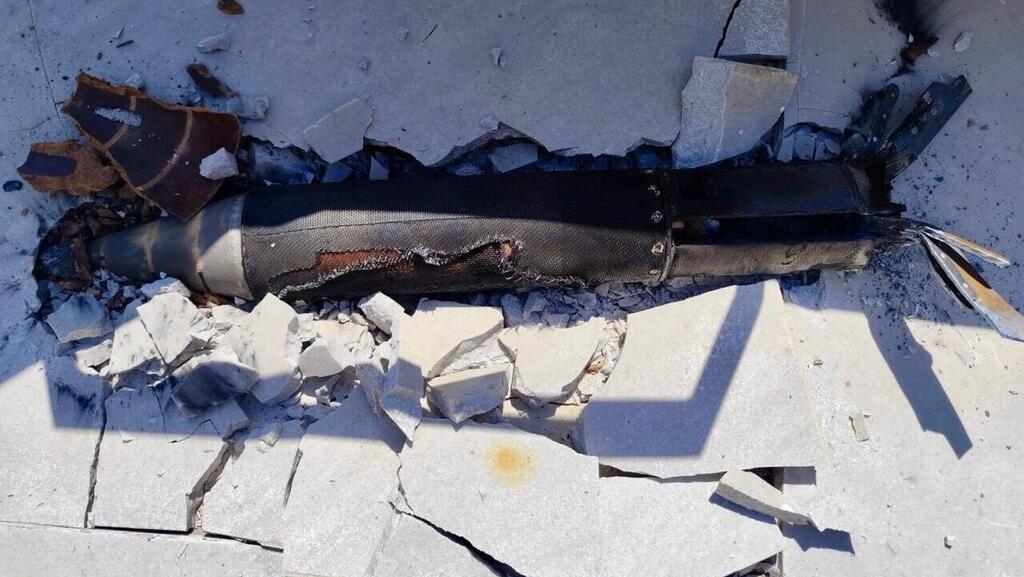
(Photo: Drom HaSharon Regional Council)
With cluster missiles, the process is different.
“The missile is launched toward its target, and when it reaches an altitude of about 7 to 10 kilometers above the target, its warhead opens,” Kalisky said.
“The munitions, small bombs weighing between 2.5 and 5 kilograms of high explosive, disperse and fall over a large area.”
The explosion occurs when an arming mechanism activates and the explosive detonates upon impact with the ground or a target.
The spread of the bomblets is not symmetrical, but the average impact radius can range from several hundred meters to as much as 10 kilometers.
Danger from unexploded bomblets
“The extent of the spread depends mainly on winds and atmospheric turbulence, the altitude at which the munitions are released and the speed of the missile carrying them,” Kalisky added.
“A certain percentage of these bombs do not explode and remain as unexploded ordnance, essentially functioning like mines that can detonate when touched.”
Military and security analyst Ron Ben-Yishai said Iran possesses three types of ballistic missiles capable of carrying cluster warheads, including the Ghadr and Khorramshahr missiles, which are capable of reaching Israel.
Their warheads typically contain explosive payloads weighing several hundred kilograms along with about 20 bomblets.
The damage caused by each bomblet, he said, is similar to that caused by the simple Qassam rockets previously fired by Hamas from the Gaza Strip.
While the bomblets cannot penetrate reinforced safe rooms, they can still cause casualties and significant damage.