

With frustration mounting over the wave of violence by extremist Israeli settlers against Palestinians, the IDF is signaling that its patience has run out. In a special meeting convened last month, IDF Chief of Staff Eyal Zamir was asked by brigade commanders in the West Bank Division to intervene immediately and recommended reviving the administrative detention orders previously cancelled by Defense Minister Israel Katz under pressure from ministers Bezalel Smotrich and Itamar Ben‑Gvir.
The urgent request by senior officers in Regional Command Central — who deal daily with escalating incidents throughout the West Bank, from southern Mount Hebron to the Shiloh ridge and north toward Nablus — came even before a violent raid by the Hilltop Youth approximately two weeks ago on a Palestinian‑Bedouin farm in southern Mount Hebron. In that incident — described by senior officers as “pure sadism” — settlers stabbed and hurled goats and sheep at a Palestinian building while masked and filmed by security cameras, and inflicted extensive damage. Similar violent incursions take place weekly, sometimes daily.

Within the IDF, commanders say red lines have been crossed and direct blame is being placed on ministers in the government, who at times physically confront soldiers when they come to evacuate illegal outposts. The apparent permissive environment has permeated to the Israel Police, which — army officers say — rarely enforces the law, almost never arrests suspects in such cases as the raid on the goats and sheep, and arrives too slowly or with insufficient special unit support.
In the past month, the army has taken off the gloves: hundreds of troops have been assigned to secure friction hotspots in Palestinian villages and in between them, and to protect illegal outposts that have not yet been cleared. The Central Command has redeployed bulldozers and excavators from the Gaza envelope, previously used in the war there, to carry out demolitions of illegal structures in the West Bank region.
Army officials assess that the current wave of violence — beyond the silent support it receives from some in the government, parts of the settlement movement and ultra‑Orthodox rabbis — stems in part from vengeance against the system for freeing 74 convicted Palestinian terrorists under the hostages release deal and for the demolition of illegal outposts. Some of the freed terrorists returned to homes near the sites of their deadly attacks. The tension has increased alongside lethal attacks emanating from the West Bank, such as the shooting at the Ramot Junction in Jerusalem earlier this year.
Following deployment of a “large blanket” of soldiers in the past two weeks, the army has registered a significant drop in violent incidents. Still there is criticism from reserve soldiers, some on their sixth or seventh tour since Oct. 7, who say they signed up to defend against a real enemy — Palestinian terrorists — not to perform law‑enforcement duties traditionally done by police or Yamam special forces. “The police are not really part of this fight, hence the rise in the number and severity of incidents,” military sources explained.
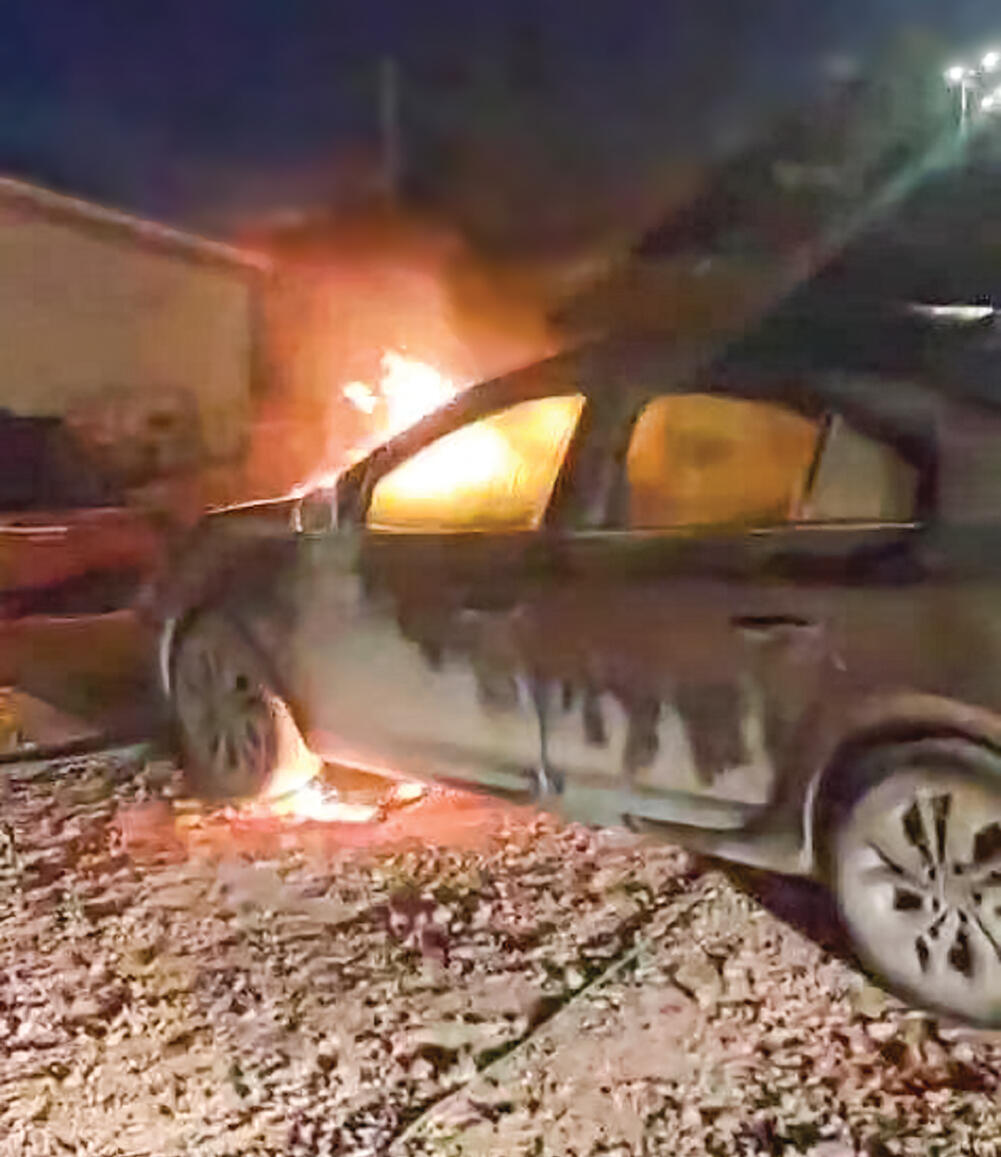
A car torched by settlers
(Photo: Elisha Ben Kimon)
In the meeting between Zamir and West Bank commanders, it was explained that administrative detention orders — previously recommended by the Shin Bet and canceled by the government — remain a key professional tool to combat or at least reduce the phenomenon. The officers acknowledged that the measure is draconian and anti‑democratic, detaining suspects for weeks or months without trial or publicly disclosed evidence, though it remains court‑supervised.
“One of their activists goes to burn Palestinian villages and finds at best worn‑out reserve units with only half the troops showing up,” army sources described. “Add to that the expansion of 22 new settlements in the West Bank, including in areas evacuated in 2005, each of which requires resources and protection the IDF must provide, especially after Oct. 7.”
Today, the West Bank Division has 21 regional field‑security battalions, up from 13 at the worst of the decline, but still far fewer than the 82 units in the peak of the second intifada 22 years ago. Among the army’s hopes is that ending the Gaza war will free up attention and resources for the West Bank, an area long simmering but not yet erupted. In two weeks, the first of two regular units — strengthened and re‑equipped forces returning from Gaza — are expected to redeploy to the West Bank.
“Defense territory in the West Bank has grown by 200 percent in recent years, so any involvement in non‑enemy defense undermines our mission,” the army warns. The IDF is also troubled by what it says is a negative shift since Oct. 7: in many previously moderate communities, such as central Gush Etzion or the seam‑line with Sharon, local residents now refuse to allow Palestinians into orchards near their settlements for the olive harvest, even on Palestinian land as had been practiced for years, out of fear that some harvesters are potential terrorists. The condition: local residents demand Border Police or Yamam protection for the olive harvest, further stretching thin the manpower cushion.
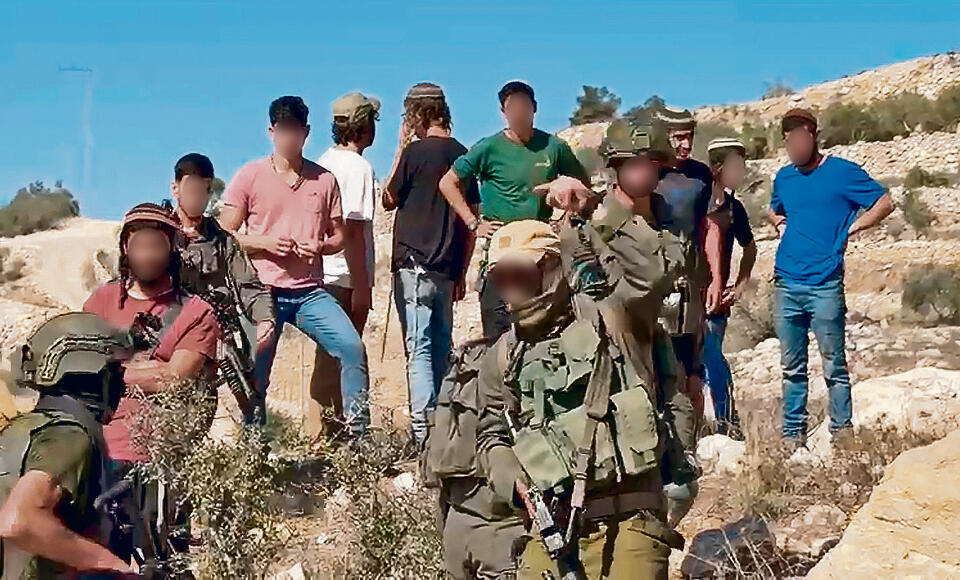
Hilltop Youth
(Photo: Oded Shalom)
Army officials take solace in the fact that the Shin Bet remains committed to the fight against the phenomenon and does not frame such incidents as mere criminal offenses or education issues — as some in the government do by appointing a "Hilltop Youth czar" instead of reinstating administrative detention orders.
According to IDF and Shin Bet figures, since the war began there have been approximately 1,575 “nationalist crime” incidents in the West Bank, with a quarterly upward trend over the past two years. In the first half of 2025 the number reached 440 — a 39 percent increase compared with the first half of 2024. In 2024 there were 675 such incidents against Palestinians; this year, with roughly six weeks remaining, the count stands at 704.
A breakdown by type shows that 368 were classified as “popular terrorism” (deliberate or sometimes organized attacks against Palestinian persons or property); 143 were violent disturbances, some involving firearms or melee weapons; 98 were full‑blown attacks; 49 targeted IDF or police forces by Jews; and 46 were agricultural‑property crimes.
Part of the trend is attributed to the surge in the number of agricultural farms established — from 30 before the war to more than 120 now — some of which trigger violent disputes over grazing land. Also, since the start of the year, 174 Palestinians have been injured in nationalist‑crime incidents — a 12 percent increase compared with the year before, with a total of 376 Palestinians harmed since the war began.
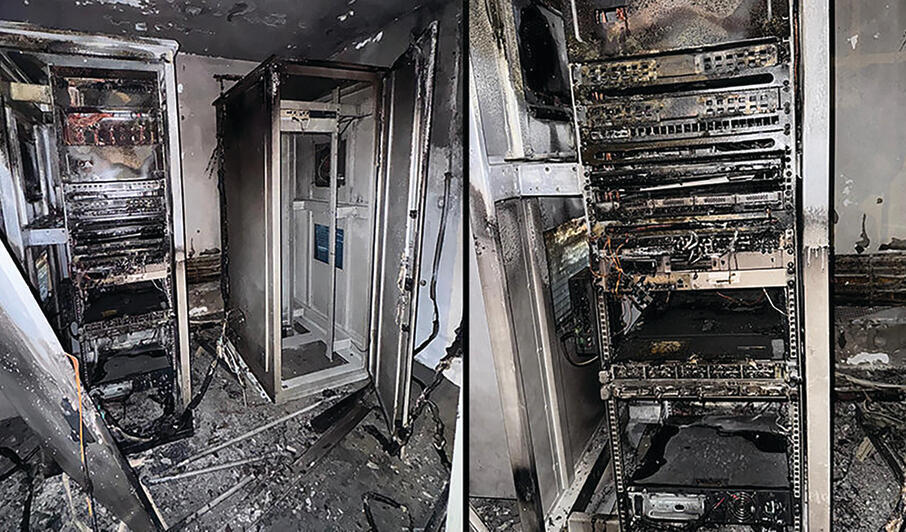
An IDF base torched by settlers
(Photo: IDF)
Sources in the settlement sector familiar with the phenomenon say an anarchistic extremist core has emerged within the Hilltop Youth in recent months, a faction that answers to no authority and is believed to drive most of the serious incidents. The result: a near collapse of control that severely endangers the fragile security stability in the West Bank enjoyed by both Palestinians and Israelis during the last two years of the Gaza war.
In response to the extreme violence, the police say the IDF, as sovereign in Areas B and C, is responsible for preventing violent incidents in those zones, while the Israel Police retains investigative authority — often in cooperation with the Shin Bet — over terror, extremist violence and insurrection. In every case of extreme violence, the police say it acts to bring perpetrators to justice. Deployment of forces in the West Bank is derived from jurisdictional responsibilities with the goal of preventing violent events.