


As every year, veterans of the Shaked Reconnaissance Unit gathered Friday morning at the Kiryat Shaul Military Cemetery in Tel Aviv for a memorial ceremony honoring the unit’s legendary commander, Abd al-Majid Khader, who later changed his name to Amos Yarkoni.
Yarkoni, a member of the Bedouin al-Mazarib tribe, was born in 1921 in the village of Na’ura near Afula. In 1948, he enlisted in the IDF and became the first Bedouin to complete a squad commanders’ course. He later joined an elite unit and during those years chose to change his name to Amos Yarkoni, though he remained Muslim.
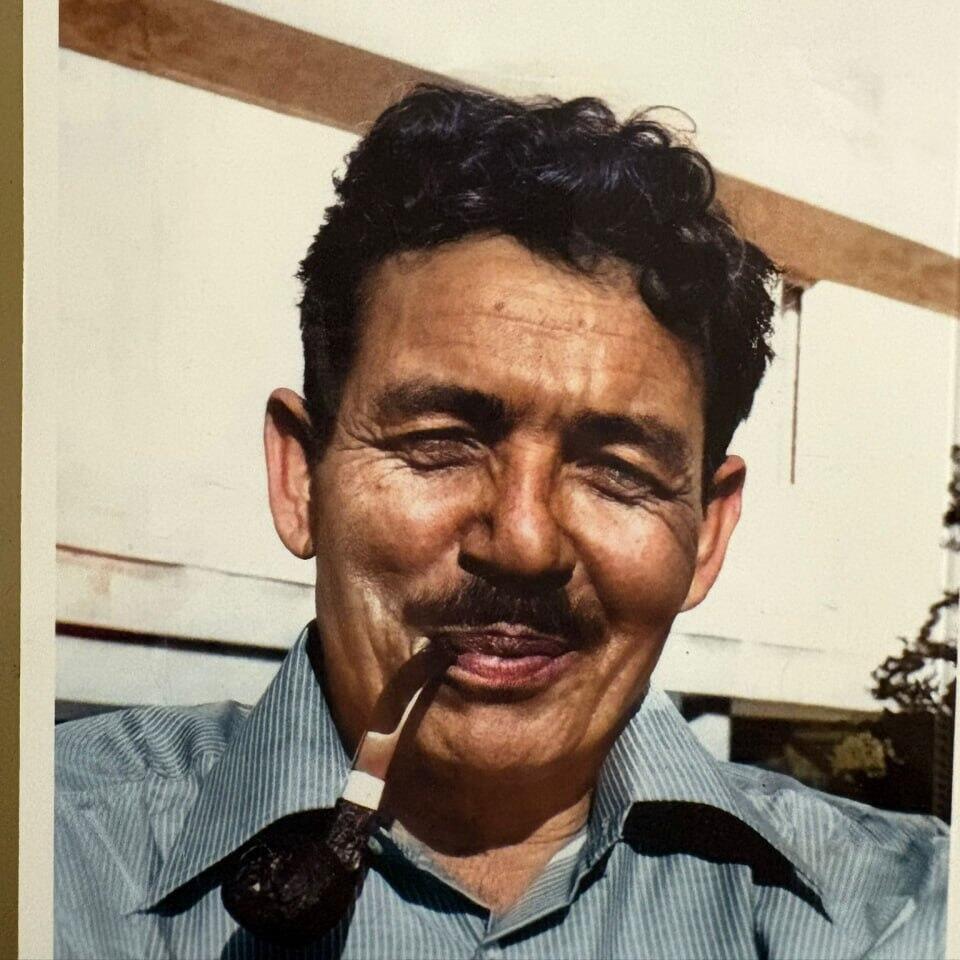
During his service, Yarkoni commanded a camel-mounted unit that fought infiltrators and smugglers along Israel’s borders. In 1953, he graduated with distinction from the officers’ course and moved to a reconnaissance unit under the Central and Southern Commands.
He later joined the Shaked Reconnaissance Unit, which he went on to command, becoming the first Bedouin to reach a senior rank in the IDF. Shaked, a Southern Command reconnaissance unit, was tasked with guarding Israel’s borders against infiltrators and smugglers.
In May 1955, Yarkoni lost his hand in a clash near Ashkelon with terrorists who had infiltrated from the Gaza Strip. Despite the severe injury, he refused evacuation to a hospital and continued fighting. In 1964, he was wounded again, this time in the leg, during an ambush operation against infiltrators from Egypt. After three months of hospitalization, he decided to step down as commander of Shaked. He was succeeded by former minister Benjamin (Fuad) Ben-Eliezer.
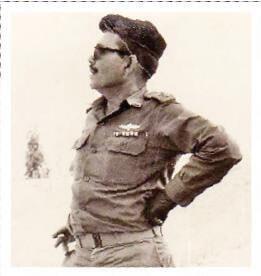
Lt. Col. Amos Yarkoni, AKA Abd al-Majid Khader
In his final IDF role, Yarkoni served as military governor of northern Sinai. He was discharged in 1969 with the rank of lieutenant colonel. After retiring from the military, he was appointed as head of the Minorities Unit and liaison to the Bedouin community in the Housing Ministry.
Yarkoni died on Feb. 7, 1991, after a prolonged illness. He was buried in a coffin draped in the Israeli flag in the Muslim section of the Kiryat Shaul Military Cemetery.
'A covenant of life'
“The father of tracking and pursuit doctrine, the legendary commander of the Shaked Reconnaissance Unit,” Lt. Col. (res.) Shlomi Gruner, a former commander of the unit, described Yarkoni. “Every year, the unit’s veterans gather for a spontaneous and modest meeting and share words in his memory. Each year, we also host a figure who contributes to his legacy. Last year we hosted [ynet military analyst] Ron Ben-Yishai, who knew him personally, and this year former Shin Bet chief Ami Ayalon.”
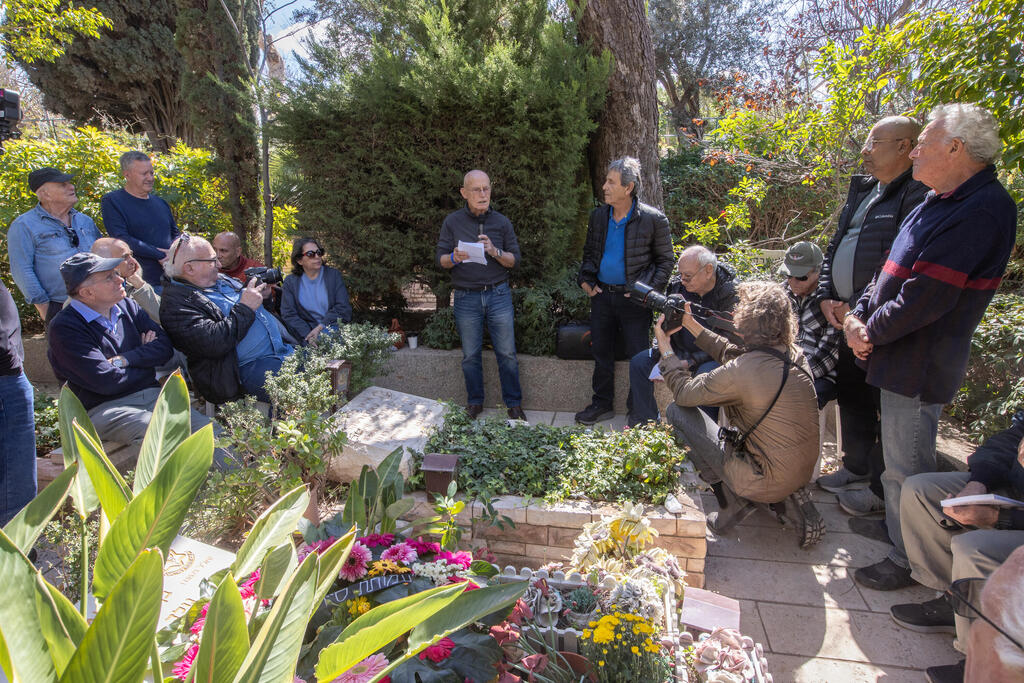
Shaked Reconnaissance Unit veterans gather at the Kiryat Shaul Military Cemetery in Tel Aviv for a memorial ceremony honoring the unit’s legendary commander Amos Yarkoni
(Photo: Ido Erez)
At Friday’s ceremony, Gruner chose to read a text written by the late Col. Yuval Dvir, who served with Amos. He told ynet about the revered commander: “He is the only person about whom, to this day, I have never heard a single bad word. People simply admire him. It was impossible to fully grasp this figure — a Bedouin who came from a village near Nahalal and fled his tribe.”
Gruner recounted Yarkoni’s decision to change his name during his early military years. “It’s a debate that lasted for years — why he was called Amos Yarkoni. First of all, the reason was that he came from the northern Bedouin, and Shaked fought tribes from both Jordan and Egypt who would cross and cut through the borders. The whole issue of blood feuds was very problematic, so he could not be identified.”
On the combat methods Amos instilled in the army, Gruner added: “He developed the concept of cutoffs, in which one squad tracks the footprints and another leaps ahead. It was called the ‘mounted pursuit,’ where a squad would jump 20 kilometers ahead by jeep, locate the tracks and then break contact. Later we also developed airborne pursuit with helicopters.
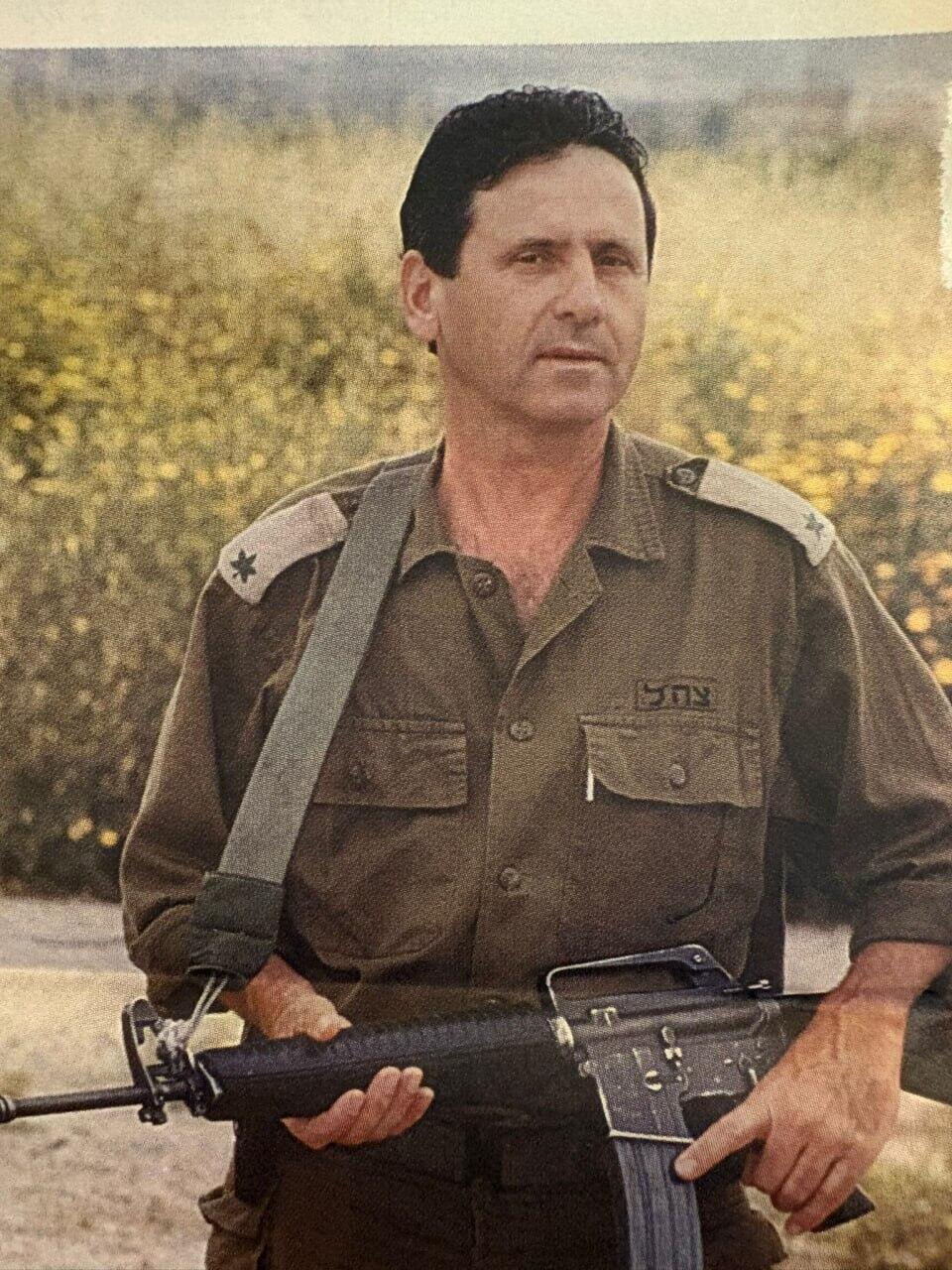
Lt. Col. Amos Yarkoni, AKA Abd al-Majid Khader
“At that time, the Egyptians who were infiltrating intelligence squads throughout the Gaza perimeter, near Be'er Sheva, did not even understand that there were borders. The Bedouin did not know there was a state with a border that could not be crossed. Amos instilled that — to block the borders, mark the borders, understand that there is a border here that must not be crossed, and whoever crosses it is punished.”
After his death, Gruner described the struggle led by his comrades to secure his burial at the military cemetery. “When he died, they did not want to bury him inside the fence. We fought a world war so they would agree to bury him, and in the end, we succeeded in burying him inside the military section at Kiryat Shaul. Since then, his grave has been very modest, and we gather around it every year.”
According to Gruner, “If people had listened to Amos in his time, we would be in a completely different situation today. He understood the mentality, and we absorbed that understanding — that there are two peoples here who need to get along with one another.
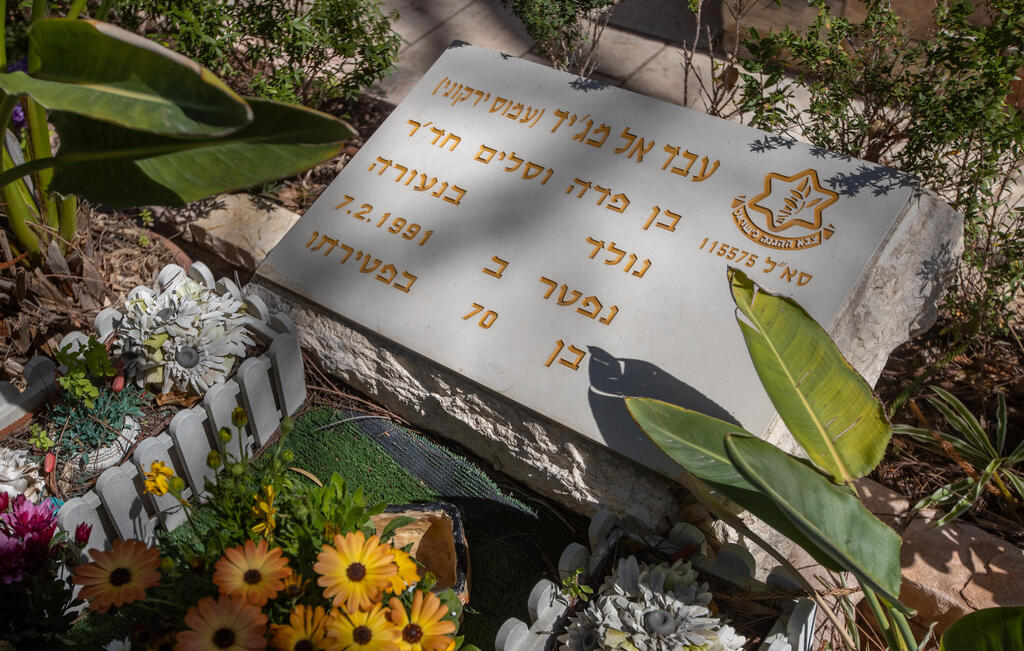
The grave of Lt. Col. Amos Yarkoni, AKA Abd al-Majid Khader
(Photo: Ido Erez)
"The best example now is that they always tell the Bedouin, ‘We forged a covenant of blood with you,’ but they say they want a ‘covenant of life.’ Fighting together is nice — but there is life around it. When Amos left the army, he concentrated in the Housing Ministry all matters relating to Bedouin society in the south, but they did not listen to him. Instead, they continued to fight and demolish, and that continues to this day.”
“If they had followed Amos’ doctrine, where would we be today?” Gruner added.