

European Commission President Ursula von der Leyen said Wednesday that she wants Canada to become the European Union’s first “associate member,” proposing an unprecedented new relationship as Ottawa seeks closer economic and security ties with Europe amid tensions with the United States.
The status does not currently exist under EU treaties, meaning its exact rights, obligations and legal structure would still have to be worked out. Von der Leyen made the proposal during her annual State of the European Union address before the European Parliament in Strasbourg, with Canadian Prime Minister Mark Carney sitting in the chamber.
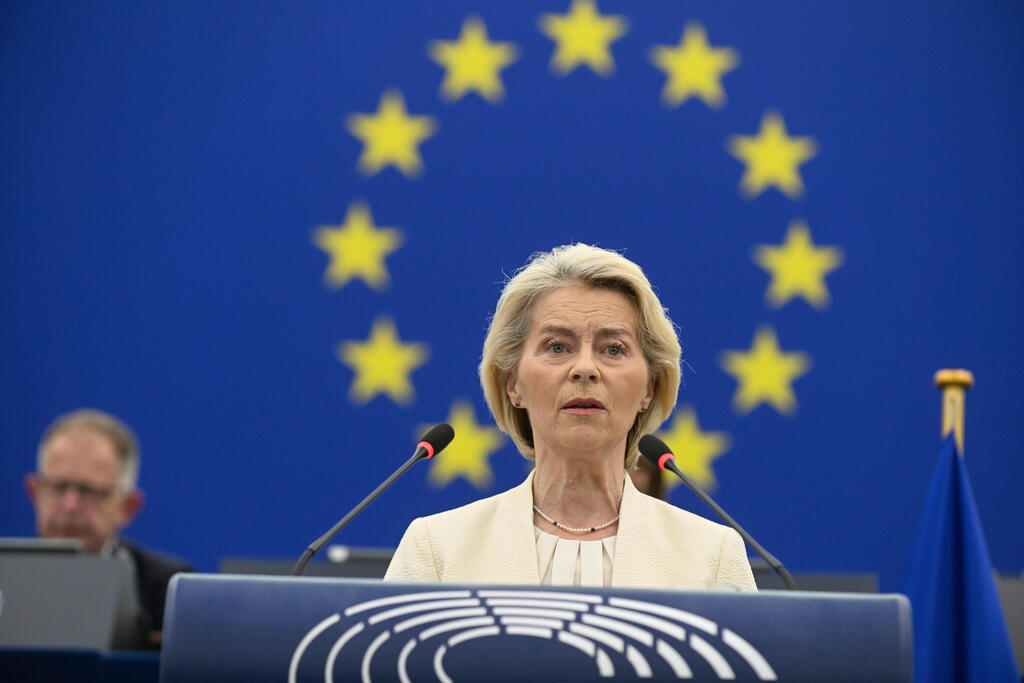
The proposal comes as Canada reassesses its traditionally close relationship with the United States following a breakdown in trade negotiations, new U.S. tariffs and President Donald Trump’s repeated remarks about making Canada the 51st U.S. state. Carney has been seeking to reduce Canada’s heavy dependence on trade with the United States and deepen ties with Europe and other partners.
Von der Leyen’s announcement also marks a significant departure from the EU’s traditional reluctance to create flexible categories of membership.
EU members reacted cautiously earlier this year when Germany floated a similar form of “associate membership” for Ukraine as a possible intermediate step toward eventual full membership.
“Partnerships are a strategic choice for Europe. But they also respond to the fracture in the international rules-based system,” von der Leyen said.
“We see the world with the same eyes: from AI to climate change, from the Arctic to geopolitics. And we have stood together: on Ukraine, on defense, on raw materials and on supply chains,” she said. “But above all, dear Mark, Europe and Canada believe in democracy.”
“We believe that power does not belong to the strongest, the richest or the loudest, but to all of us,” she added. “That democracies have the freedom to choose with whom to work.”
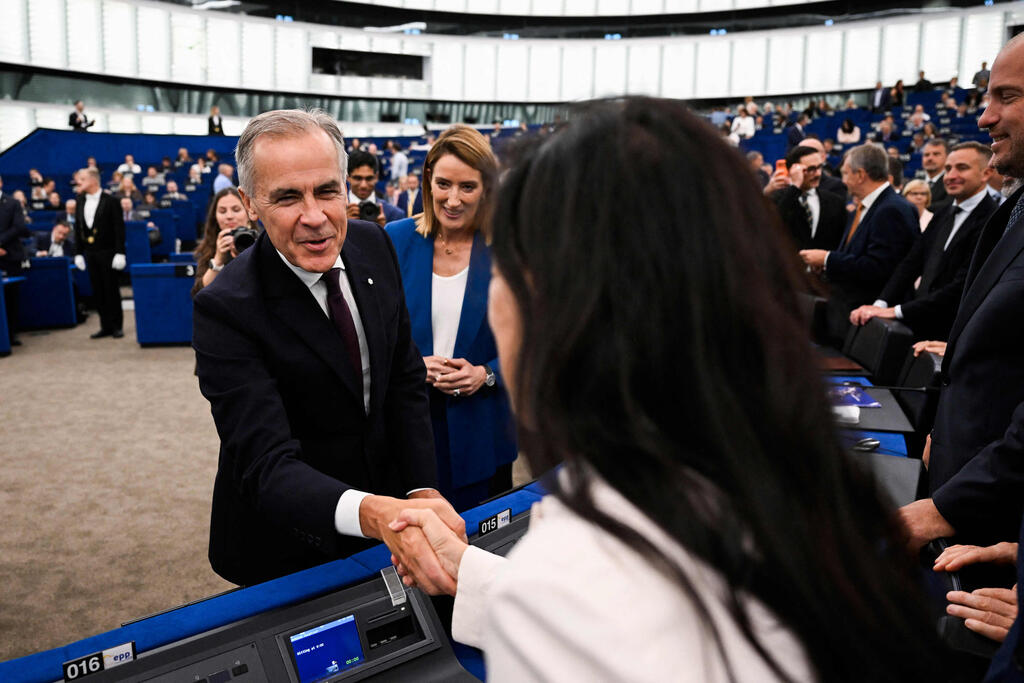
Canadian Prime Minister Mark Carney receives a warm welcome at the European Parliament in Strasbourg
(Photo: Jean-Christophe Verhaegen / AFP)
Carney, who was invited to Strasbourg by von der Leyen, received a standing ovation from lawmakers after she addressed him directly during the speech. He was the first foreign head of government to attend the annual State of the European Union address and is scheduled to address the European Parliament himself on Thursday.
“I would like to work with you on opening the door for Canada to be the first associate member of the EU,” von der Leyen told him.
Von der Leyen said the EU and Canada should move beyond their existing free-trade relationship toward what she called an “Alliance for the Future,” creating a shared space for economic prosperity and security.
She listed advanced manufacturing, technology, defense production, energy, critical minerals, batteries, artificial intelligence, quantum computing, cybersecurity and economic security as areas for expanded cooperation.
The Arctic, where Canada and several European countries have major strategic interests, would become a “flagship joint project,” she said. Von der Leyen also proposed involving Canada in a future European Security Council alongside other close partners.
Canada has already moved closer to the bloc in defense. It became the first non-European country to join the EU’s 150 billion-euro SAFE defense loan program, while the two sides have long been linked economically through the Comprehensive Economic and Trade Agreement, known as CETA.
What would ‘associate membership’ mean?
For now, the answer is unclear. “Associate member” is not a legal category contained in the EU’s treaties, and von der Leyen did not spell out whether Canada would gain access to EU institutions, parts of the single market or other benefits normally reserved for member states.
When a similar concept was discussed this year in connection with Ukraine, one version envisioned allowing Kyiv to attend certain EU summits and ministerial meetings and gain access to some EU programs without receiving full voting rights. The idea received a cool response in Ukraine, which is pursuing full membership.
Von der Leyen stressed that the proposed partnership with Canada was “not against anyone else, but for our common strength,” an apparent effort to frame the initiative as cooperation rather than a move against Washington.
The broader geopolitical context, however, is difficult to ignore. Canada-U.S. trade talks collapsed last month, deepening a dispute that has included tariffs and retaliatory measures. Trump’s repeated references to Canada as a potential 51st state have further strained what was long one of the world’s closest bilateral relationships.
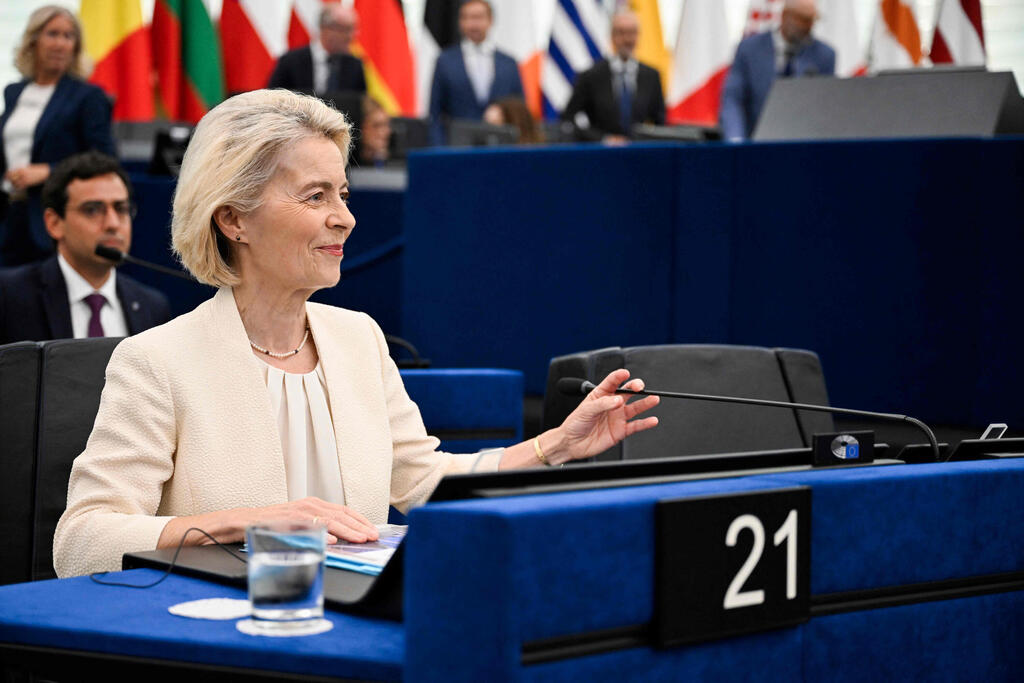
(Photo: Jean-Christophe VERHAEGEN / AFP)
Earlier this week, Carney said Canada was seeking a “unique alliance” with the EU rather than full membership. His government has increasingly emphasized diversifying trade and building closer security and economic ties with Europe.
Reports ahead of Carney’s Strasbourg visit said Canadian and European officials had been exploring ways to connect Canada more closely to Europe’s market in strategic sectors including energy, artificial intelligence, critical minerals and defense. Discussions have also included the possibility of making it easier for Canadians to live and work in Europe, though no final arrangement has been agreed.
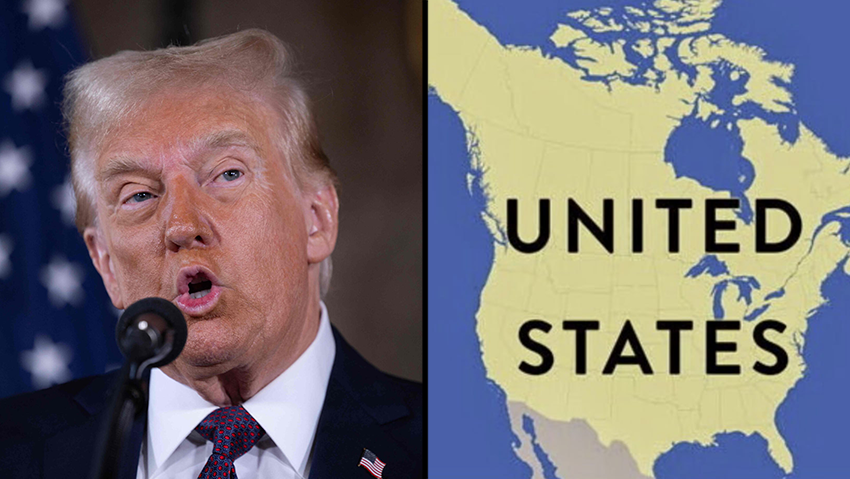
Trump and a map he posted on Truth Social, with ‘United States’ written across Canada as well
(Photo: SCOTT OLSON / GETTY IMAGES NORTH AMERICA / AFP)
The proposal comes after months in which Carney has sought alternatives to Canada’s overwhelming economic dependence on its southern neighbor. Around 70% of Canadian trade remains tied to the United States, making any substantial shift toward Europe a long-term project rather than an immediate replacement for the U.S. relationship.
The EU and Canada already have a substantial economic relationship. Their CETA free-trade agreement eliminated most tariffs between them, and the two sides say trade in goods and services has risen sharply since the agreement began provisional application.
What “associate membership” would ultimately add remains to be negotiated. Unlike full EU membership, the proposal currently has no defined legal framework, no agreed voting rights and no established mechanism for participation in the bloc’s institutions.
For now, von der Leyen’s announcement signals political intent rather than an accession process: an effort to create a deeper form of partnership between the EU and Canada at a time when both are seeking greater room to maneuver in a more fractured international system.