

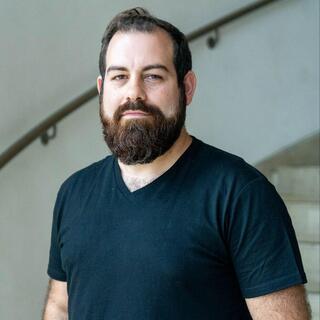
Attorney General Gali Baharav-Miara decided Thursday morning to file a serious indictment against Prime Minister Benjamin Netanyahu’s adviser Jonatan Urich in the Bild affair, accusing him of disclosing classified information, possessing classified information and destroying evidence, including an allegation that he acted with intent to harm national security.
The prosecution is now expected to seek Urich’s removal from the Prime Minister’s Office. Under standard procedure, a civil servant who is indicted is suspended, but Urich is not defined as a civil servant. Earlier this month, the Shin Bet changed its position and said Urich could enter the office despite being suspected of security offenses.

(Photo: Yair Sagi)
About a year and a half ago, serious indictments were filed in the case against Prime Minister’s Office spokesman Eli Feldstein and reserve noncommissioned officer Ari Rosenfeld, who allegedly transferred the information to the Prime Minister’s Office.
Feldstein was charged with disclosing classified information with intent to harm national security, possessing classified information and obstruction of justice. Rosenfeld was also charged in a serious indictment that included five counts of disclosing classified information, obstruction of justice and theft by an authorized person.
According to the case, Rosenfeld contacted Feldstein, and after Feldstein expressed interest in receiving intelligence materials, Rosenfeld sent him the “Hamas document” through a social network in June 2024. According to an investigative source, the document was taken from the IDF Military Intelligence Directorate’s intelligence materials system.
On September 1, the IDF announced that six hostages had been murdered in a Hamas tunnel in Rafah, prompting increased protests by hostage families and criticism of Netanyahu. The next day, Netanyahu held a press conference and presented a document, apparently originating from Hamas and previously published by Channel 12, that contained instructions on how to pressure the government into reaching a hostage deal.
Around that press conference, Feldstein apparently told Netanyahu that he had a similar and more significant document. According to the suspicion, together with Netanyahu aides Jonatan Urich and Yisrael Einhorn, the idea emerged to publish the document in order to “influence public opinion in Israel regarding the negotiations over the hostages, and particularly the contribution of the protests to strengthening Hamas,” as the court put it.
After the military censor barred publication in an Israeli newspaper, the idea arose to publish it in Germany’s Bild newspaper, which had close ties with the Prime Minister’s Office and with Einhorn.
On September 9, 2024, Rosenfeld and Feldstein met again at the Kirya military headquarters in Tel Aviv. This time, according to the indictment, Rosenfeld gave Feldstein the document as it was written in Arabic, along with three other classified documents.
Feldstein, as before, updated Urich and this time also Netanyahu’s additional spokesman, Ofer Golan, writing to them: “I collected everything. Need to bring them to the boss.”
Feldstein left the Kirya for Jerusalem and, according to material revealed in the case, wrote to Urich on the way: “Come outside, Ofer Golan wants a conference call, me, you and him, now, on Bild. On Bild.” They held a conference call of about five minutes.
Afterward, according to Feldstein, he arrived at the office in the Knesset and met Urich, while Tzachi Braverman was also in the room but occupied with other matters. According to Feldstein’s account during questioning, he gave Urich the documents he had received from Rosenfeld, and Urich took Feldstein’s phone and showed him how to scan them with it.
From that point on, the scanned document was distributed by Feldstein to media outlets. When Feldstein updated Urich that he was trying to publish the document in the media, Urich replied: “Go, we’ll try.” Urich denied Feldstein’s account of the meeting at the Knesset.
Urich’s attorneys, Amit Hadad and Noa Milstein, rejected the decision to indict him, saying it was “wrong and detached from the evidence.”
“The evidence negates the prosecution’s theory and demolishes the claims against Urich from the ground up,” they said in a statement.
The attorneys said Judge Menachem Mizrahi, who they said is familiar with all the investigative material in the case, had determined there was “not a shred of evidence” that Urich was involved in the leak.
“Instead of closing a baseless case, as should have been done, the prosecution is clinging by force to a hollow and unnecessary case,” they said. “As in the ‘witness harassment’ case, in which it turned out that the witness had not been harassed, this case too will be closed. Jonatan Urich acted lawfully, and his only sin was his work for Prime Minister Benjamin Netanyahu.”