

Iran said Tuesday that it had targeted a U.S. air base in Jordan with ballistic missiles as it widened its retaliation for American strikes, while Bahrain sounded missile alert sirens for the third time amid renewed attacks on U.S. military facilities across the region.
Iran’s Revolutionary Guard Corps announced the Jordan attack in a statement carried by the semiofficial Fars news agency, calling on Jordanians to dismantle American bases in their country.
“You know very well that not only do we not have any enmity with your country, but we also love you, the noble people, who understand the pain and oppression of the Palestinian people more than any other nation,” the statement said.
Jordan’s military said it had intercepted four missiles launched by Iran. There was no immediate independent confirmation that an American base had been struck, and Jordan had previously denied an Iranian claim that Prince Hassan Air Base was hit.
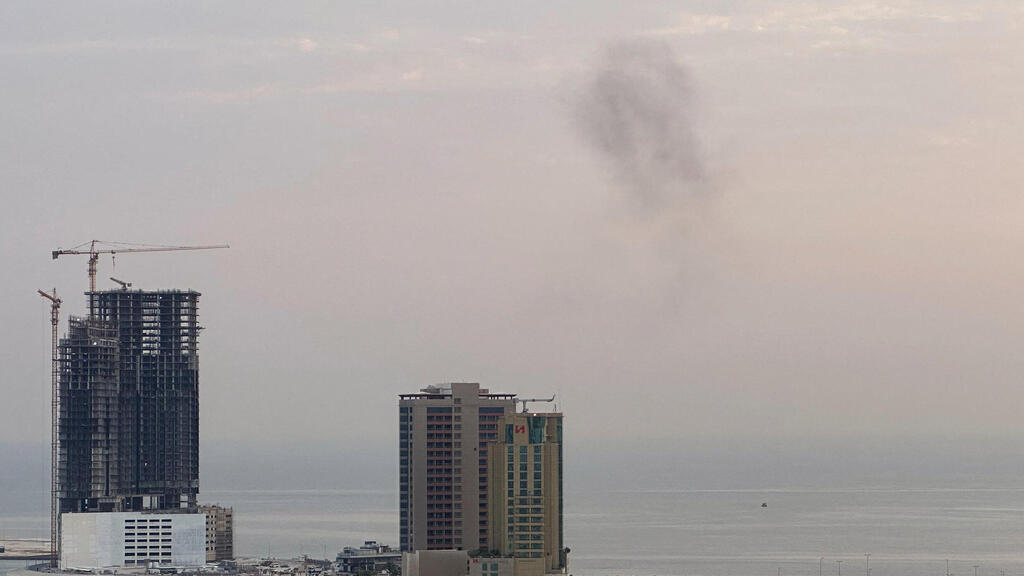
Bahrain, which hosts the headquarters of the U.S. Navy’s Fifth Fleet, activated its missile warning sirens repeatedly and urged residents to seek shelter.
The IRGC claimed that its strikes in Bahrain hit a U.S. Patriot radar, a Fifth Fleet air-control radar and other military systems. There was no independent confirmation of damage or casualties.
The attacks marked the third consecutive day of Iranian retaliation against U.S. assets in Gulf countries following American strikes on Iran.
US completes five-hour wave of strikes
The latest Iranian attacks came after U.S. Central Command said it had completed a five-hour operation against Iranian military targets in Bushehr, Chabahar, Jask, Konarak, Abu Musa and Bandar Abbas.
CENTCOM said U.S. forces targeted Iranian coastal defense systems, missile and drone sites and maritime capabilities in an effort to further weaken Tehran’s ability to attack commercial shipping.
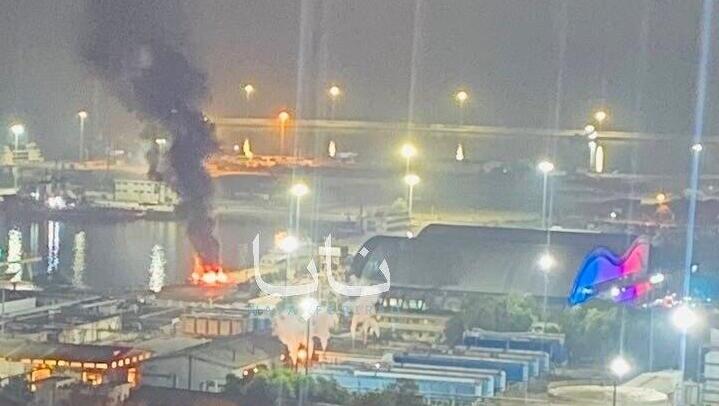
Smoke billowing over Iran's Kish Island following US strikes
More than 50,000 U.S. service members were deployed across the Middle East, it added.
The operation was the third consecutive night of American strikes on Iran.
“We’re going to hit them very hard tonight and we’re going to hit them hard tomorrow,” U.S. President Donald Trump said before the strikes began. “And there’s not a damn thing they can do about it.”
CENTCOM said the strikes would continue to impose a heavy cost on Iranian forces and degrade their ability to attack civilians and commercial vessels in the Strait of Hormuz.
Iranian state television reported explosions in the southern port city of Bandar Abbas and near Kish Island in the Persian Gulf. Additional explosions were reported on Abu Musa and Qeshm islands in the Strait of Hormuz and in Jam County in southern Bushehr Province.
Iranian missiles hit tankers, killing crew member
The escalation followed Iranian attacks on two Emirati tankers in Omani territorial waters south of the Strait of Hormuz.
The United Arab Emirates’ Defense Ministry said two Iranian cruise missiles struck the vessels, killing one Indian crew member and wounding eight others, four of them seriously.
Both tankers caught fire, but the blazes were later brought under control, the ministry said.
The IRGC claimed responsibility, saying the vessels had ignored repeated warnings and entered what it described as a minefield.
The United Arab Emirates said it reserved the right to respond to the escalation.
The United Kingdom Maritime Trade Operations agency had earlier reported that a tanker was struck by an unknown projectile about 64 kilometers, or 40 miles, southeast of Kalhat, Oman.
Separately, security sources said a missile struck a site belonging to an Iranian Kurdish opposition group east of Erbil in Iraq. No casualties were reported.
Trump threatens deeply buried nuclear site
Speaking at the White House, Trump said the American strikes were aimed at eliminating Iran’s ability to threaten the Strait of Hormuz.
“We’re taking out all of their capability for anything having to do with the strait,” he said, while adding that he still believed a diplomatic agreement was possible.
Trump also threatened to attack Pickaxe Mountain, a heavily fortified underground site near Iran’s damaged Natanz uranium enrichment complex.
“We’re going to take out Pickaxe Mountain. Tell the Iranians to be ready,” Trump said.
“We’re watching Pickaxe Mountain closely. We see no activity there,” he added. “But we’ll probably give Pickaxe a shot relatively soon.”
The site contains two deeply buried tunnel complexes that experts assess may lie beyond the reach of even the most powerful bunker-buster bombs in the U.S. arsenal. Satellite imagery has previously shown construction and efforts to reinforce or block its entrances.
Trump also said a potential agreement with Iran had collapsed after appearing close to completion.
“Yesterday there was an agreement that was on its way to being 100% done, and then suddenly they got a phone call and everyone ran out of the room,” he said.
“These people are crazy,” Trump added. “We had a deal in which we got everything, and they just violate agreements.”
US blockade raises pressure around Hormuz
Trump earlier announced that the United States was reinstating its blockade of Iranian shipping and would ensure the Strait of Hormuz remained open.
He also demanded financial compensation from Gulf states for American efforts to protect commercial traffic through the waterway, one of the world’s most important energy routes.
The International Maritime Organization said passage through the strait should remain free from tolls and charges under international law.
The growing exchange of strikes has expanded beyond Iran and the United States, placing Jordan, Bahrain, the United Arab Emirates, Oman and Iraq directly in the path of the escalating conflict.
With Iran now claiming attacks on American military facilities in Jordan and Bahrain, and Washington promising further strikes, the confrontation is increasingly spreading from the Strait of Hormuz into a broader regional war.