

The United States launched a new wave of attacks against Iran on Monday for the 10th consecutive night, as President Donald Trump vowed that Tehran would pay “many times over” for killing American soldiers and the regional confrontation continued to spread across the Middle East.
U.S. Central Command said the latest round of strikes began at 4 p.m. Eastern time. The targets were not immediately disclosed, but recent American operations have focused on Iranian military capabilities, missile infrastructure and positions linked to attacks against U.S. forces. Washington has also sought to weaken Iranian systems that could threaten more complex American operations or efforts to reopen the Strait of Hormuz.
Jordanian air defense intercepting Iranian missiles


The attacks followed one of the deadliest periods for U.S. forces since the war began in February. The number of American troops killed rose to 17 over the weekend, while remains recovered after an Iranian attack in Jordan were being examined to determine whether they belonged to another missing service member.
Two U.S. soldiers were confirmed killed when Iranian ballistic missiles struck the Muwaffaq Salti Air Base in Jordan. In March, six American troops were killed when an Iranian drone hit a U.S. military facility at Port Shuaiba in Kuwait. About 430 U.S. service members have been wounded during the conflict.
“Every time Iran kills an American soldier, they will pay for that killing many times over,” Trump wrote on Truth Social. He said the directive had been passed to Defense Secretary Pete Hegseth, Joint Chiefs Chairman Gen. Dan Caine and every senior U.S. military commander.
Trump did not explain what the order entailed, but the United States had already begun moving additional fighter jets and aerial refueling tankers into the region before the fatal attack in Jordan. The White House said Trump would attend the dignified transfer at Dover Air Force Base for the fallen troops.
Jordan has emerged as one of the central battlefields in the expanding confrontation. Its military intercepted three Iranian missiles Monday evening after alerts sounded across the country, with no casualties or damage reported. Iranian media simultaneously reported fresh airstrikes near Khomein and Shiraz and blamed the United States, although Washington did not claim responsibility.
The missile barrage followed days of attacks against American forces stationed in Jordan. Iran fired four missiles toward Aqaba on Sunday, three of which were intercepted. The fourth landed in an uninhabited area. Two days earlier, Jordanian fighter jets shot down four drones that entered the kingdom’s airspace.
The attacks have transformed Jordan from a strategic rear base for U.S. operations into an exposed frontline state. Its proximity to Israel, Iraq and the Gulf makes it essential to Washington’s regional campaign, but increasingly vulnerable to Iranian retaliation.
Trump has threatened to broaden the war by striking Iranian energy facilities, bridges and underground nuclear-linked sites. He has also raised the possibility of sending ground forces to seize Kharg Island, a key hub for Iran’s oil exports. Former U.S. counterterrorism chief Joe Kent warned that the cycle of retaliation risked trapping Washington in an uncontrolled escalation.
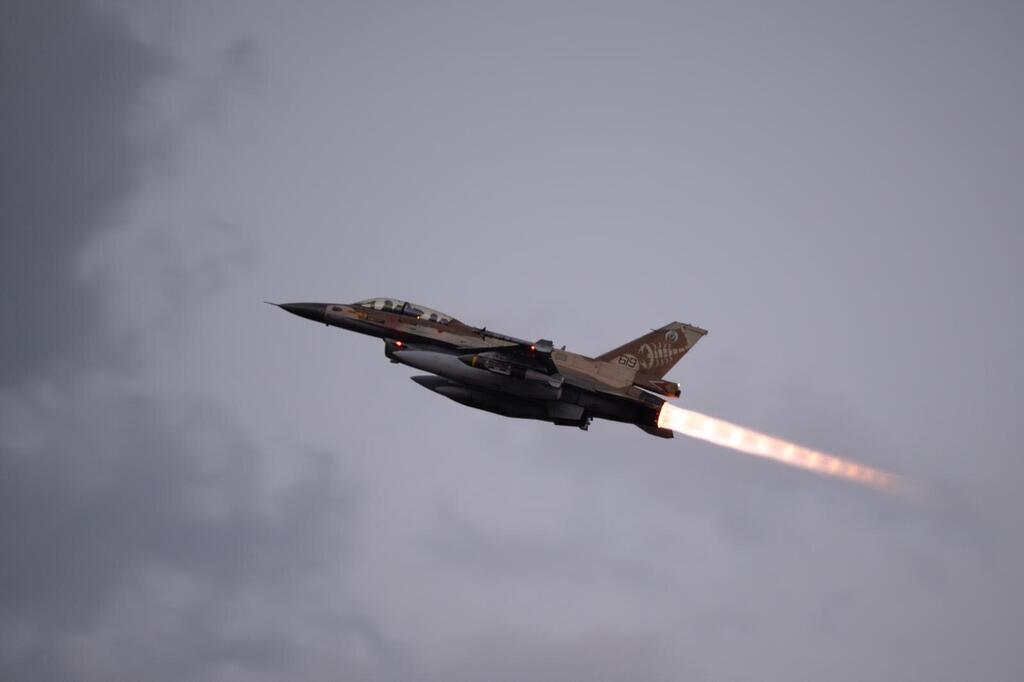
Israeli fighter jet
(Photo: IDF)
Israel, meanwhile, is preparing for the possibility that it could be drawn into the next phase of the campaign, but senior officials say Jerusalem does not intend to fire the opening shot.
The IDF is preparing for three principal scenarios: an American request to participate in expanded operations, a direct Iranian attack on Israel or intelligence indicating that Tehran is preparing such an assault, which could trigger a preemptive strike.
“The IDF is ready. There is 100% coordination with CENTCOM,” a senior Israeli security official said. “We still have many targets, including infrastructure, nuclear facilities, missiles and other areas. If there is a call, we will act.”
Some Israeli defense officials believe the previous campaign ended before all of Israel’s objectives were achieved and argue that Iran’s current weakness presents an opportunity. Tehran has suffered military and economic damage, faces growing domestic pressure and is increasingly confronting Gulf states that previously sought to avoid direct conflict.
Others caution that renewed Israeli involvement could harm the economy, deplete interceptor stocks, revive Iranian drone attacks and risk drawing Hezbollah into the fighting. Visible Israeli participation could also complicate Washington’s effort to build a coalition of moderate Arab states against Tehran.
Senior Israeli officials therefore say the decisive call remains in Washington.
“The final arbiter is Donald Trump, and what he says will determine what happens,” one official said. “If Trump wants us, we will join. If he does not want us, we will sit quietly. If the Iranians make a mistake and try to drag us in, we will enter.”