

U.S. Energy Secretary Chris Wright warned Wednesday night that Iran is “frighteningly close” to the ability to build a nuclear weapon, saying it is “a small number of weeks” away from enriching a ton of uranium to weapons-grade level. His remarks came about 2 1/2 months after the outbreak of the war in the Islamic Republic, during which the United States and Israel jointly carried out 40 days of intense strikes.
Wright made the comments during a hearing of the Senate Armed Services Committee, against the backdrop of the war with Iran and the Trump administration’s efforts to justify the military action against Tehran’s nuclear program. “It is frighteningly close,” Wright said when asked about the state of Iran’s program. “They are a small number of weeks away to enrich that to weapons-grade uranium.”
The energy secretary stressed that enriching uranium to weapons-grade level is not the final stage on the path to a bomb. “There’s still a weaponization process that happens after that,” he said, “but they’re quite close.”
Democratic Sen. Richard Blumenthal asked Wright about the status of the additional 11 tons of uranium reportedly held by Iran. Wright responded that enrichment levels in those stockpiles reach up to 60%, adding that Tehran also has “a lot” of uranium enriched to 20%, a figure he described as “very concerning.” Uranium enriched to about 90% is considered suitable for use in a nuclear weapon.
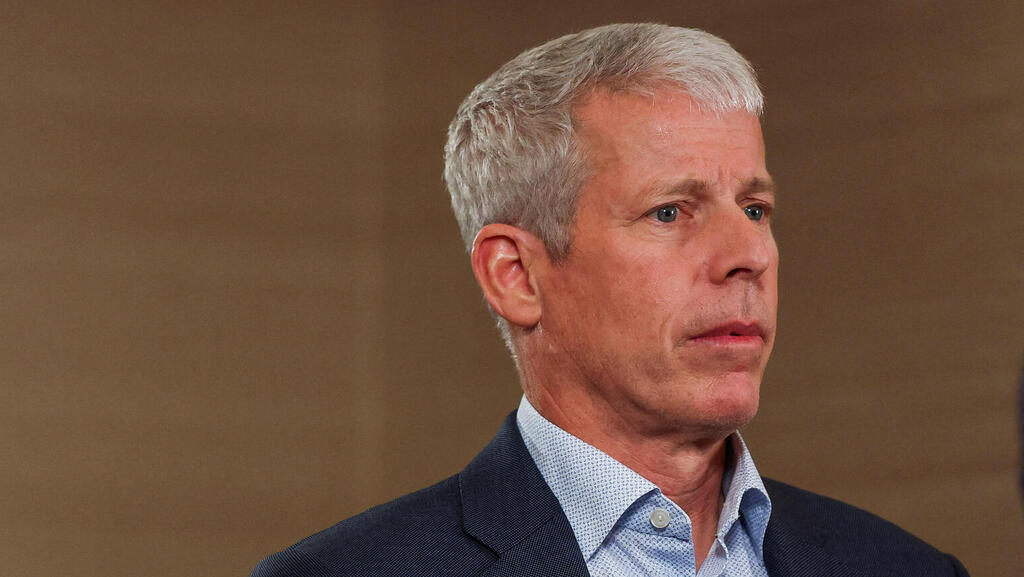
US Energy Secretary Chris Wright
(Photo:REUTERS/Amr Alfiky)
Blumenthal later pressed Wright on whether President Donald Trump would need to act against all of Iran’s uranium stockpiles to stop enrichment. “I think that’s the wise strategy,” Wright replied. “Ultimately, the goal is to prevent future enrichment of uranium as well. Yes, to have a safe world, we need to end their nuclear program.”
Trump administration officials have repeatedly cited Iran’s stockpiles of enriched uranium as part of the justification for the war. Trump himself has said that in order to reach an agreement ending the conflict, Iran would be required to hand over its enriched uranium.
Ibrahim Rezaei, spokesman for the Iranian parliament’s National Security and Foreign Policy Committee, told Qatar’s Al Jazeera on Wednesday night that “there may be new confrontations with the United States.” He then threatened: “If the pressure on us continues, we may raise the level of uranium enrichment to 90%. We are prepared for all scenarios. We have no nuclear negotiations with America.”

US Vice President JD Vance
(Photo: Jacquelyn Martin/Pool via REUTERS)
U.S. Vice President JD Vance, meanwhile, told reporters at the White House on Wednesday night that he believes progress is being made in negotiations with Iran to end the war. He added that Trump has a “very simple” red line and that he “needs to feel confident that we’ve put a number of protections in place such that Iran will never have a nuclear weapon.”
Meanwhile, new classified intelligence assessments published the previous night by The New York Times indicate that Iran has access to 30 of its 33 missile sites along the Strait of Hormuz. The newspaper said the findings suggest that Iran’s military remains far stronger than Trump has claimed, or hoped.
According to the report, despite damage to the missile sites, Iran managed to restore them to varying degrees, enough for 30 of them to be classified as active. Officials familiar with the intelligence assessments told the Times that the Iranians are capable of using mobile launchers inside the sites to move missiles elsewhere and, in some cases, launch them directly from the facilities where they are located.
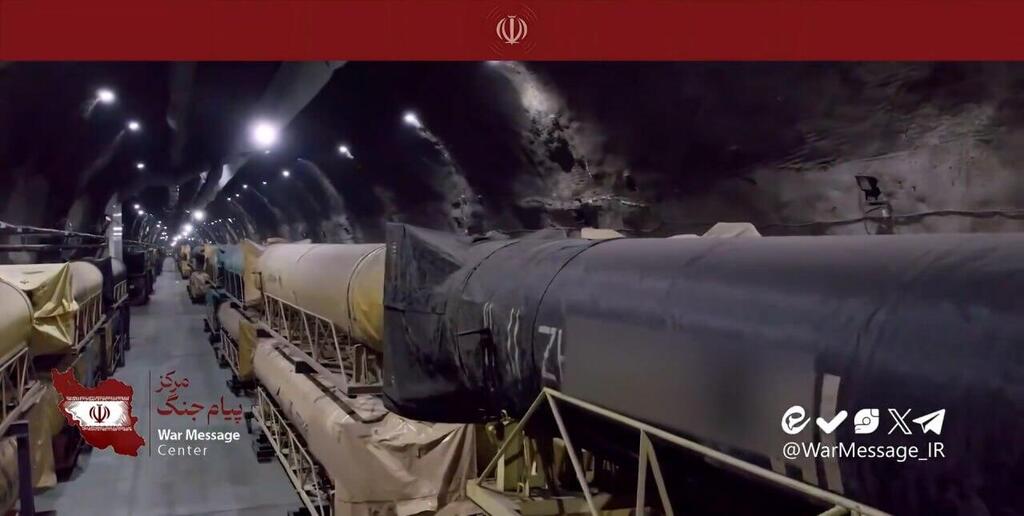
Underground missile facility of the Revolutionary Guards
In recent weeks, the Times reported that Iran still possesses 70% of its mobile launchers across the country, as well as about 70% of the missile arsenal it held before the war, including long-range ballistic missiles and a more limited stockpile of shorter-range cruise missiles. The report also said an analysis of satellite images and several surveillance technologies showed that Iran has restored access to about 90% of its underground missile launch and storage facilities across the country. Intelligence assessments found that the facilities are operational, either fully or in part.
As noted, the newspaper contradicted statements by Trump and War Secretary Pete Hegseth claiming that Iran’s military had been destroyed and no longer posed a threat. The White House responded to the Times by saying the Iranian military had been severely damaged by massive U.S. and Israeli strikes, adding that Iran understands the current situation is unsustainable and that anyone claiming it has rebuilt its military is either delusional or repeating Revolutionary Guards propaganda. The Pentagon also accused the newspaper of serving as a public relations outlet for the Iranian regime.