


The Israeli Navy is preparing to receive INS Drakon, the country’s sixth submarine and one of the most advanced vessels of its kind, as military officials warn that Israel must rapidly expand its maritime capabilities to confront threats stretching from Iran and the Houthis to Turkey and vulnerable infrastructure beneath the Mediterranean.
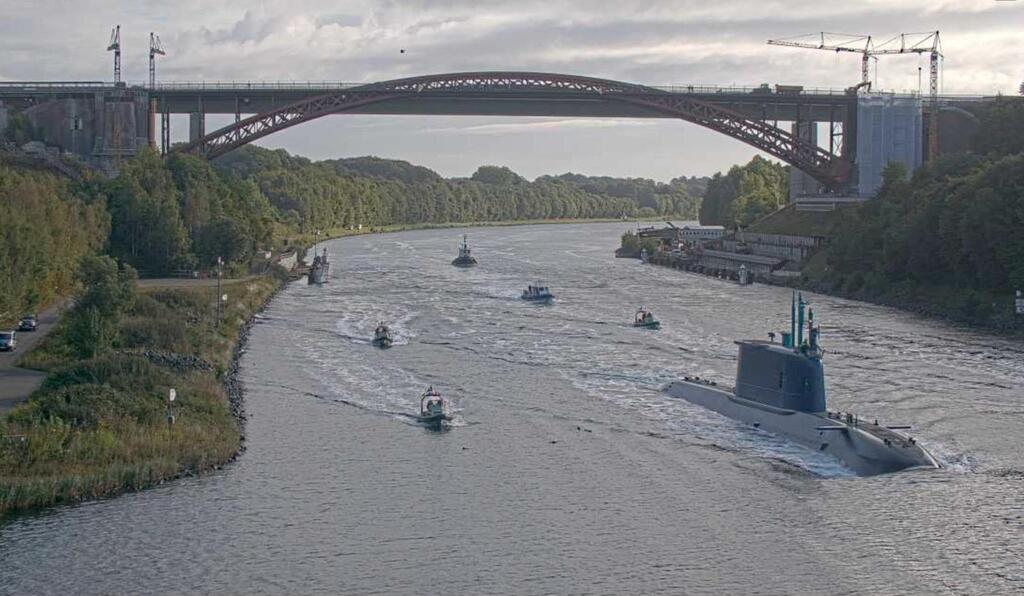
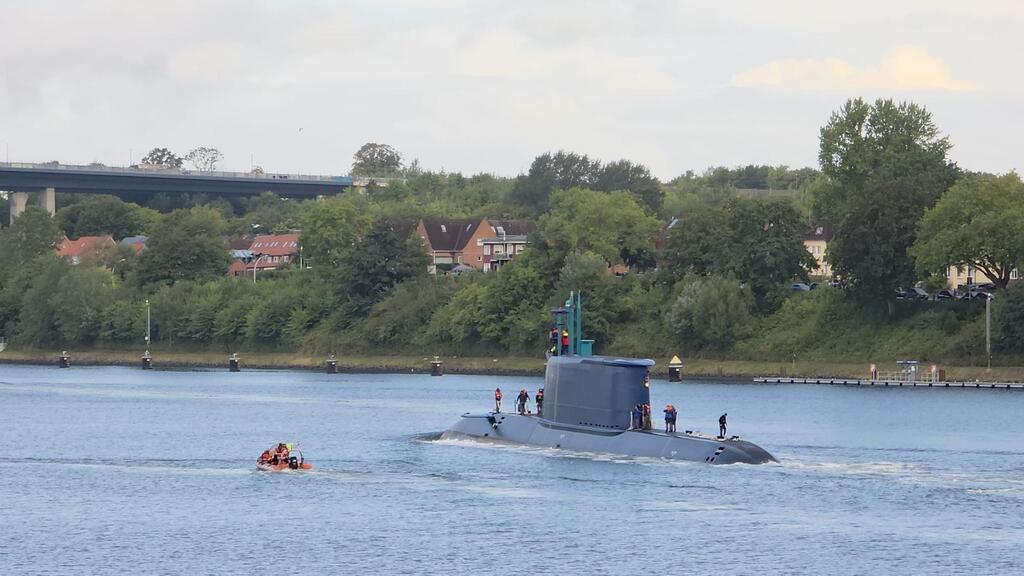
The submarine departed Germany on September 1 and is due to dock at Haifa Port on Wednesday ahead of an official reception ceremony Thursday.
Gallery
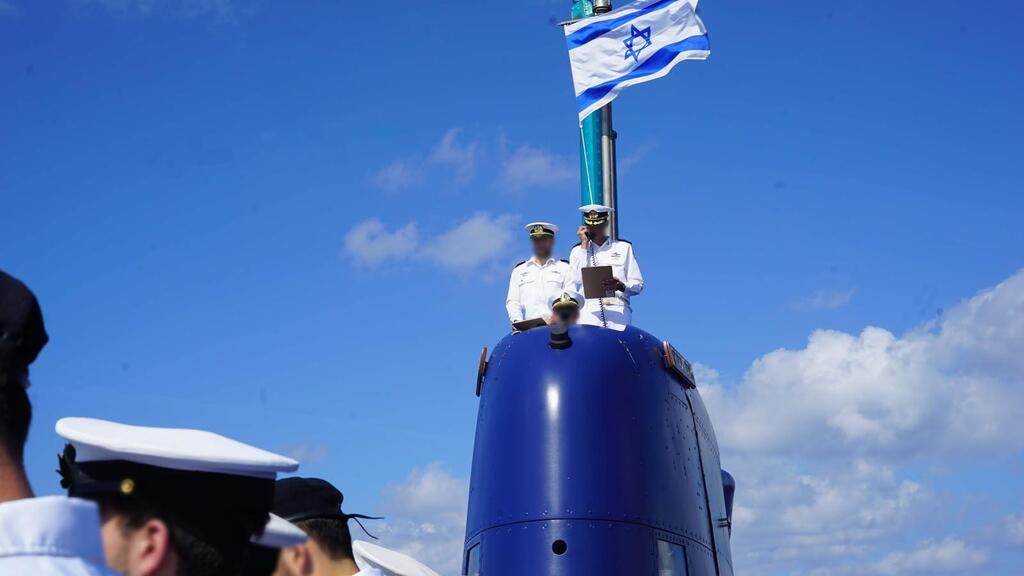
Israel’s most advanced submarine arrives as Navy warns fleet must grow for next war
(Photo: IDF)
Drakon’s arrival is not merely another step in expanding the fleet. Navy officials see it as part of a broader transformation of Israel’s maritime force following the October 7 attack and amid sweeping changes across the region’s seas and strategic waterways.
Those challenges include the confrontation between the United States and Iran around the Strait of Hormuz, Houthi control over the southern reaches of the Bab al-Mandab Strait and potential future maritime tensions involving Turkey and other regional powers.
The stakes are especially high for Israel because 98% of its trade arrives by sea. Israel sits at a strategic crossroads connecting East and West, making open shipping lanes a critical national economic and security interest.
Turkey’s growing maritime power
A senior Israeli security official said Turkey’s naval buildup is rooted in its “Blue Homeland” doctrine, which places control of surrounding maritime areas at the center of Ankara’s strategic thinking.
Turkey has expanded its maritime presence in recent years and is considered a major regional naval power, backed by a domestic defense industry that gives it considerable independence in producing and arming vessels.
Turkey currently operates 12 submarines and plans to add another six in the coming years, according to Israeli security officials.
Alongside the buildup and the need to defend strategic assets above the water, including ports and offshore energy platforms, Israel is increasingly concerned about assets below the surface, particularly communications cables laid along the seabed.
Senior security officials say countries are developing capabilities to locate and damage such infrastructure in different parts of the world.
“The Russians, for example, cut underwater lines and operate using various methods,” one senior security official said.
The official said robotic systems are being developed that can operate at great depths and sever communications cables, potentially causing major economic, security and strategic damage.
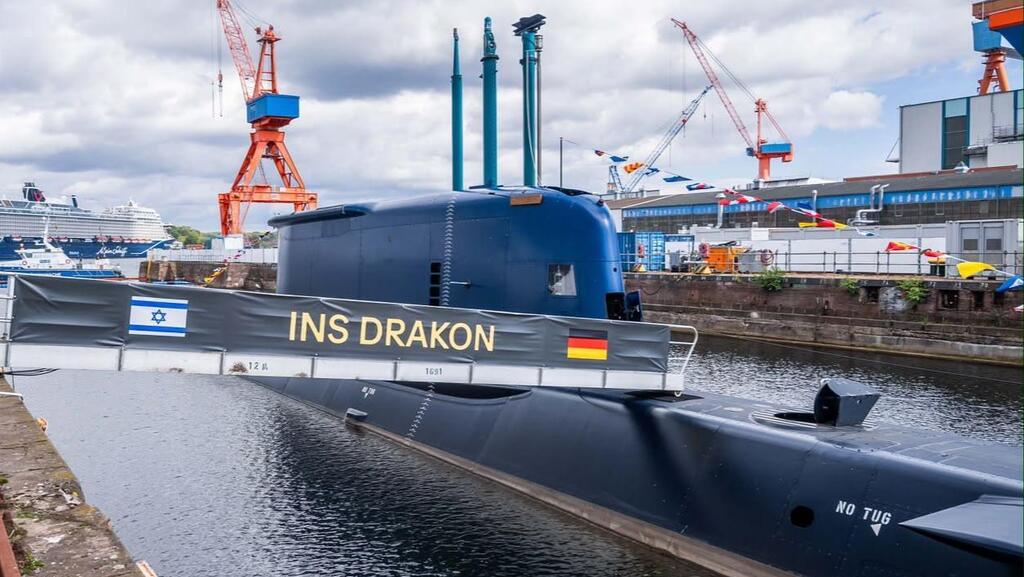
INS Drakon (Dragon)
(Photo: IDF)
No Israeli communications cable has so far been damaged, officials said, but they described previous activity in the eastern Mediterranean that raised concern.
“Several years ago, we saw surveillance and attempts by various actors to monitor and locate Israel’s cables in the eastern Mediterranean,” one security official said.
‘A distinctly Israeli interest’
The Houthis’ activity around the Bab al-Mandab Strait has further sharpened Israeli concerns over freedom of navigation.
A senior security official said the Yemeni terrorists’ control over the southern part of the strait has harmed freedom of navigation and could encourage both states and terrorist organizations to consider maritime pressure against Israel.
“The issue of Bab al-Mandab and freedom of navigation in the Red Sea is a distinctly Israeli interest,” the official said. “Beyond that, it gives both countries and terrorist organizations an appetite to try, for their own interests, to impose a naval blockade on Israel. If you do not respond to this, you create the understanding that such incidents will simply be tolerated or absorbed.”
Officials say a blockade need not involve conventional warfare.
“A blockade on Israel, even a partial one, can be created not only through military means but also through civilian actions such as flotillas,” the official said. “For example, in the latest flotilla that was stopped in Crete, some of the vessels tried to block a ship that was on its way to Israel.”
“The entire issue of the straits began with Bab al-Mandab, continued to the Strait of Hormuz and now everyone is talking about the maritime arena.”
The official said Israel’s response, particularly against the Houthis, should include building maritime coalitions and strengthening cooperation with countries such as Greece and Cyprus, which are also affected by disruptions around Bab al-Mandab.
Navy says it must grow
The IDF is closely monitoring naval developments in neighboring countries, with Turkey considered the most significant but Egypt also receiving close attention.
Security officials say the Israeli Navy will have to expand because its current force remains relatively small compared with the changes taking place around it.
(Photo: IDF)
That process takes years. Drakon itself was ordered about 14 years ago. Even after reaching Israel, it is expected to require roughly two months of work to install complex Israeli systems before becoming operational.
New Navy commander Maj. Gen. Eyal Harel has made force buildup a central focus of his tenure and is seeking to expand the fleet, its capabilities and its role in future rounds of fighting.
Security officials say there is currently an asymmetry between Israel’s fleet and neighboring navies, though they argue there is still enough time to make the necessary adjustments.
“There is currently an asymmetry between the Israeli fleet and those around it, but there are capabilities and enough time to make the adjustments needed for the Navy to develop accordingly,” security officials said.
Navy officials distinguish between two key concepts that have gained importance during recent operations, particularly against Iran.
The first is “maritime superiority,” comparable to air superiority, meaning the ability to dominate a defined maritime area for a limited period, impose a tight naval blockade and strike targets within it.
The second is “sea control,” which allows military forces to operate effectively in a given maritime space without completely denying the enemy the ability to act or fire from it.
Officials describe Israel’s current position against Yemen as sea control rather than full maritime superiority.
“At the moment, the Navy is providing an answer to the threats, but if nothing is done, a growing gap will open between Israel’s capabilities and those of the enemy,” one security official said.
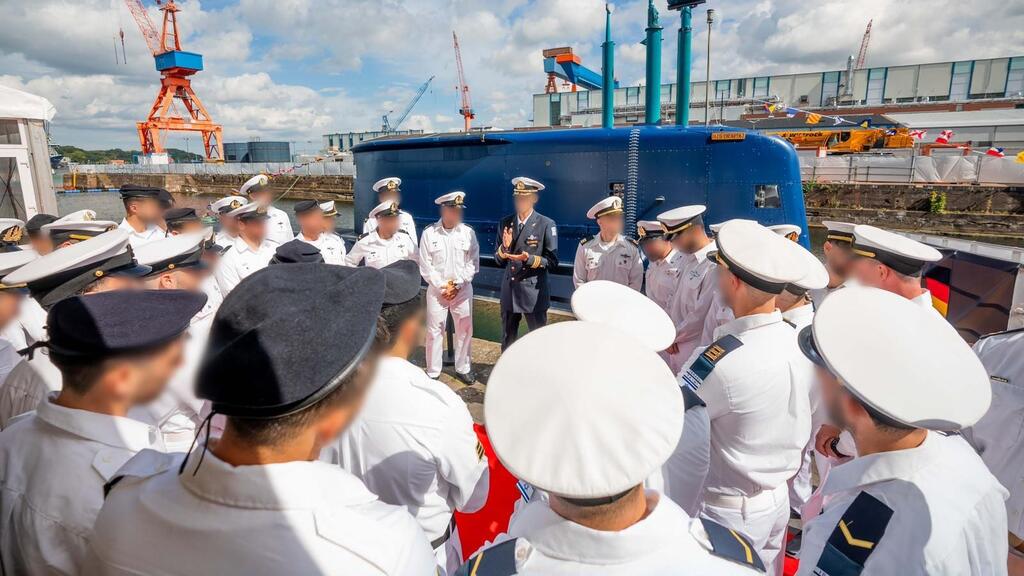
Israeli Navy personnel aboard the submarine
(Photo: IDF)
Israeli officials also point to U.S. activity around the Strait of Hormuz as an example of the economic power of maritime operations.
“The American operation in the Strait of Hormuz has enormous economic consequences for the Iranians, and every indicator shows that the worsening economic pressure is working,” officials said. “It will take them a long time to recover from something like this.”
They added: “Israel will have to develop capabilities to operate as a significant arm in the next campaign against Iran. Those changes are already underway.”
A new maritime doctrine
As part of the Navy’s transformation, Harel established a special team in May bringing together military personnel, economic researchers and civilian experts to formulate a new maritime security doctrine.
The effort reflects the Navy’s view that maritime security and national economic interests are closely linked, particularly when it comes to keeping shipping lanes open.
The team is expected to submit its conclusions to the IDF chief of staff by the end of the year.
The main changes under discussion include building a stronger intelligence infrastructure, increasing the size of the force, expanding covert capabilities, introducing autonomous vessels and developing more international partnerships.
“We have operated in very distant places where Israel had never operated before until recently,” one military official said. “We remained off enemy shores for extended periods without being detected, sometimes for many weeks, with capabilities operating very close to enemy areas.”
The official said Israel is also assisting U.S. operations around the Strait of Hormuz with intelligence and analysis.
“When it comes to Hormuz, Israel helps with analysis and intelligence because a great power like the United States can have difficulty carrying out precise operations quickly and in a focused way when the target’s window of opportunity is critical,” the official said. “Israel can close fire loops very quickly.”
Israel’s submarine fleet
Since October 7, Israeli submarines have logged about 10,000 hours at sea annually, according to security officials, meaning that at least two submarines are deployed at sea at any given time.
Officials say Shayetet 7, the Israeli Navy’s submarine flotilla, has operated in four new theaters where Israel had never previously deployed submarines.
(Photo: IDF)
The vessels carry out intelligence-gathering and strike missions, including operations against the Houthis in the Red Sea, where crews must navigate narrow waterways and areas with limited depth.
“In some cases the submarines dived in areas where, because of the difficult navigation, even a small deviation could cause damage or a collision with an underwater mountain,” one security official said.
Preparations for Drakon’s arrival were themselves accompanied by delays and diplomatic obstacles.
At one stage, Norway and Denmark barred the submarine from operating in their territorial waters for training and testing, according to a senior Israeli military official, even though it was sailing under the German flag.
“That caused a delay of several months in the preparations,” the official said. “The Navy also had to deal with embargoes and boycotts by various countries because of the war.”
Israeli and German crews ultimately conducted training in waters between Sweden and Denmark.
Drakon will become the Navy’s sixth submarine and its third Dolphin AIP-class vessel.
The AIP, or air-independent propulsion, system uses oxygen and hydrogen to generate power and recharge batteries during prolonged underwater operations without requiring the submarine to surface or draw outside air, allowing it to remain submerged and concealed for longer periods.
The submarine is more than 70 meters long and around 30% larger than Israel’s original Dolphin-class submarines. Less than one-fifth of its full size is visible above the waterline.
Its arrival completes the second generation of Israeli submarines built in Germany and reflects the countries’ long-standing defense partnership.
The journey from Germany to Israel covers roughly 4,000 nautical miles, or about 8,000 kilometers, and takes around a month through the Atlantic Ocean, the Strait of Gibraltar and the Mediterranean.
Construction took more than 12 years, followed by months of testing and preparations in close cooperation between the Israeli Navy and German naval and government authorities.
Israel’s involvement in the project has lasted roughly two decades, with a permanent team of Navy officers and engineers working in Germany alongside their families.
For Israeli naval planners, Drakon’s arrival is not the end of that process but the beginning of the next one: building a force capable of protecting Israel’s sea lanes, strategic infrastructure and long-range reach as the maritime arena becomes increasingly central to the country’s security.